
Costs of confinement: A prison system running on overtime
Staffing shortages in New Jersey’s prisons drive up costs, exhaust corrections officers, and disrupt daily life behind bars.
Editor’s note: This story is the first in an occasional series examining what it costs to operate New Jersey’s prisons, jails, and youth correctional facilities, what drives those costs, and the impact on taxpayers, staff members, and incarcerated people. If you have information or experiences to share, please email tips AT jerseyvindicator.org.
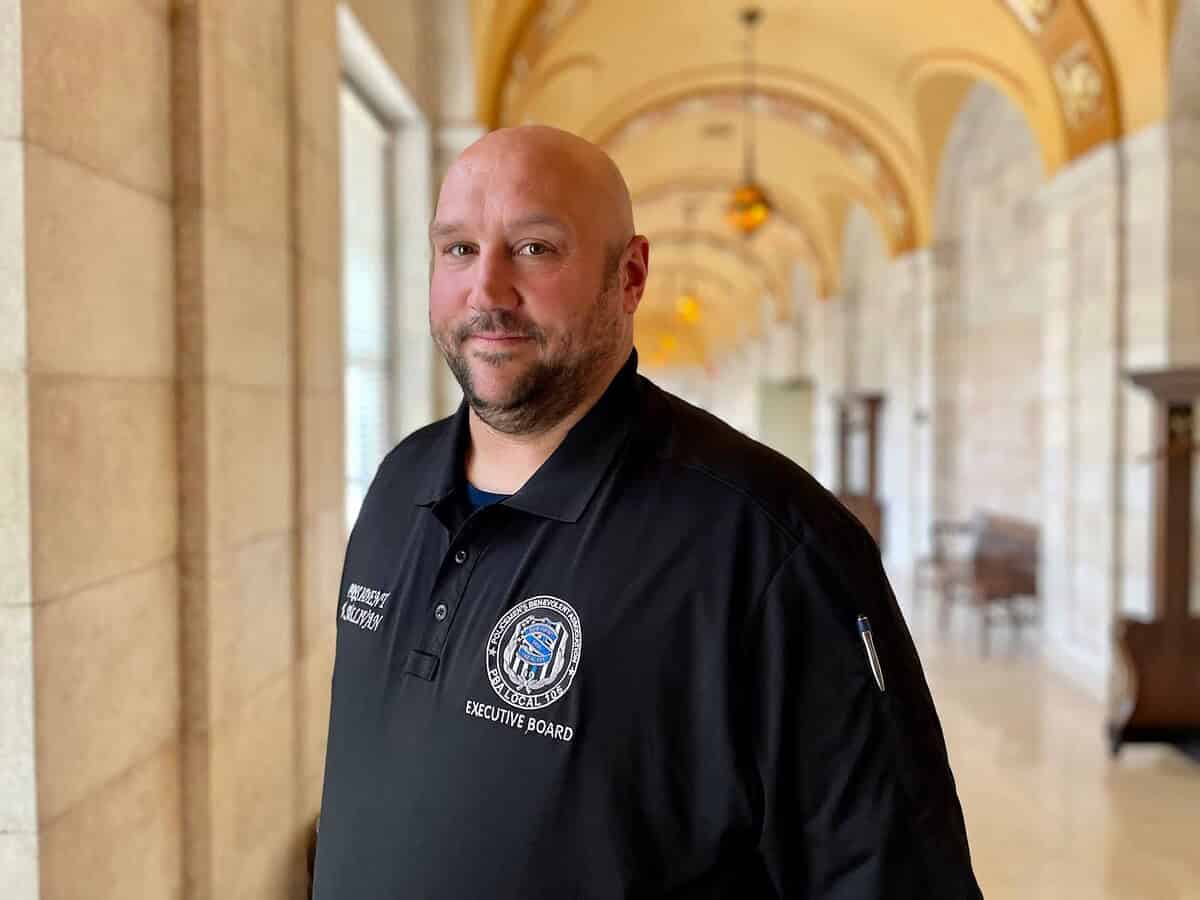
Bill Sullivan had already put in an eight-hour shift at the prison on what was supposed to be his day off. His 9-year-old son had a baseball game, and he planned to watch him play after work.
But just a few hours before he was scheduled to leave, he learned he wasn’t going home.
The prison was short-staffed again, and Sullivan, a correctional officer and single father, was ordered to work another shift.
“It’s terrible,” he said. “You don’t want to tell a 9-year-old that dad’s been to every baseball game, but he’s got to miss this one. I could refuse [the overtime]. But then I’m subject to discipline.”
Don’t miss the NJ stories that matter. Sign up for our free newsletter →
For Sullivan, who heads the union representing about 4,000 state correctional officers, the experience is hardly unusual. He said prison administrators order him and his members to work mandatory overtime three or four times a week because of a chronic staffing shortage that began during the COVID-19 pandemic and has never let up.
Multiply those extra shifts across New Jersey’s prison system, and the cost adds up quickly.
For the 2025-26 fiscal year that ended June 30, New Jersey spent $165 million on overtime for state correctional officers, a staggering sum largely driven by chronic staffing shortages at the state’s nine correctional facilities and three satellite facilities.
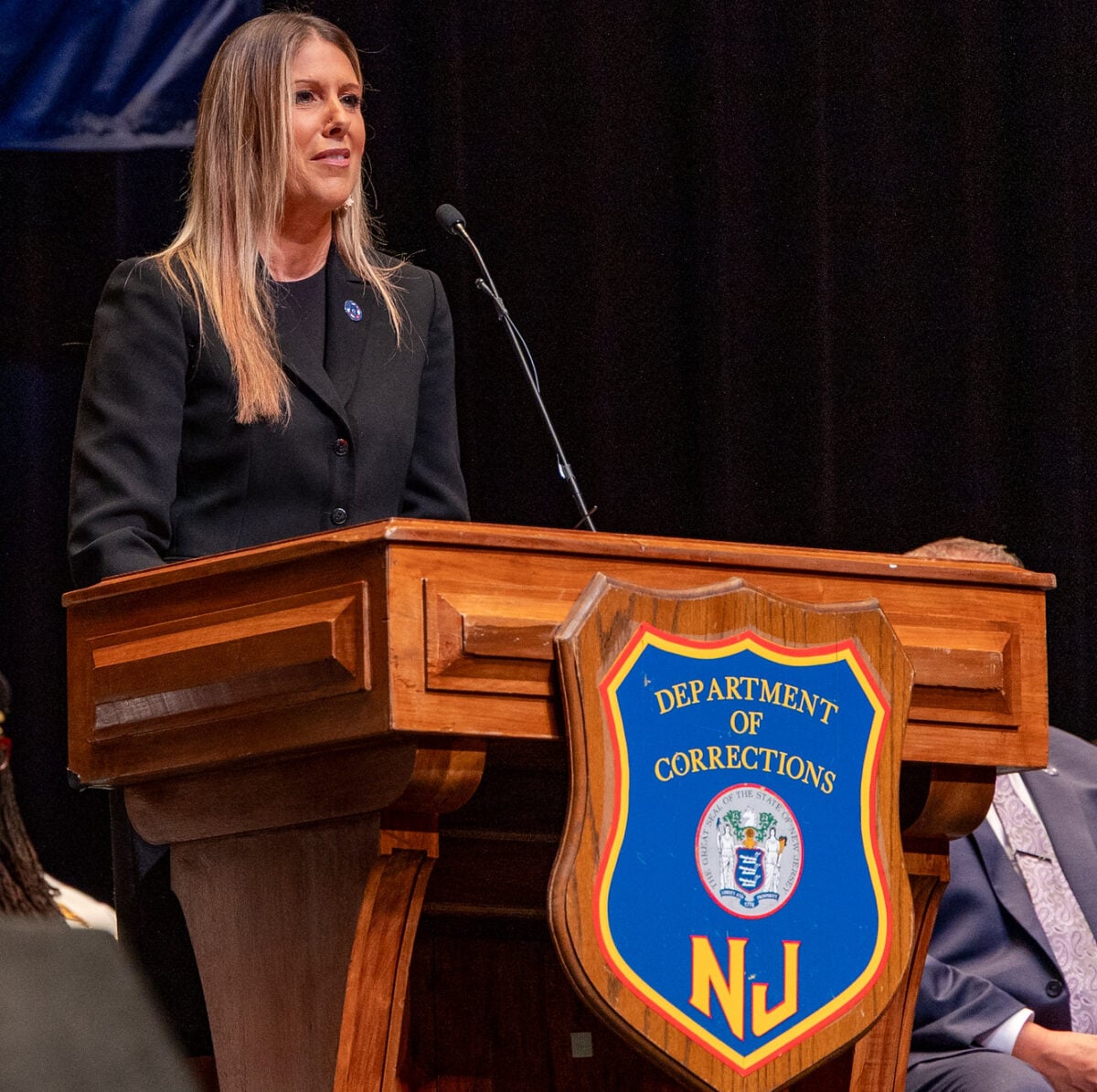
Department of Corrections Commissioner Victoria Kuhn estimated during New Jersey Legislature budget hearings in May that the agency will spend more than $162 million on overtime this fiscal year. That is about four times what the state budgeted for overtime in 2019 before the pandemic, a Vindicator review of state payroll records shows.
Kuhn attributed nearly 80% of last year’s overtime costs to officer vacancies.
The Department of Corrections reported about 4,268 uniformed staff as of May 2026, including 3,605 correctional officers, 394 sergeants, 234 lieutenants, and 35 majors, according to budget documents.
Even with fewer people incarcerated in state facilities, the department remains about 334 officers short of its target staffing level, Kuhn told lawmakers.
The true cost of the labor crisis extends far beyond the balance sheet.
Exhausted correctional officers often work long stretches of mandatory overtime to keep facilities running, while people in prison sometimes spend more time in their cells because there are too few staff members to supervise the educational, vocational, or rehabilitative programs they participate in.
While New Jersey’s staffing crisis has drawn increasing attention from lawmakers, criminal justice experts say the state’s experience reflects a broader challenge facing prison systems across the country: how to maintain safe, humane facilities when there aren’t enough people willing to do the job.
Inside prisons, staffing shortages can disrupt the routines that shape nearly every part of the day.
“When we’re short-staffed, prisoners get to do less stuff outside their cells,” Sullivan said. “They get it, but they get angry.”
Six current and formerly incarcerated people at New Jersey State Prison and Northern State Prison talked about the problem with The Vindicator.
“When it happens, it’s often on the weekends because guards are more likely to call out,” said one recently released man who asked not to be named for fear it would affect his employment prospects.
“You’re stuck in your cell. You eat in your cell. You don’t get to take a shower or anything,” he said. “It can really get to you.”
Meals can be delayed, visitation interrupted, and critical prison functions slowed, said Michael Mitchell, an associate professor of African American studies and criminology at The College of New Jersey.
“It creates inconsistency in services,” Mitchell said. “And individuals who are incarcerated don’t like inconsistency. They grow accustomed to routine, and when things start to change, they begin to change. It leads to anger, frustration, overdoses, altercations between incarcerated individuals and staff, more complaints, and more grievances.”
Department officials say they do not lock down facilities because of staffing shortages. But they acknowledge that prisons may curtail activities in certain units when staffing falls too low.
“A lockdown is an extraordinary security measure reserved for serious safety or security concerns and is not used to manage staffing shortages,” Department of Corrections spokesman Christopher Greeder said in an email. “When staffing levels are insufficient to support all scheduled activities, facility leadership may temporarily implement a modified activity protocol which prioritizes core functions while rescheduling certain non-essential activities.”
The department calls them “reduced activity days.” Dan Sperrazza, NJDOC’s chief of staff, said they are intended to maintain safety while minimizing the amount of time incarcerated people spend in their cells.
“These operational adjustments are not full-facility lockdowns, but rather temporary service modifications on specific units,” Sperrazza said in an email. “Each decision is based upon maintaining safe operations while minimizing disruptions whenever possible.”
Sperrazza said the reductions do not happen often. Last year, prisons across the state cut activities during 128 of 9,855 total shifts, or about 1.3%.
Even when other activities are curtailed, the DOC is reluctant to cancel visitation for people in prison.
“The department recognizes the important role family connections and faith-based programming play in institutional stability and successful rehabilitation,” Sperrazza said. “For that reason, visitation and religious services are prioritized and the last to be modified.”
This reporting is free because readers make it possible. Join them. →
Fewer people in prison, more overtime
The number of people in New Jersey prisons has fallen sharply since before the pandemic. The overtime needed to run the system has moved in the opposite direction.
In fiscal year 2019, the average daily population in state prison facilities was 16,501. By fiscal year 2026, it had fallen to 11,693, a decline of about 29%, according to state budget documents. Overall, the department now oversees roughly 13,000 state-sentenced people, including some people housed in county jails and residential community reintegration programs.
The state closed four correctional facilities between fiscal years 2020 and 2023 as the prison population declined.
But the workforce shrank along with it. State prisons had 7,047 filled positions in fiscal year 2019, including civilian employees. By January 2026, that number had fallen to 4,920, a decline of about 30%, according to an Office of Legislative Services budget analysis.
Closing prisons and reducing the incarcerated population helped ease staffing pressures, but was not enough to offset the loss of employees. Without those changes, overtime costs might have been even higher, the Office of Legislative Services concluded.
In April, State Auditor David Kaschak issued a 16-page report detailing the seriousness of the challenge facing the Department of Corrections.
The department’s overtime costs for correctional officers have risen substantially since 2022, when they stood at about $97.6 million. That figure rose to about $118 million in 2023, then jumped to nearly $155 million in 2024, according to Kaschak’s report.
Correctional officers worked a combined 1.5 million overtime hours in 2022 and 1.7 million in 2023. By 2024, the total had climbed to more than 2.1 million hours.
Most of that was voluntary overtime, which rose steadily from 1.1 million hours in 2022 to 1.57 million hours in 2024.
But mandatory overtime grew at an even faster rate. Prison administrators required officers to work an additional:
- 229,592 hours in 2022
- 361,155 hours in 2023
- 474,980 hours in 2024
For officers willing to work additional hours, overtime can substantially increase their earnings. In 2024, the top 10 overtime earners received a combined $2.3 million on top of their regular pay. In 2025, the top 10 received a combined $2.2 million in overtime, a Vindicator analysis of payroll records from 2019-2025 shows.
The top overtime earner in 2024, a senior correctional officer at East Jersey State Prison, logged 3,511 overtime hours that year — an average of more than 67 overtime hours a week on top of his regular schedule — and received more than $286,000 in overtime pay, according to the auditor’s report and state payroll records reviewed by The Vindicator. The officer’s total earnings that year were $395,344.26.
In 2025, a senior correctional officer at Bayside State Prison received $271,641.20 in overtime pay. His total earnings that year were $385,221.04.
By comparison, in 2019, the top 10 overtime earners received a combined $716,999.78. That year’s top overtime earner, a senior correctional officer at Garden State Youth Correctional Facility, received $118,134.43 in overtime and $214,829.89 in total pay.
The following is a list of the top 10 correctional officer overtime earners for 2025. You can also view and search our full database of New Jersey Department of Corrections employee overtime for 2019-2025.
| NJDOC Top 10 overtime earners for calendar year 2025 | |||||
|---|---|---|---|---|---|
| Rank | Title | Prison | Salary | Overtime | Total Pay |
| 1 | Senior Officer | Bayside | $111,379.84 | $271,641.20 | $385,221.04 |
| 2 | Senior Officer | Bayside | $111,379.84 | $255,883.94 | $369,463.78 |
| 3 | Sergeant | Northern | $118,743.01 | $249,870.12 | $370,813.13 |
| 4 | Lieutenant | Northern | $140,635.51 | $207,927.78 | $350,763.29 |
| 5 | Senior Officer | South Woods | $111,379.84 | $207,873.85 | $321,453.69 |
| 6 | Senior Officer | East Jersey | $111,379.84 | $206,993.36 | $320,573.20 |
| 7 | Senior Officer | East Jersey | $111,379.84 | $206,941.05 | $320,520.89 |
| 8 | Lieutenant | Edna Mahan | $140,273.17 | $201,011.55 | $343,484.72 |
| 9 | Senior Officer | Bayside | $111,379.84 | $199,423.32 | $313,003.16 |
| 10 | Senior Officer | Northern | $111,379.84 | $189,665.69 | $303,245.53 |
| Total | $1,179,310.57 | $2,197,231.86 | $3,398,542.43 | ||
Kaschak warned that working such extreme hours can carry safety risks.
“Working excessive hours with insufficient rest could cause an impairment of cognitive and motor performance that in turn could have negative impacts on an officer’s ability to provide a safe and secure environment for incarcerated persons and staff,” he wrote in his audit report.
Sullivan, who has spent 20 years working at East Jersey State Prison in Rahway, has witnessed the correctional officer ranks shrink.
Five years ago, he represented about 6,000 rank-and-file officers. His union has since lost about 2,000 members.
The decline has changed how frequently officers are ordered to stay beyond their scheduled shifts, Sullivan said. In 2019, an officer might be required to work an extra shift two or three times a month.
Now, he said, it can happen three or four days a week. Some facilities are even worse than that.
“It’s slowed down a little bit,” Sullivan said of mandatory overtime. “But not enough to where people aren’t getting forced to stay.”
A shortage years in the making
Several factors contributed to the staffing problem, but Sullivan traces the beginning of the current crisis to the COVID-19 pandemic.
“A lot of people stayed home to deal with family stuff,” he said.
The pandemic also disrupted recruitment efforts. Lockdowns and restrictions prevented recruiters from going out into communities to find new officers, Sullivan said, creating a hiring gap at the same time some veteran officers were retiring.
Others left after developing lingering symptoms from COVID-19, he said.
But the staffing shortage persisted long after the pandemic ended.
“If you have a couple years of bad stuff, it takes you like five to 10 years to recover,” Sullivan said.
The challenge now goes beyond filling existing vacancies. The Department of Corrections must also hire fast enough to replace a large group of veteran officers approaching retirement.
An August academy graduating class added 103 officers to the ranks, Sullivan said. But 82 correctional officers are retiring in August, meaning most of that class will effectively replace officers leaving at roughly the same time.
And many more could follow.
“It’s slowed down a little bit. But not enough to where people
Bill Sullivan, President PBA Local 105, NJ Department of Corrections
aren’t getting forced to stay.”
Sullivan estimates that about 1,200 correctional officers, more than a quarter of the workforce, are currently eligible to retire.
Many are staying for now. Sullivan said some are drawn by the additional income available through overtime, while others are waiting for contractual raises that would increase the salaries used to calculate their pensions. Many others who can retire have a few more years until they can receive full benefits. Law enforcement personnel enrolled in New Jersey’s Police and Firemen’s Retirement System can qualify for special retirement with full pension benefits after 25 years of service credit, regardless of age.
Sullivan estimates the department needs another 800 correctional officers to reach what he considers to be a “good position.”
He said the situation could become dire if the department cannot significantly increase staffing. He described the potential consequences in stark terms.
“I guess you’d have to let all the inmates out,” Sullivan said. “Or call in the National Guard. That’s the reality.”
At the same time, reducing the shortage presents an unusual challenge: After years of overtime, some officers have grown accustomed to the additional income.
“You’ve got to have a happy medium,” Sullivan said. “People are used to the extra money, and you don’t want them to get upset when the paychecks slow down.”
Trying to fill the ranks

The Department of Corrections has boosted its recruitment marketing efforts to fill empty posts in the state’s prisons, sending recruiters across New Jersey and building an online presence while touting a career that can eventually pay more than $120,000 a year before overtime.
Recruiters have attended job fairs and events at One-Stop Career Centers and sought out military veterans at Joint Base McGuire-Dix-Lakehurst. They have also held virtual career fairs and hiring events at prisons, where prospective applicants can talk directly with officers and learn more about the work.
The department has promoted the recruitment effort under the slogan “Serve with Honor. Protect with Pride.”
Social media channels and YouTube have become important ways to reach potential recruits. In videos like “Level Up Your Career: Strength, Stability and Purpose at the NJDOC“, the department highlights opportunities beyond traditional prison assignments, including the K-9 unit, Special Operations Group, and emergency response teams.
Officials are also emphasizing pay. Recruits earn $24 an hour while attending the academy, which is about $50,000 a year. Salaries rise to $55,081 after graduation. After completing 12 months of on-the-job training, officers can become senior correctional police officers with a starting salary of $75,661, according to the department’s recruiting materials.
Senior correctional officers at the top of the scale can make $123,104 a year, or about $59 an hour, according to the NJDOC website.
Officers can earn time and a half for overtime and also receive annual salary step increases. Officials also tout benefits that include health coverage, a state pension, paid leave, a $2,200 annual uniform allowance, and tuition reimbursement.
The department has also tried to make training more accessible. Officials have offered recruits a nonresidential option for the 19-week academy, allowing them to go home after training rather than requiring them to live at the academy.
Recruitment officers also work with applicants as they move through a hiring process that includes background checks, medical and psychological examinations, and other requirements.
There are signs those efforts are working.
Recruitment campaigns have grown academy class sizes, while higher salaries have helped keep officers already on staff, Kuhn told legislators.
The Department of Corrections established a full-time recruitment unit after legislators passed a law four years ago allowing the department to bypass the state’s lengthy civil service hiring process.
Greeder called the broader approach, combining digital advertising, social media outreach, and face-to-face recruiting, “incredibly successful.”
Schuster, the corrections watchdog, said the department has done a “really admirable job” with its recruiting efforts, which has helped produce larger academy classes.
In 2022, the academy graduated a class of just 54 people. Earlier this year, 157 new officers graduated, the largest class in nearly a decade.
Other changes, such as modifying the state’s physical fitness standards for correctional officers so more women can qualify, might further expand the pool of potential recruits.
Officer attrition has also fallen significantly.
Three years ago, the department was losing 26 officers per biweekly pay period. That number had dropped to nine, a 65% decrease, Greeder said.
By the May budget hearing, Kuhn said the department was losing about eight officers per pay period, the lowest attrition rate the department had recorded.
Department officials attribute the improvement in part to a 2023 collective bargaining agreement that significantly increased wages and expanded benefits.
Greeder also pointed to expanded wellness initiatives, peer support services, resiliency training, and other programs that have helped the department retain 94% of academy graduates through their first year of service.
“Folks are no longer leaving us to go to other departments, agencies, and police forces,” Kuhn said in May. “We’re not losing young officers. Our attrition now is those who are retiring.”
Sullivan, the union leader, agreed that the pay increases have helped.
But retaining officers remains a constant battle because as pay rises at the Department of Corrections, so does pay at county jails that can lure state officers away.
“Essex, Monmouth, and Bergen counties take all our officers,” Sullivan said. “[Our pay] went up, and people stopped leaving to go to the counties. But now the counties are settling their contracts, and our officers are going [again] because it’s a direct transfer. When you’re a state corrections officer, you can go work anywhere. You’re qualified.”
That, along with the steady stream of retirements, disability leaves, and workers’ compensation applications means the staffing crisis is far from over.
Despite those gains, corrections officials continue to rely on existing officers working overtime.
‘It takes a toll’
The overtime needed to fill vacant posts can itself make the staffing shortage harder to solve.
“It becomes a circuitous problem: It’s hard to fill the positions of people who don’t stay, and once they leave, it requires more overtime,” said Joe Russo, a corrections researcher and former program manager of the National Law Enforcement and Corrections Technology Center at the University of Denver.
“Then officers get burned out, and they leave,” he continued. “Or even worse, they get burned out and they stay. But complacency goes up, vigilance goes down, and bad things tend to happen.”
The long hours can also take a serious toll on correctional officers’ mental and physical health, an area Russo said is already a concern in the profession.
“They tend to have a very low life expectancy compared to other professions, and it’s been documented that they have, in some cases, higher rates of PTSD than Iraq war veterans,” he said. “It’s a very difficult, unpredictable environment.”
Marc Bullaro, a retired assistant deputy warden at Rikers Island, said long hours can also make prisons less safe.
“They’re tired, they’re fatigued, and they’re stressed,” Bullaro, now an adjunct assistant professor at John Jay College of Criminal Justice, said of correctional officers. “This means you’ll have more incidents, more uses of force, more confrontations with the detainee population because they’re a little bit more irritable or frustrated.”
Sometimes, officers scheduled to work a double shift the next day call out to avoid it, Bullaro said, which can compound the staffing problem.
“Then officers get burned out, and they leave. Or even worse, they get burned out and they stay.”
Joe Russo, corrections researcher
Schuster said callouts are predictably worse on weekends.
“Officers will call out on the first shift so they don’t get held over second shift on a Friday, Saturday, or Sunday,” he said. “They know there’s not going to be enough staff, and if they’re there, they’re going to be mandated to stay. But if I don’t show up to the first shift, you can’t keep me for the second.”
The lengthy shifts can also make it harder to convince officers to come in when they have legitimate reasons to call out, such as a major snowstorm or an anniversary dinner after repeated overtime shifts have already strained things at home.
“They can say, ‘I’ve done three double shifts this week, there’s 10 inches of snow in my driveway, and I’m not coming in,’” Schuster said. “Or that they’ve done so many double shifts that it’s affecting their family life. But this is the type of job you have to show up for. It’s not an office job. It’s an essential service.”
Kuhn acknowledged the effects during the spring budget hearing.
“It’s one thing if it’s voluntary,” she told lawmakers. “But when it’s mandatory, and you’re being forced to stay, it takes a toll on you, your mental health, your body, your family. And that’s what we’re trying to reduce and avoid.”
Administrators at some prisons have adapted by returning incarcerated people to their cells around 6 p.m. on weekends instead of holding evening recreation, Schuster said. That allows administrators to reduce some holdover shifts from eight hours to four, making them more tolerable for officers.
Sullivan said every officer deals with forced overtime differently. Some resist, some call out, and some just leave and deal with angry supervisors later.
But they all know the personal cost.
Many officers end up getting divorced because of extended absences from their families, Sullivan said. Others self-medicate to cope, leading to substance abuse problems.
“That’s why our life expectancy as a corrections officer is 59 years,” Sullivan said. “It’s taking years off your life, and you don’t know it at the time. But we have people retire, then pass away a couple months later.”
The forced overtime, combined with aging facilities that present their own health risks and the constant threat of violence from incarcerated people, has dissuaded correctional officers from recruiting friends and family into the ranks as they once did, Sullivan said.
“I can’t go tell my little nephew who just turned 20, ‘Hey man, come work with us,’” Sullivan said. “Because I know what the environment’s like. And the environment is really bad.”
Still, Kuhn said the department expects mandatory overtime to decline by about 10,000 hours this fiscal year, though higher salaries mean that improvement will not necessarily translate into lower overall personnel costs.
“I will not be satisfied sitting in this seat until we have reduced mandatory overtime to zero,” she said. “I want officers to put their hands up and say, ‘I want the overtime.’ Not, ‘You have to stay tonight and do the overtime.’”
Building a more informed New Jersey, one story at a time.
Readers fund The Jersey Vindicator because they believe New Jersey needs independent reporting that serves the public. No paywall. No spin. Just deeply reported journalism that helps people understand what’s happening in our state.
If you believe this work matters, please contribute today.

Steve Janoski is an award-winning investigative journalist with nearly two decades of experience covering criminal justice, policing, courts, government, and politics. His reporting has exposed corruption, government malfeasance, and police misconduct. His work has appeared in the New York Post, USA Today, The Associated Press, The Record, and the Asbury Park Press. At The Jersey Vindicator, he covers criminal justice. Reach Steve at steve AT jerseyvindicator.org.

Krystal Knapp is the founder, executive director, and publisher of The Jersey Vindicator and the founder of Planet Princeton. She has more than two decades of experience reporting in New Jersey, including 10 years at The Trenton Times, where she was the newsroom’s public records and computer-assisted reporting expert. Her work has been recognized by the New Jersey Press Association and the Center for Cooperative Media. You can reach her at Krystal AT jerseyvindicator.org.