

Five Minutes with Ambreen Tariq: Making the great outdoors welcoming for everyone
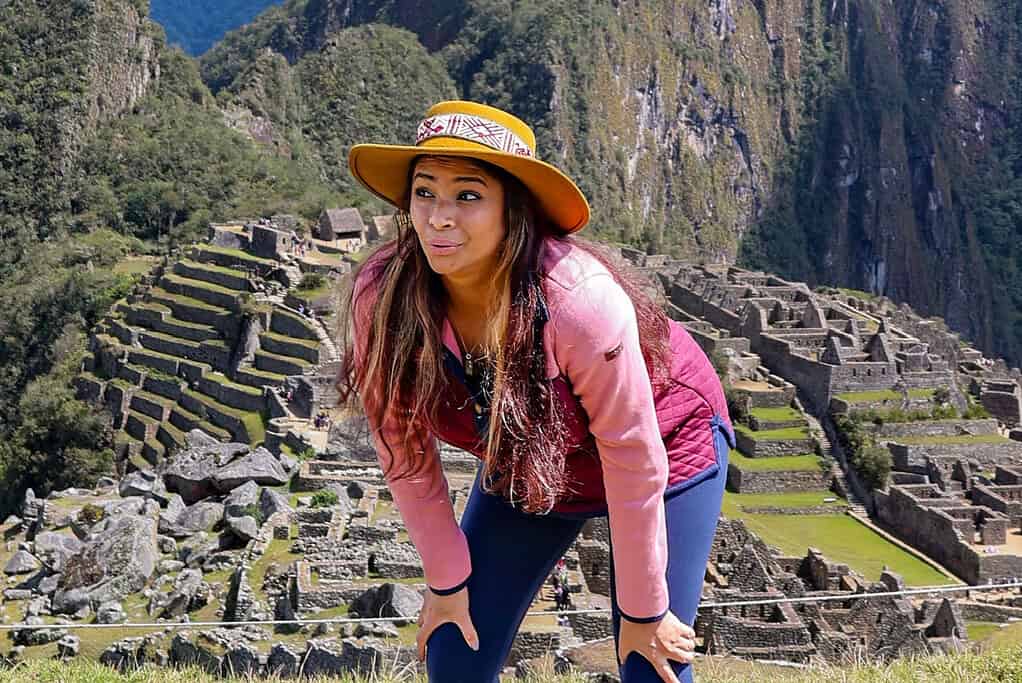
Author, activist, and outdoorswoman Ambreen Tariq was born in India but found her passion in the American wilderness.
A 42-year-old senior program director at the nonprofit educational organization Outdoor Recreation Roundtable, Tariq started camping with her family after they immigrated to Minnesota when she was 8 years old.
Later, she moved to Wayne, New Jersey, where she went to high school and adopted what she calls an exemplary Garden State accent. Now based in Washington, D.C., the nonpracticing attorney, who worked for both the Environmental Protection Agency and the Department of Labor, is a well-known outdoors activist who started the website @BrownPeopleCamping, among other pursuits.
She also wrote a semi-autobiographical children’s book, Fatima’s Great Outdoors, which follows a young girl from an immigrant family as they embark on their first camping trip in the Midwest.
Q: Why did you start @BrownPeopleCamping?
A: I’ve always been super passionate about environmental justice, which is the concept that low-income communities, and often people of color, bear the brunt of environmental degradation and environmental crimes. But in all those spaces, whether it was law school, working at the EPA, or even a climate march, it’s so predominantly white.
The country’s demographics are moving in a completely different direction. And that’s the problem: If we had to pass the Clean Water Act of 1972 now, it wouldn’t pass. There isn’t enough people power. So for me, a clear link between the two problems is that if you’re not falling in love with nature, you’re never going to stand up and fight for it.
It became obvious that there needs to be a bigger push for folks who identify with me to be represented. That got me started with @BrownPeopleCamping.
At first, it was really tongue in cheek. I wanted people to ask why I named it that, so we could have the conversation. And I went in with a pretty simple formula: I love photography and I love telling stories, so I’m just going to be my own storyteller. It doesn’t need to be complicated. I’m going to say what I saw, why I like it, and why I want more people to come out and experience it. Let’s talk about why the outdoors looks the way it does, who’s not out there and why, and how we change that.
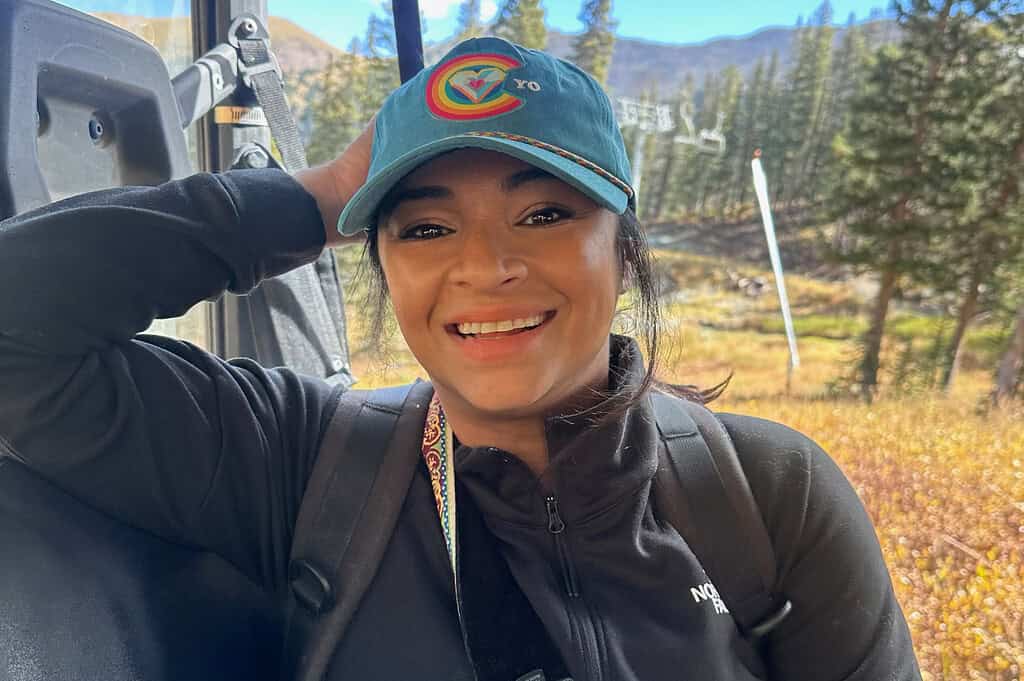
Q: How did your family and your background as a Muslim South Asian woman shape your love of the outdoors?
A: We stumbled into camping when we came to the United States because we were trying to learn how to be American, and in Minnesota, the outdoors is a huge part of the culture. We were like, “This is what we do now. We’re American.”
But I think regardless of where you are on the economic spectrum, being an immigrant is really f—ing hard, especially for children. For me, it was such a difficult time. But when we went outdoors, it was calm. And when I look at memories of my childhood, when my parents were smiling or laughing, I think about when we went camping. I can’t imagine we went more than five times, but it became this rallying point in my brain — this feeling that when I’m out there, all I have to do is adventure, discover, be curious and just be a kid.
It became a very sentimental lighthouse for me. No other part of our lives was like that. We were latchkey kids. My parents worked two jobs each.
As I got older, I started making my way back to the outdoors. And it was almost startling as an adult to be like, “Whoa, I feel like I’m a 10-year-old in Minnesota again.” Every part of my life is drenched with diversity. Nothing is homogeneous. But when I went camping, it was a time warp. The country had changed, but that hadn’t. As a grown adult, I don’t have to just accept things the way I see them.
Q: Why don’t more people of color enjoy the outdoors?
A: As an immigrant, I have a different relationship to the land. I’m trying to gain entrance. I don’t really have a sense of possession or entitlement. It’s not mine; it never was. I don’t have lineage here.
But Indigenous peoples’ relationships are very complicated. It was theirs, and it was taken away. Period. And the places where we recreate, national and state parks, hold a lot of historic pain of displacement.
Then you look at the African American community, which was brought here to work the land but denied rights to own it, recreate on it or even be safe on it. There’s also this history of “bad things happen to Black people in the woods.”
So, depending on where you come from, your relationship to the land is very different, as are the stories told to you or the fear associated with it.
And inevitably, you still have to overcome the discomfort of, “I’m the only one out here who looks like me.” Plus, there’s a bar to entry with knowledge, equipment, and culture, which can deter people. A big part of breaking down those barriers is creating spaces where people can feel safe, explore, and try something on their own.
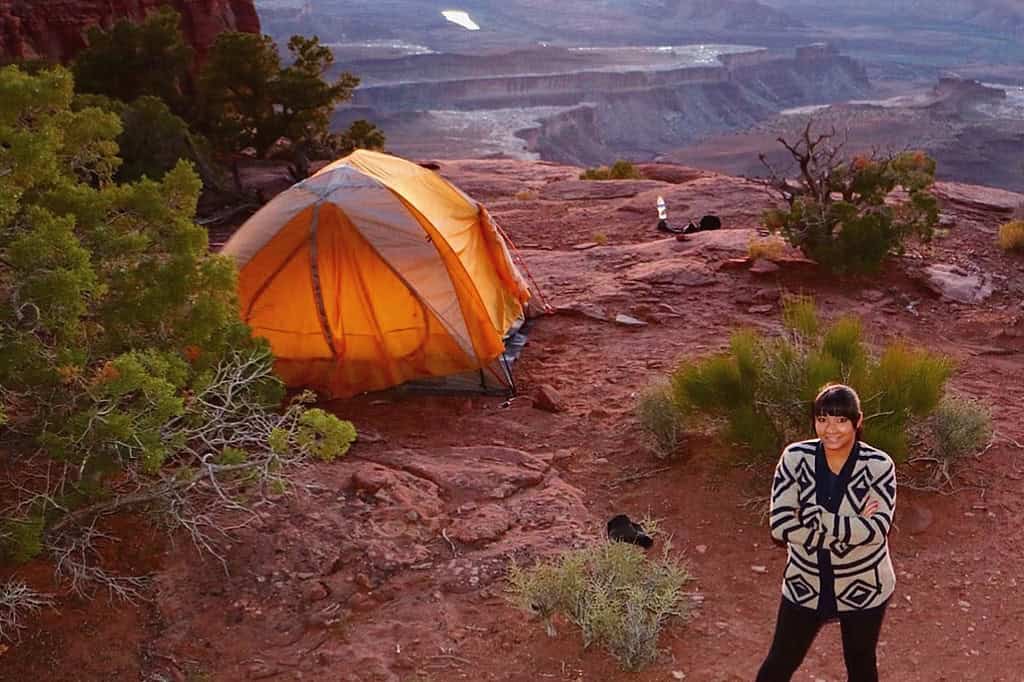
Q: So how do you fix that?
A: Familiarity is important. For example, when I got my gun license, I knew nothing about gun culture. But I saw a class about women in shooting and thought, “You know what? I want to go in there and explore because I feel really uncomfortable in a completely male-dominated space.”
It’s so intimidating. But it made me comfortable to go to this class for women. I could relax. It was daunting, but the minute I saw someone I related to, I said, “OK, maybe this is possible for me too.”
That’s a good parallel to the outdoors. If you’re new to it and people from your walk of life aren’t there, you feel unfamiliar, and it can be intimidating. But when you see someone who looks like you, who you can identify with, that changes things.
And there are so many groups doing this exact work, trying to make a space for people to feel safe, explore, and connect. I highly recommend people go out with groups that make a welcoming space for newcomers — local and county recreation centers, the Sierra Club, even faith-based groups that organize outings. There are so many resources.
You can also go on social media and find those groups. Even if you don’t want to go out with them, you’ll feel like you’re part of a community that’s encouraging you to explore. That’s the psychological support everybody needs.
Q: How have people responded to this? I hear you’ve gotten some pretty heinous messages.
A: That’s been the greatest surprise for me. It’s rare, but when I see ignorant comments, it’s not enough for me to say, “Oh, that’s just a crazy person.” It’s not. It’s a person with an opinion who probably represents 50 others who think the same way, and to ignore it would go against the work I’m trying to do. I genuinely want to understand what it is about what I do that angers someone.
The most extreme comments are just white supremacy. It’s nativism — “This is my land, get the f— out.” Then there’s the middle resistance, which sounds like, “Why are you playing the race card? Why are you making the outdoors political?” It’s consistently white people who say that.
So I tell them, “Put yourself in a time and place where you’ve been a minority.” Often, the people who respond that way have never experienced that. It’s not personal, and I’ll never lose sleep over those comments because they don’t know me. It’s more of an expression of where they are.
There’s a large swath of people in this country who are emotionally suffering. They’ve been led to believe they were going to grow up and have this country be a certain way, but politics is pointing to people of color as the reason they don’t have that — money, resources, power or land.
It’s the age-old manipulation of racism to make people believe minorities are causing all their problems when that has nothing to do with it. It’s ignorance laced with fear.
But it makes me laugh when people say, “Why do you have to make the outdoors political?” My response is, land is the single most political thing in the history of the planet Earth. So I’m not going to tell you what to think, but I am going to share stories with you. I’m going to tell you how I feel and how I think. Maybe that will help us understand each other better.
Steve Janoski is a multi-award-winning journalist whose work has appeared in the New York Post, USA Today, the Associated Press, The Bergen Record and the Asbury Park Press. His reporting has exposed corruption, government malfeasance and police misconduct