


From an ordinary Sunday morning to detention: How an ICE raid upended a young New Jersey couple’s life together

Vanessa Aracena was in the bathroom of her Perth Amboy home getting ready for church on a Sunday morning in August when she heard a knock at the door.
Her husband, Carlos Archila Reyes, had stepped outside to get the car ready for the drive to Plainfield.
A neighborhood girl stood at the door. She was out of breath. “They took him,” she said. “They took your husband.”
Agents waiting outside the house had surrounded Reyes. A cellphone photo taken by a passerby captured the scene in the seconds after the agents moved in on him. Photos show him on a sidewalk near the corner of Market Street, wearing a light blue shirt and standing with his arms at his sides. Five agents are clustered around him, four in tactical gear. His faded red sedan sits on the street. Reyes had tried to tell the agents he needed to speak to his wife, but they put him in a van and drove away.
“They told him no,” Aracena said. “They told him they didn’t have to talk to me.”
A neighbor said the agents had asked for someone else, a different name. “It wasn’t him they were looking for,” Aracena said. “And they took him.”

Aracena remembers not believing what happened at first and feeling disoriented, trying to sort the details out in her mind.
“He didn’t have time to tell me anything,” she said.
Later that day, he called her from a number she didn’t recognize. Federal agents brought him to the detention center in Elizabeth first, where they asked him questions, took photographs, and processed him.
“Don’t worry,” he told her. “I haven’t done anything bad in this country.”
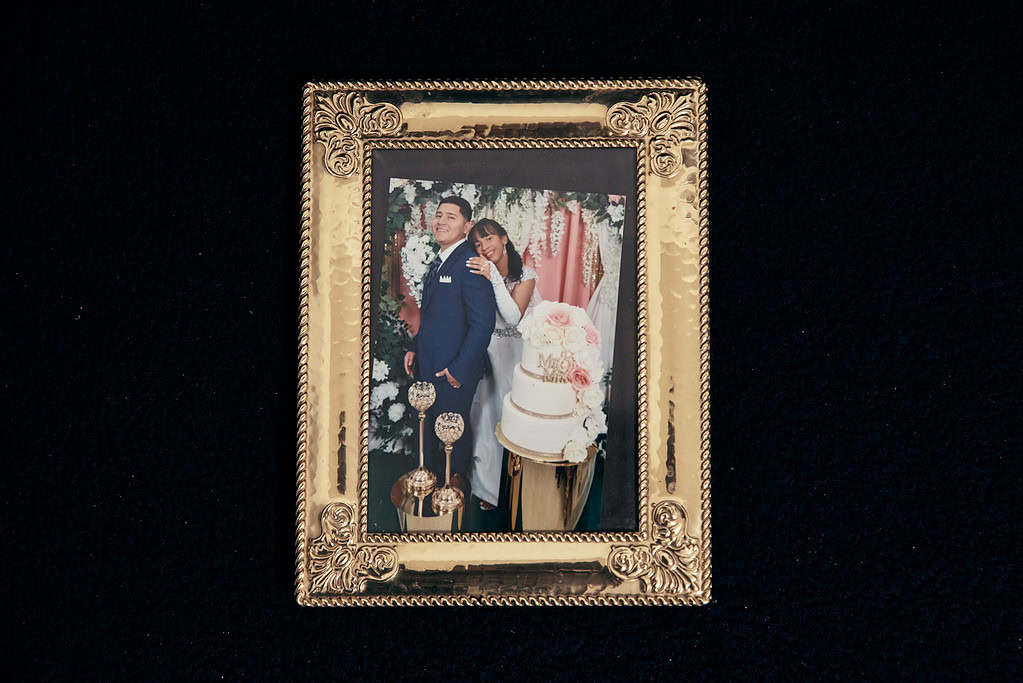
Before all this, they’d lived a modest lifestyle and were trying to save money for their future. Aracena, 24, had come to the U.S. from the Dominican Republic. Reyes, 23, is from Guatemala. They met while working at a Somerset facility packing COVID-19 test kits. They dated for two years and got married on Jan. 4. Aracena is a lawful permanent resident. Reyes never obtained legal status. He crossed the border without being caught, and immigration never processed him. After they married, they planned on filing a petition for him to be in the country legally, but they hadn’t filed the paperwork yet.
Aracena worked the night shift cleaning a school. Reyes worked a forklift, loading equipment and moving pallets and boxes for a logistics company. He’d earned a license to operate the machine, and his supervisors liked him, giving him a promotion, Aracena said.
“He was very hardworking,” she said. “They liked him a lot.”

The couple had plans. “We are young,” Aracena said. “We wanted to have a child.”
They imagined saving for a house, leaving behind the instability that had defined their early life together. Before they found steady work, they’d lived in their car for six months, parking wherever they could, taking odd jobs to survive day-to-day. He cut grass and worked in landscaping when the weather allowed. If it rained, the jobs dried up.
“There wasn’t much work,” Aracena said. She wasn’t always working either. But they believed they could build something more stable together. They were saving money for a lawyer to begin his residency petition. “We were going to do it this year,” she said.

After his arrest, they found a lawyer. Reyes was scheduled for an immigration hearing on Sept. 17. They hoped he would get released on bond. The lawyer explained the steps. But the costs were already straining the family.
“Now we don’t have money,” Aracena said. “When they release him, we will work hard to present the papers.”
She kept saying “when,” not “if.”
Her father-in-law, José Agustín Aracena, 53, remembers the morning of the arrest. The day before, the family had gone out to eat together. The next morning, around 8, his daughter called him.
“Papi, they’re taking him — immigration,” she said.
He thought she was exaggerating or mistaken. But when he arrived on Market Street, the girl outside told him it was true. She said Reyes had tried to speak to his wife, asking the agents for a moment to let someone call her, but they had refused.
Later that morning, Carlos called and told them he would be moved from Elizabeth to Delaney Hall in Newark within an hour. They drove there at about 3 p.m., but visiting hours ended at 1 p.m. They couldn’t see him. The next Saturday, Aracena was finally able to visit her husband.
At Delaney Hall, Reyes was sad at first, his wife said. But within a week, they put him to work cleaning bathrooms. They paid him four dollars for the work. Aracena said her husband likes to work. Staying idle makes him restless.
“He doesn’t like sitting,” she said.

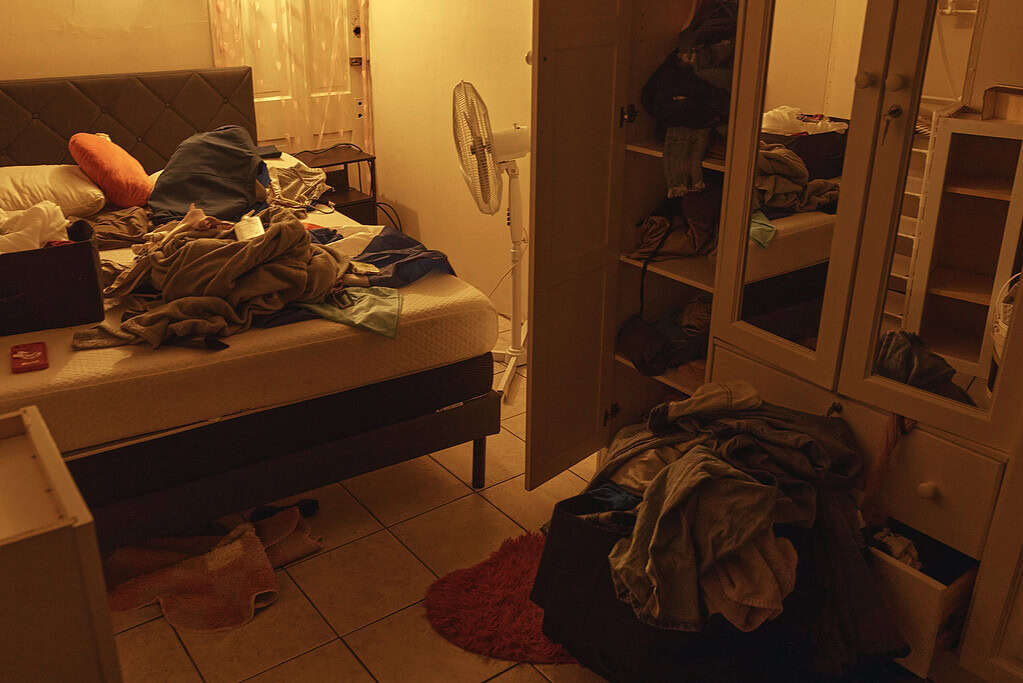
Aracena moved back in with her parents after her husband was detained. She returned to the apartment on Market Street and picked through some of her belongings, feeling nostalgic when she came across her wedding dress, which she held for a moment. When she stepped back outside, she looked at the spot where Carlos had been taken.
She marks the weeks now by the rhythm of court dates, phone calls, and whatever other updates manage to reach her. She holds on to the hope that she and her husband will be able to stay and build a life and a family together. She remembers what her husband told her on the day they took him.
“Don’t worry. I haven’t done anything bad.”
It was the first message he managed to send her, and it is the one she returns to each time she tries to imagine what might come next.
If this reporting helped you understand something important about New Jersey, consider supporting it.
The Jersey Vindicator is an independent, nonprofit newsroom focused on accountability and transparency. Our reporting is funded by readers — not corporations, political insiders, or big advertisers.
Reader support makes this work possible — and helps ensure it continues.


Krystal Knapp is the founder of The Jersey Vindicator and the hyperlocal news website Planet Princeton. Previously she was a reporter at The Trenton Times for a decade.