


Five minutes with Robert Kaplow: The 50-year journey behind “Blue Moon”
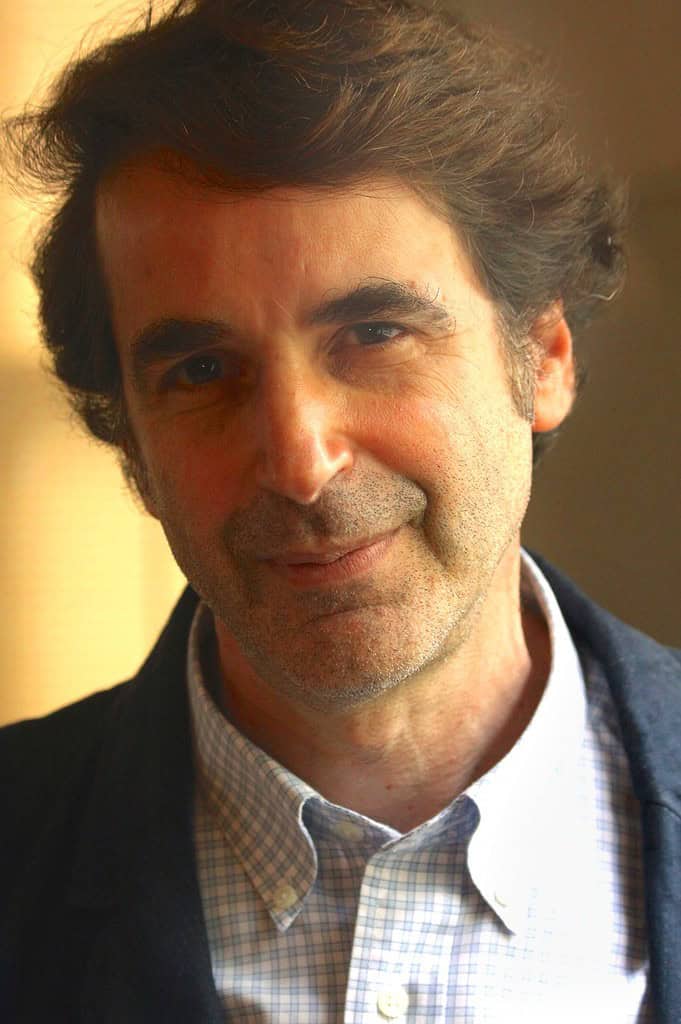
On a visit to a New York City library, Robert Kaplow hit upon an idea for a screenplay about a relationship gone bad. Some 50 years later, the script he eventually wrote has been nominated for an Academy Award. Kaplow, 72, a retired English teacher who lives in Metuchen, talks about the long gestation and unexpected success of “Blue Moon,” Richard Linklater’s film about the last days of lyricist Lorenz Hart and his break from composer Richard Rodgers.
Hart died in 1943 after a long struggle with alcohol and depression, just as Rodgers’ career was taking off with a new writing partner, Oscar Hammerstein.
Why do you think a relatively quiet, literary film like “Blue Moon” appeals to movie audiences today?
I continue to be astonished that people are finding themselves in this small, kind of modest film, about a largely forgotten figure. They find their way into it from different portals. We see Lorenz Hart falling apart in front of our eyes, and he’s falling apart in 90 minutes, in real time. Maybe it’s because the film conveys the feeling of being left behind, or the end of a long friendship. People are just drawn into it. It’s been very rewarding.
So what drew you to write about Lorenz Hart, a songwriter who died more than 80 years ago?
Well, I’ve been interested in songwriting for a long time. I thought in my early 20s I might be a songwriter. I had some ability in that area. One day I went to the Library for the Performing Arts in New York, which is up at Lincoln Center, and in the rare archives there, they had this long audio interview with Richard Rodgers. It must have been two or three hours, on reel-to-reel tape. I sat and I listened to the entire thing. There’s this moment where Rodgers talks about leaving Hart, and he does so in such a kind of cold and businesslike manner. It actually felt as if the coldness was a way to armor his heart against feeling too much. It really stayed with me: What was between the lines there? I think I knew, even then, that I was eventually going to write about it. But I didn’t write about it for another 30 years.
How did your script come to Richard Linklater?
Well, he had made a film from a novel I wrote called “Me and Orson Welles.” So I knew him. We would speak on the phone. I went to his openings in New York and things like that. And one day he just said to me, “What are you working on, Robert?” I told him I was trying to write this thing about the last days of Lorenz Hart, and he said, “Lorenz Hart! I’m really interested in that. Could I read it?”
“Blue Moon” takes place mostly in a single setting, in the course of a single night, and is, in large part, a monologue. How did you make that structure work as a movie?
I sent Linklater the first draft of the script a dozen years before the film actually was made. It’s the story of the opening night of Oklahoma!, and it all takes place in a bar. That was always there. But that first draft was much longer, more discursive, more characters. Every year, for a dozen years, Ethan Hawke, Richard and I would just meet and read it. I would sit there with a pen in my hand and listen to them. They helped me focus it, make it shorter. Linklater’s contribution was to get it to move more cinematically. Linklater would always say to me, “We’ve heard this already, Robert. The audience doesn’t need to hear this twice.” He just had a good sense of how to make the film as accessible to an audience as possible.
What else did Linklater bring to the original screenplay you wrote?
It was Richard’s idea to do that scene where Hart collapses in the beginning of the film, and then you hear what’s supposed to sound like an obituary from WQXR. That was Richard’s idea, too, and I think he was right. His assumption was that a lot of the audience will have no idea who Lorenz Hart is. So this was a way, in 30 or 40 seconds, of doing the exposition, telling the audience who he is, how old he is when he dies, and to give them, you know, a dozen of the hit songs that someone in the audience would say, “Yeah, I’ve heard ‘My Funny Valentine,’ I’ve heard ‘Blue Moon.'” Then you can get to that explosive evening.
How did Hawke get involved in the project early on, and how does a lanky actor like that come to play a bald, German-Jewish lyricist who was barely 5 feet tall?
Richard just showed Hawke the script and that was it. Hawke has said many times publicly that there’s no other director in the world that would have considered him for this part other than Richard Linklater. You know, Hawke is too tall, he’s too good-looking. He’s got that certain masculine bravura thing about him. Somehow, Richard knew that you could take all that away and you’d still have a really interesting performance with Ethan Hawke.
What should people know about Ethan Hawke, from your experience working with him?
Extremely hardworking. Serious. Committed. Generous, and inventive. They filmed this movie and built the set of Sardi’s at Ardmore Studios in Ireland. They rehearsed for three weeks before the cameras rolled, and I was there for two of those weeks. Every day, during lunch, Ethan would walk in and say to me, “Listen, this might be the worst idea you’ve ever heard, but what about ….” He was inventing all the time. He brought his theater sense to it too. You know, there’s a 14-minute scene in the coat room near the end of the movie. It’s a two-person scene. Ethan came in one day and said, “I think we should stage this scene like a little play. If you want an audience to pay attention for 14 minutes, the scene has to dramatically move.”
When you conceived of this screenplay as a young man, you were struck by the coldness of Richard Rodgers to his old songwriting partner. But in the film that relationship seems much more complex.
There’s a critical scene between Rodgers and Hart during the opening night afterparty. Rodgers just had a huge success with “Oklahoma!” and was on the cusp of his run with a new partner, Oscar Hammerstein. It’s a tense scene, but it’s a love scene too. These guys love each other. They need each other. But they’re completely exasperated by each other. Rodgers sees Hart self-destructing, and you get the sense he’s trying to save him from himself. Of course, it doesn’t work out.
So you were an English teacher?
I taught AP English, creative writing, and film studies at Summit High School. The film class was kind of my own invention. The classes caught on. I think I brought to the classroom the sense that not only was I a teacher, but I was a writer. That brought students to the class. I think they thought, “OK, this guy can speak about creative writing because he’s invested in it, and he has worked in that craft.” That gave a certain legitimacy to what I was teaching.
How are you taking the fact that you’re now an Oscar nominee and a celebrity of sorts?
Well, I’ve heard from people I haven’t heard from in 40 years. I go into local restaurants and the owner gives me a free dinner. I really didn’t realize how much the public pays attention. I think, for a lot of people, winning the Academy Awards is like you’ve won a Pulitzer Prize or something. I mean, it’s surprising, it’s delightful, it’s rewarding, and unexpected. You know, I thought it was a well-written screenplay, but I didn’t know people would vote for it as best original screenplay of the year. I think the Academy considered 350 films that were submitted and five of them got nominated. I was just astounded.
Other than “Blue Moon,” do you have any favorite films from last year?
“There’s a little film I liked called ‘Train Dreams.’ It’s a heart in grief, a man struggling to survive his own grief, sort of like Lorenz Hart, and I think in that sense the films are very similar. Both films allow an audience to stay with an injured character. They both believe the audience will be deeply enough engaged to care.”
Do you think Hollywood is ready for more films like “Blue Moon”?
“I don’t know. I don’t know enough about Hollywood to answer that question. What’s heartening is that a film like this, a very literary film, a very word-driven film, people paid attention to it and nominated it for an Academy Award. You just think of the world we live in, where these kind of big, loud movies seem to dominate, and it’s rewarding to think there’s still room for this kind of a film. I hoped this movie would lead people to just discover Lorenz Hart. I think people know those songs, like ‘My Funny Valentine,’ but they have no idea who wrote them. I think he’s a great talent, and to make people notice him and pay some attention and some tribute to him, is rewarding.”

Jeff Pillets is a freelance journalist whose stories have been featured by ProPublica, New Jersey Spotlight News, WNYC-New York Public Radio and The Record. He was named a Pulitzer Prize finalist in 2008 for stories on waste and abuse in New Jersey state government. Contact jeffpillets AT icloud.com.