



Watchdogs urge demolition of New Jersey’s oldest state prison buildings
Report exposes “antiquated and inhumane” conditions at a section of the prison that was built in the 19th century
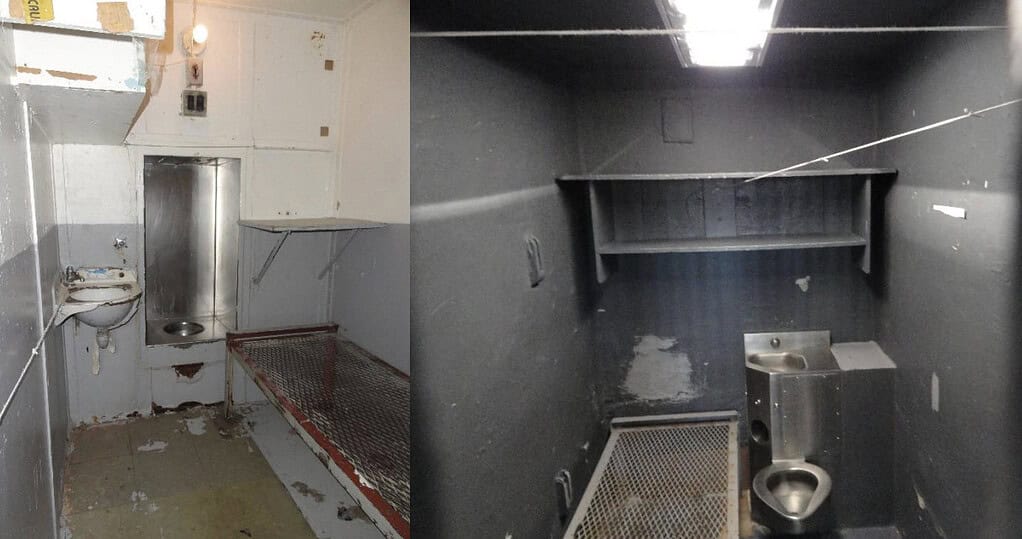
State watchdogs say New Jersey should demolish and rebuild a decaying wing of its oldest prison where shockingly small cells, exposed toilets, and stifling summer heat have made life miserable for hundreds of inmates.
A 12-page report written by inspectors from the Office of the Corrections Ombudsperson and released last month details squalid conditions in the Trenton prison’s West Compound, parts of which were built 25 years before the Civil War.
The ombudsperson’s office recommended that the state shutter the West Compound, considered America’s oldest functioning prison, and replace it with modern housing units.
“The buildings in the West Compound were constructed nearly 200 years ago and have been called antiquated and inhumane by New Jersey correctional leaders, policymakers, and subject matter experts for at least the last 100 years,” inspectors wrote. “Lawmakers and the Department of Corrections should prioritize and fund the demolition and replacement of the West Compound with modern correctional housing units that better meet the needs of the department and the incarcerated population.”
The watchdogs did not fault the prison staff for these shortcomings.
“New Jersey State Prison is well run by professional staff who have gone to great lengths to make the West Compound safe and livable,” the report said. Inspectors added that the staff had shown “extraordinary efforts.”
However, the structural issues, which have cost Garden State taxpayers hundreds of millions of dollars for maintenance and repairs over the years, are too extensive to overcome.
Despite this, it is still unclear what the state Department of Corrections plans to do.
An agency spokesperson declined to answer The Jersey Vindicator’s questions about the West Compound’s future. Instead, the department sent a statement saying it “remains committed to new construction and replacement of aging units, while recognizing budget constraints, potential historical significance and that the expense of demolition and rebuilding on the same site may be unnecessary.”
“The NJDOC remains committed to continuing to maintain and enhance infrastructure across all facilities,” the spokesperson said.

A troubled history
New Jersey State Prison consists of three sections: the North, South, and West compounds.
The first two sections were built in the 1980s and avoid many of the West Compound’s problems because of their modern design and temperature controls, according to the report.
The West Compound is a different story. Inspectors visited in October 2024 and over the next six months found more than 600 people living in cells so narrow that a man can stretch his arms and touch both walls.
The oldest part of the West Compound was built in 1836, and other sections were added between 1861 and 1905, making even the newest section 120 years old.
More than two-thirds of those incarcerated at New Jersey State Prison have life sentences or will not be eligible for release until at least age 70, the report said.
This means hundreds of people will spend years living in rooms that range from 35 to 45 square feet, not counting the space taken up by their 13-square-foot bed.
Others confined to the compound’s disciplinary section live in rooms just 4 feet wide and 7 feet deep, for a total of 28 square feet, not including their beds.
These dimensions are significantly less than what state code requires of county jails, and the report called them “shockingly small.”
“People live in this maximum-security facility, often for decades, with restricted movement and few programming options, even when they have … clean disciplinary records,” the report said.
It is not clear how much time the inmates are confined to the cells since the prison does not record that information, according to the report.
They are allowed out to use pay kiosks, the outdoor prison yard, or an indoor gym several times a week. They also attend educational, religious, or rehabilitative programs.
Inspectors found several other problems during their visits, including toilets built into cell walls that offer no privacy, faucets that do not provide hot water, open showers that rob inmates of modesty, no day rooms or recreation spaces, and housing units that reach dangerously high temperatures in summer.
“Officers reported large portions of the population folding their beds against the wall and sleeping on the floor to stay cool at night,” according to the report.
The ancient toilets, some of which were simply mounted in the bottom of cubbyholes, directly face the cell door’s iron bars, meaning anyone walking by can see someone using them.
The same goes for the shower room, which uses makeshift dividers to offer inmates some privacy as they bathe.
Photos show that the rudimentary dividers do little to provide modesty. The high ceilings also let inmates housed on upper floors look directly into the shower area.
“The staff reported that people shower in their underwear for privacy,” according to the report.
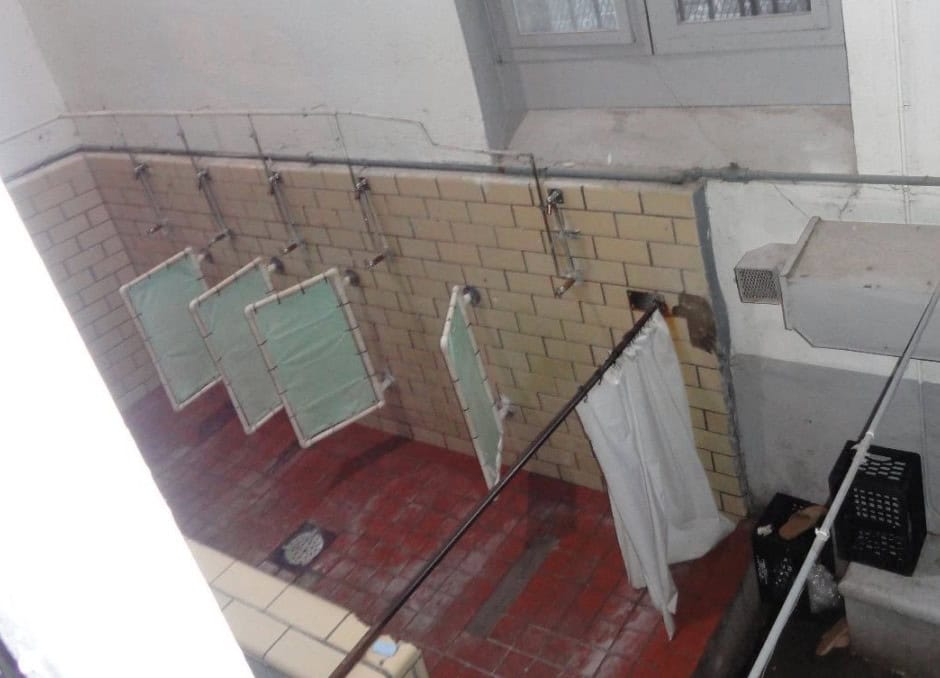
the Corrections Ombudsperson.
Future recommendations
Correctional leaders, policymakers, and advisers first called for the compound’s demolition and replacement in 1918 after a state commission described the facility as “wholly unsuited for the present needs either of the inmate or the officers.” The same report said it was “antiquated and inadequate … much too small for decent living.”
Thirty-four years later, following a riot and public hearings, another state-appointed committee called the prison “one of the most archaic in the United States” and said another should be built in its place.
The Historic American Buildings Survey photographed and documented the prison in the 1980s because it was expected to be demolished.
In 2011, the Department of Corrections requested state funds to do the same job that had been discussed for decades, citing “antiquated housing units” and a class-action lawsuit over living conditions in the failing facility.
But nothing changed.
The ombudsperson’s office has again recommended that state officials close the West Compound and build a new complex with modern housing units that better serve the incarcerated population.
In the short term, the office recommended other stopgap measures, such as transferring people from the West Compound to other facilities, tracking out-of-cell time for the general population, and investigating how to make the showers more private.
The Ombudsperson’s office also said lawmakers should adopt standards for humane prison conditions.

Steve Janoski is an award-winning investigative journalist with nearly two decades of experience covering criminal justice, policing, courts, government, and politics. His reporting has exposed corruption, government malfeasance, and police misconduct. His work has appeared in the New York Post, USA Today, The Associated Press, The Record, and the Asbury Park Press. At The Jersey Vindicator, he covers criminal justice. Reach Steve at steve AT jerseyvindicator.org.