


In mayoral debate, McGreevey and Solomon clash over who can make Jersey City affordable
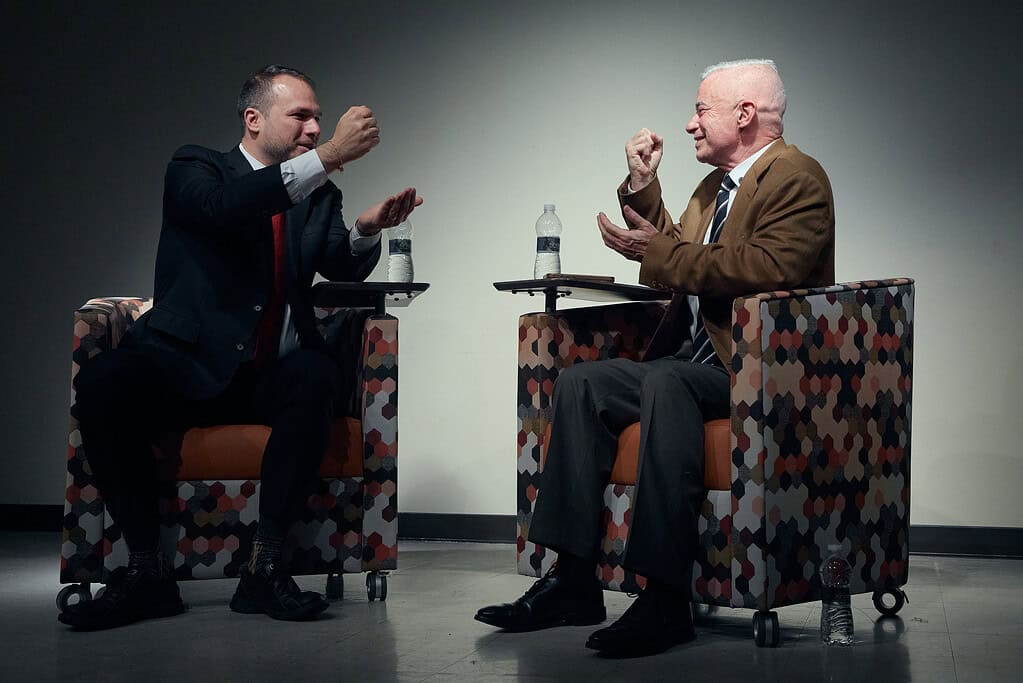
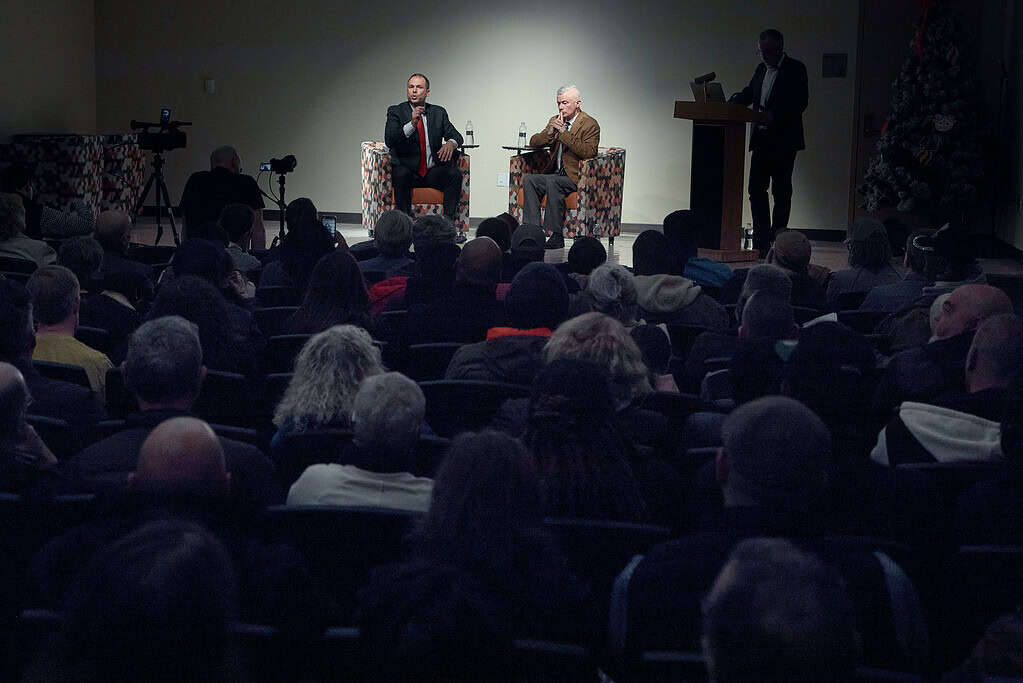
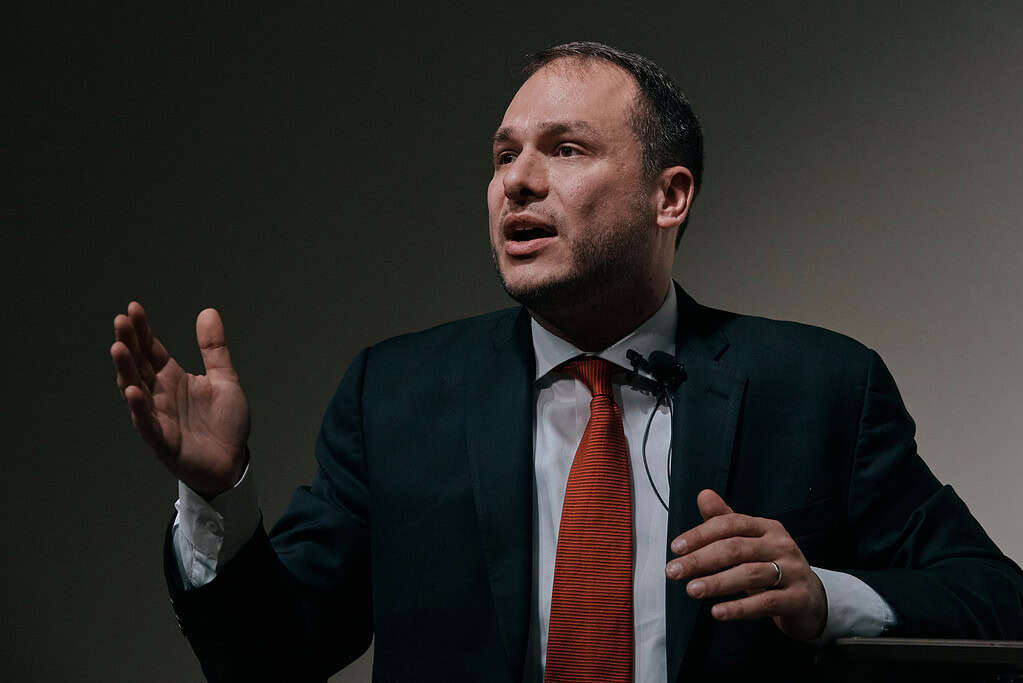
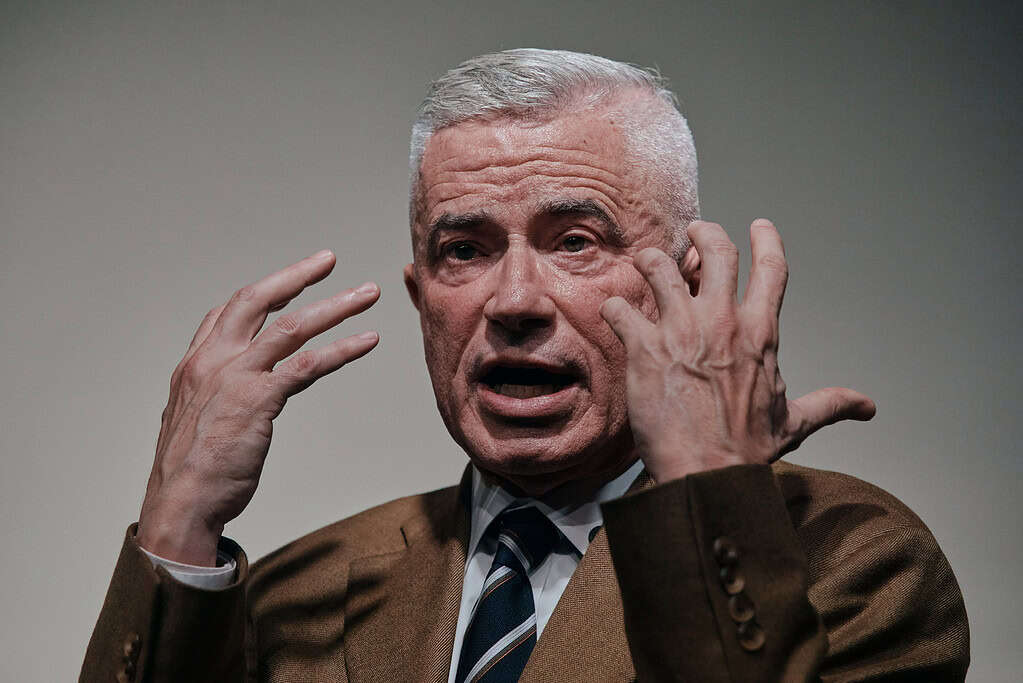
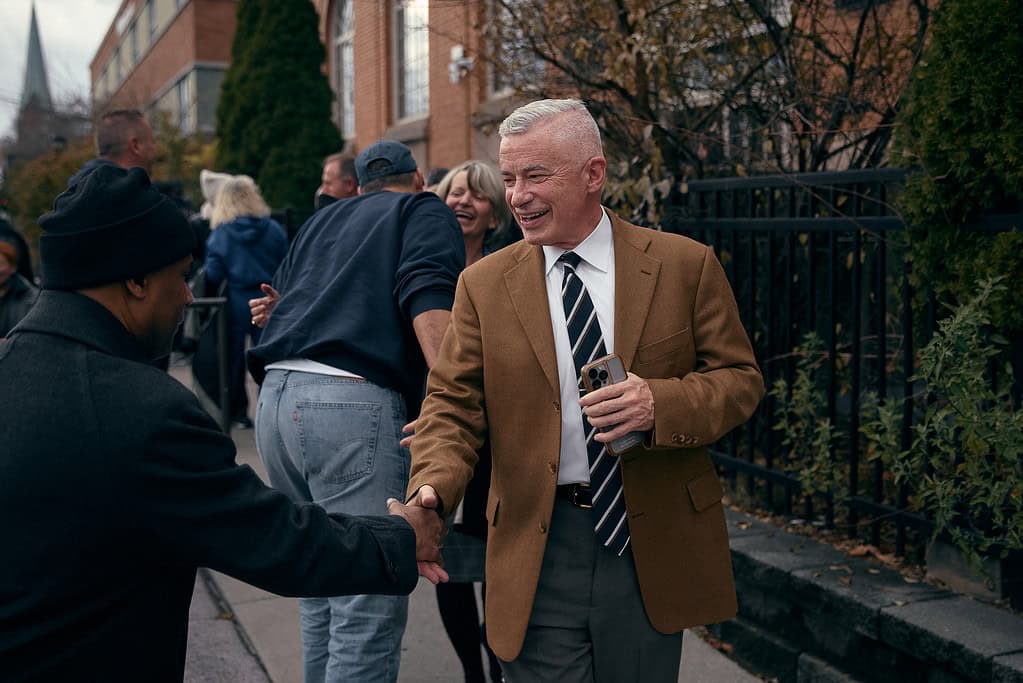
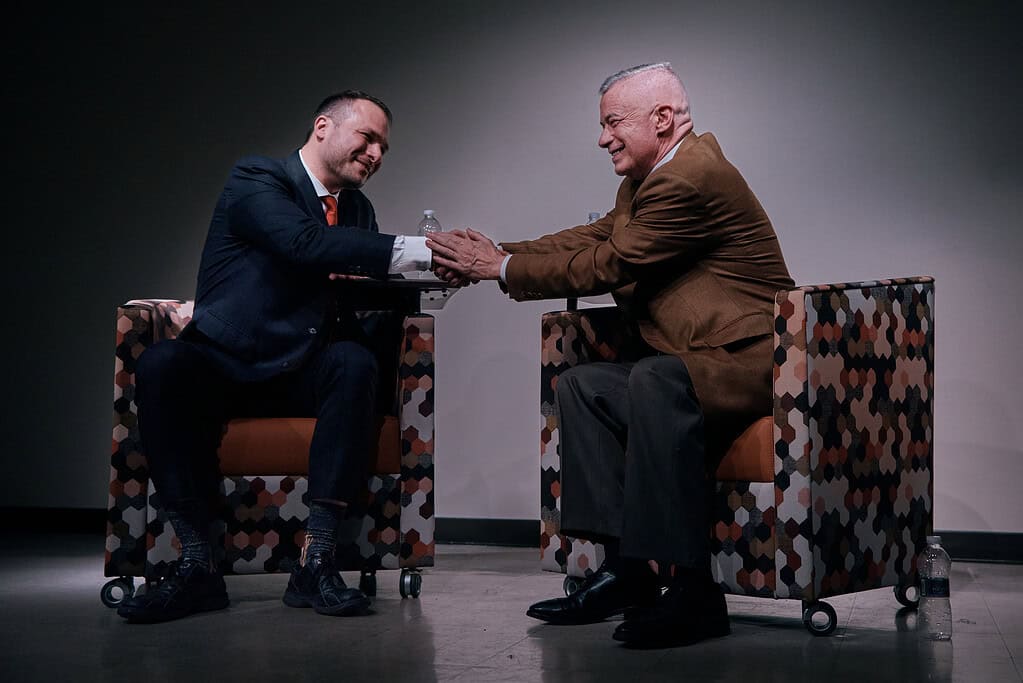
In a debate on Nov. 22, former Gov. Jim McGreevey and Jersey City Councilman James Solomon sparred over who can make the city more affordable and safe without breaking the city’s budget, and who voters should trust to do it.
The two candidates, who face each other in a Dec. 2 runoff to replace outgoing Mayor Steven Fulop, repeatedly returned to the same themes: rising property taxes, soaring rents, public safety and whether their rival’s promises add up
The forum, held at the Earl Morgan branch of the Jersey City Free Public Library and co-sponsored by neighborhood group I Love Greenville and the Port Liberte Civic Association, drew residents from across the south side who often feel left out of the downtown development boom.
Don’t miss the NJ stories that matter. Sign up for our free newsletter →
Affordability at the center
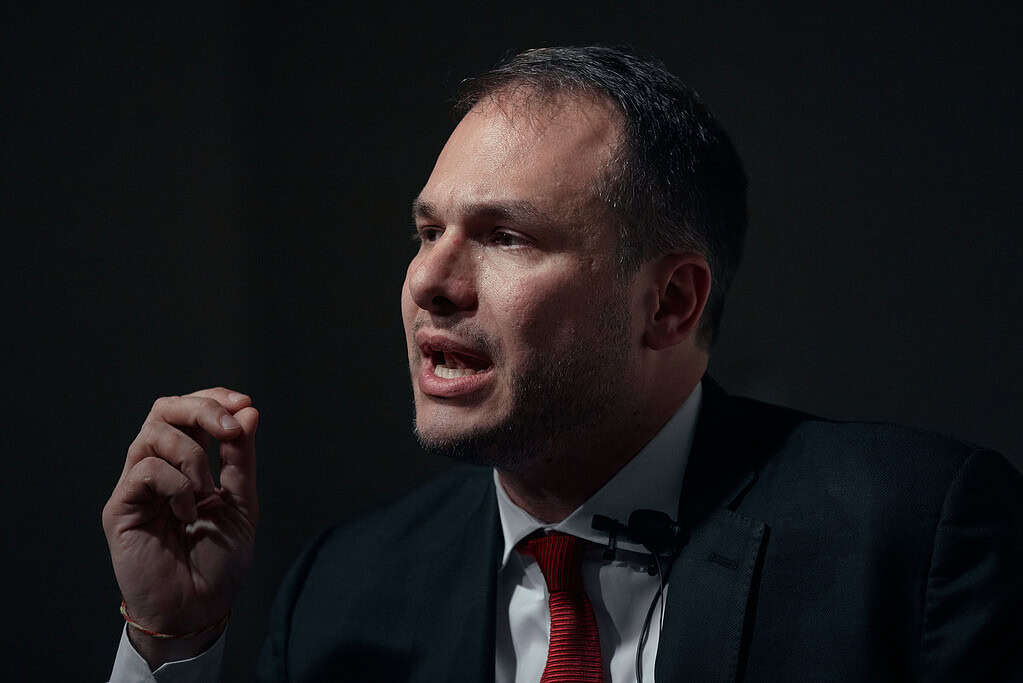
Starting with his opening statement, McGreevey cast Solomon’s housing and social policy agenda as unrealistic and fiscally dangerous.
“What I contend is these ideas, while well-meaning, are risky, expensive, and would have a staggering impact on our property taxes and on rents,” McGreevey said, arguing that Solomon’s proposal to require some new units to rent for $1,000 a month or less would require “a huge subsidy on the backs of the property taxpayer.”
Citing conversations with construction managers, McGreevey said building 5,000 affordable units under that model could add “almost $3 billion” in debt once land and construction costs are factored in. He also attacked a running mate’s call for universal child care from birth to age 5, pegging the cost at about $342 million a year.
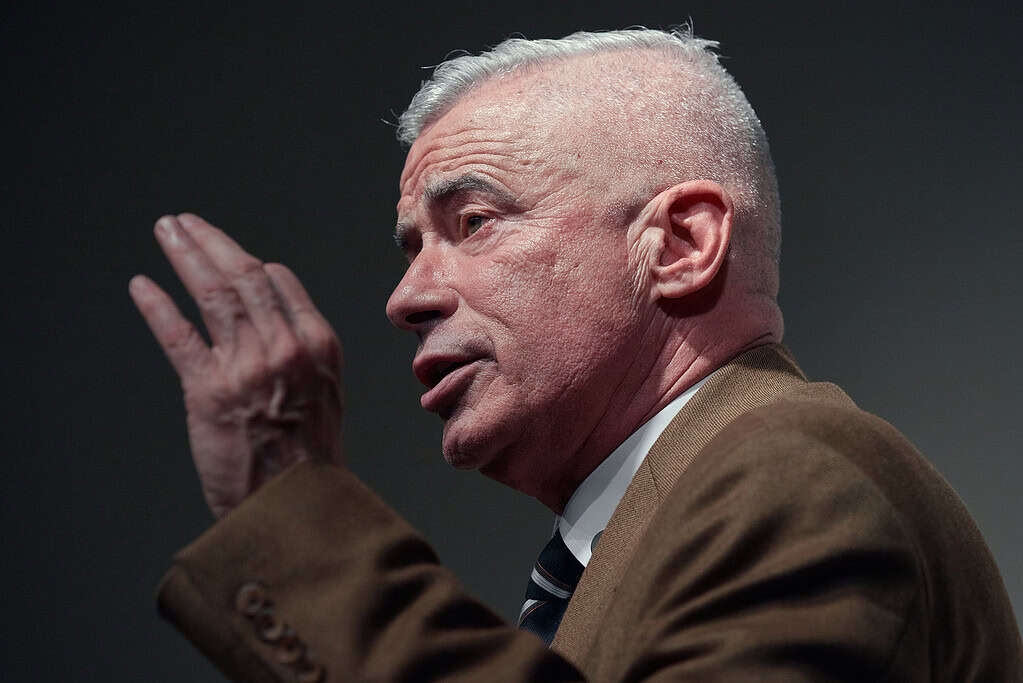
Solomon, a two-term Ward E councilman who has made affordability the core of his campaign, countered that the former governor was focusing on what Jersey City “can’t do” rather than what is already being done.
“The thing I hear the most is someone saying to me, the next rent increase, the next property tax increase is going to force me out of the city that I love,” Solomon said. “We are going to demand that developers who have taken so much from us start to give back.”
Solomon said he would require large developments to include 20 percent affordable housing, with some apartments renting at $1,000 a month or less, and would cap rent increases to keep existing tenants in place. He pointed to projects like Bayfront and 72 Montgomery as proof that below-market rents can be financed when the city is tough in negotiations with developers.
McGreevey said he also supports a 20 percent affordable requirement but warned that “you cannot engage in risky programming that is unproven.” He argued the better path is to work with churches, synagogues, and mosques to build on their land and “upzone” faith-owned properties so they can finance new affordable units without heavy city borrowing.
Solomon used McGreevey’s record against him, citing a 2000s-era state report that showed Woodbridge, where McGreevey was mayor, had a court-ordered obligation to build more than 1,300 affordable units but had “produced exactly zero.” McGreevey said that at the time, “everything in Woodbridge was affordable” and called the comparison to Jersey City “disingenuous.”
This reporting is free because readers make it possible. Join them. →
Crime and policing fault lines
Public safety offered one of the sharpest contrasts.
Solomon promised “hundreds of police officers” walking beats and pledged to publish crime statistics by precinct at least monthly. But he said he would end the city’s “fixed post” system, arguing that officers assigned to stand on corners “make it feel like a police state” and they cannot respond quickly to crimes nearby.
“We have not met the standard that every person deserves to feel safe in Jersey City,” he said, adding that his plan also includes funding “violence interrupters” and 1,000 summer jobs for youth to address the roots of crime.
McGreevey accused Solomon of suggesting in the past that Jersey City’s police force should be half its current size and said the city needs to “ramp up our police department to a 1,000-person police force.”
“The reality is this: robberies are up 32 percent, burglaries are up 65 percent, sexual assaults, rapes are up 95 percent,” McGreevey said, arguing for more officers, a formal CompStat system and the return of motorcycle patrols to crack down on illegal dirt bikes and e-bikes.
Solomon called the characterization that he wants to cut the police force dishonest and said he has “always supported our police force,” noting that he has voted to add “hundreds of new officers” to the department over eight years on the council.
A looming budget hole
Both men acknowledged that whoever wins will walk into City Hall facing a sizable budget shortfall, though they differ on the scale and the cure.
McGreevey said he believes the city is looking at “an immediate shortfall” of at least $150 million. If nothing is done, he warned, “the resultant increase in property taxes would be upwards of 30 percent on the municipal portion” of the bill.
He promised to implement zero-based budgeting — forcing departments to justify every dollar rather than building on last year’s spending — and to order forensic and operational audits to root out “duplication of services all throughout Jersey City.” He also argued the city must stop extending tax abatements to developers that he said shift costs onto residents.
Solomon did not dispute that a major gap looms, saying the numbers are “stark” even if the final figure varies. He pledged that “in the next four years, we will have stable property taxes,” and said his first step would be to “audit the big developers and big corporations who are not paying what they owe.”
He cited his work on the council to audit businesses for compliance with the city’s payroll tax, saying that review showed roughly 90 percent were not paying, and that his efforts resulted in more than $40 million in additional revenue for the Jersey City Public Schools.
Solomon said he would also consolidate overlapping agencies, starting by eliminating one of the city’s two economic development entities, and bring in new leadership in the budget office.
McGreevey agreed that some redevelopment agencies should go, but repeatedly pressed Solomon on how he would pay for expanded senior services, recreation centers, and stormwater projects.
“Every time James has an idea, realize ‘cha-ching’ — there’s a cost that’s going to be borne by property taxpayers,” McGreevey said.
Greenville’s long-standing grievances
Greenville residents pressed the candidates on longtime neighborhood complaints: trash-strewn streets, vacant storefronts, uneven park investments, and a lack of year-round recreation space for youth.
Solomon promised to fire what he called a “failing” trash-hauling contractor and to install a City Hall “city stat” system to track and publicly measure performance across departments, from pothole repairs to code enforcement. He said the city’s current quality-of-life problems — uncollected garbage, booming car stereos, dirt bikes and people sleeping in public spaces — are symptoms of a government that has “too often served downtown first.”

McGreevey said that under his tenure, a “quality of life is a mess” would not be acceptable. He proposed pulling all code and enforcement complaints into the mayor’s office, tracking them on a centralized spreadsheet, and requiring direct follow-up by the business administrator and mayor. Leaving complaints inside siloed departments, he argued, means “the individuals most comfortable with the status quo aren’t going to do a darn thing.”
Both candidates said they would break ground on a long-promised recreation center in Greenville during their first term, with Solomon pointing to $1 million already secured for a Bayside Park facility and McGreevey saying he would build four centers citywide within four years, citing his record of building a community center while he was the mayor of Woodbridge.
On commercial blight, Solomon backed a vacancy tax on landlords who keep storefronts empty “while still benefiting financially,” saying big property owners have “controlled the political system for the last 12 years.” McGreevey said he would tap state redevelopment funds to help small businesses improve their façades and access capital, and would “twin” major companies doing business with the city with local, minority- and women-owned businesses.
Hospitals, parks, and the waterfront
The candidates also sparred over Christ Hospital, the Heights facility that has been the subject of redevelopment plans, and over how to handle the costly public walkway that runs through the gated Port Liberte community.
Solomon pledged to keep a full-service hospital or equivalent facility on the Christ Hospital site and blasted the owners for seeking to replace it with 2,200 “luxury-only” units. He said that when a landowner connected to the hospital donated $35,000 to McGreevey’s campaign, it showed the stakes of campaign finance in land-use decisions.
McGreevey said the city should rezone the property for hospital and healthcare use only, then seek proposals from major health systems like Columbia or Cornell, with the city helping finance construction.
On Port Liberte’s publicly accessible waterfront walkway, both men said they would seek state environmental funds to help cover maintenance so the cost does not fall solely on condo owners or the city budget. Solomon opposed the city taking over full responsibility and suggested a special assessment so all properties in the enclave contribute. McGreevey said Liberty State Park is ultimately a state park and argued that “the state of New Jersey realistically should assume that cost.”
Past and the future
McGreevey, 68, is a former governor seeking a political comeback two decades after resigning amid scandal, who now runs a reentry nonprofit; Solomon, in his 30s, is a progressive downtown councilman and cancer survivor promising an anti-corruption, pro-renter City Hall.
McGreevey leaned heavily on his experience in state and local government, saying Jersey City needs “a steady hand of leadership” to navigate rising debt, aging sewers, and tension over development.
Solomon cast himself as the candidate of the future.
“What we’re going to do is get tough on developers,” he said in his closing, promising to cap rent hikes, enforce rent control, and staff City Hall with people “rooted in all six wards.” “If you want someone who says you can’t, vote for the governor. If you want someone who says you can, vote for me.”
McGreevey, in turn, warned that promising $1,000 rents, universal child care, and expanded services without new taxes would “bankrupt the city.”
“This city will be a ghost town,” he said. “All of these promises have a financial cost.”
Debate transcript
Opening statements
Jim McGreevey: Thank you. Hello, and thank you very much, everybody. Thank you, James, for being here. This is an important election, and for me, I think it’s a pivotal election in terms of Jersey City and where we are. You know, what we recognize is that while James has been in office for the past eight years, our property tax increases have been exorbitant. In fact, the property tax increases were the highest in the state of New Jersey. In addition to that, rent increases were among the highest in the nation.
And what I contend is why this election is so important is that we need a steady hand of leadership guiding Jersey City. Respectfully, I think James’ proposals are risky and unproven. The idea of having $1,000-a-month rents would require a huge subsidy on behalf of all of Jersey City in order to appropriate the necessary dollars to leverage that $1,000-a-month rent. According to our calculations, it costs upwards of $550,000 to construct a unit, and upwards of a half a billion dollars to purchase the land.
So hypothetically, if you were going to design 5,000 units at $1,000 a month, that would cost a staggering almost $3 billion on the backs of the property taxpayers. In addition, another one of James’s council candidates’ suggestions was to have full childcare from birth to five years of age. That would cost $342 million.
So what I contend is these ideas, while well-meaning, are risky, are expensive, and would have a staggering impact on our property taxes and on rents. So what I consider is that experience matters, and I’ve had the privilege of serving as mayor, of having the privilege of serving in government, and to level out the cost of debt service. And secondly, in addition to property taxes, is policing. While James has been in office, he again and again and again attempted to cut public safety. I believe we need to support it in the face of increasing crime rates.
James Solomon: All right. Thank you, Governor. Thank you, Aaron. Thank you. I love Greenville and Port Liberte, and thank all of you for being out here on a Saturday morning. You’re spending your time thinking about how to make our city a better place.
For me, this election is about the future of Jersey City and not the past, and I am running because we desperately need a more affordable Jersey City. When I knock on doors, the thing I hear the most is someone saying to me, the next rent increase, the next property tax increase is going to force me out of the city that I love, and you need a mayor who is laser-focused each and every day on delivering an affordable Jersey City. And that’s what I will do.
We are going to demand that developers who have taken so much from us start to give back. And we’re going to demand that they put 20% affordable housing in their larger developments, including genuinely affordable rents at $1,000 a month and under. We’re going to cap rent increases, we are going to stabilize property taxes, and we are going to ensure families remain in Jersey City.
We’re going to do more than that too. Right now in Jersey City, there is less today for young people than there was 30 years ago. That is a travesty, and it ends when I am mayor. We’re going to create 1,000 new jobs. We are going to have the first free municipal rec center in Jersey City.
And what you’re going to see in this debate, I think, is a contrast – the contrast between optimism and a “can’t-do” attitude, a contrast between the future and the past. In the governor’s opening, he spent most of his time telling you what we can’t do. In my opening, I’m sharing with you my vision for a Jersey City that works for everyone, that works for my children who go to public school, that works for all of your children and families in Jersey City.
So I welcome this debate. I welcome the opportunity to share my positive vision for the future of Jersey City.
Moderator: The first question will be on public safety. Greenville residents consistently cite safety as a top concern. What is your plan to improve the safety in Greenville, and will you commit to publishing crime statistics on at least a monthly basis for every Jersey City police precinct?
James Solomon: Yes, I’m full committed to publishing our public safety statistics, and then our broader plan. Every person deserves to feel safe in Jersey City, and we have not met that standard yet. So what we are going to do is this:
First, hire hundreds of police officers — hire hundreds of police officers to make sure that our officers are out walking the beat in our streets with genuine community policing. We’re going to end the fixed posts that make it feel like a police state where the officers can’t respond to a crime that is happening a block away. We’re going to change the leadership of the department, and then we’re going to invest in the broader community, because we’re going to have support in a well-funded police force, but we’re also going to have support for our broader community.
So we’re going to fund the violence interrupters — the community trusted partners who can help stop violence before it happens. We’re going to fund, as I mentioned earlier, real investments in young people: 1,000 summer jobs, so we’re giving young people something to do.
When I was knocking on a door on Warner, a mother was saying, “Look, my high school student doesn’t have anything to do in the summer,” and it’s our job as city leaders to create those opportunities.
Jim McGreevey: I think this is a major difference between Councilman Solomon and myself. Councilman Solomon at one time made the quote that a city the size of Jersey City should have a police department half of the size. I believe it is critically important for the sake of community policing to ramp up our police department to a 1,000-person police force.
In addition to that, we have to have CompStat reporting. It’s essential. We have to know what statistics of what crimes in the streets and our neighborhoods are available to be published. Secondly, we need to bring back motorcycle patrols, which is so essential. We have e-bikes that are driving all across Jersey City, creating havoc. We need to bring back motorcycle patrols to assist the police to make sure those individuals, if they’re licensed and registered, are apprehended.
But we also need a police department that understands the importance of being vigorous and having a powerful community representation. You know, when James came into Greenville, he wore a flak jacket. My point here is, in terms of Greenville, is to be representative and be on the ground.
James Solomon: You know, look, it’s just unfortunate that the former governor is lying to you about multiple things in his desperate attempt to have political relevancy after his campaign has foundered. But here’s the truth: I have always supported our police force. I’ve been on the council for eight years. I have voted to add hundreds of new officers in my time on the council.
And what he is referencing, let’s be very clear: I was on a police ride-along where you were required to wear flak jackets, and the fact that he’s going to that level of dishonesty is very unfortunate. But I’m going to remain positive and focus on what I can do to make your life better.
Jim McGreevey: This is a matter of record. This is not a matter of opinion. And just look at Councilman Solomon’s past quotes. Look through his votes on the council again and again, along with Councilman Lavarro, his attempts to reduce the size of the police department. The reality is this: robberies are up 32%, burglaries are up 65%, sexual assaults, rapes, are up 95%. We need to have, proactively, a police department that’s going to protect our homes, our safety, and our neighbors. We can’t politicize this.
Moderator: You have both made commitments to build more affordable housing, yet the numbers you have committed to will provide only a small portion of what’s needed. Why is your policy proposal the best? And would you be willing to create a local bonding mechanism to subsidize affordable housing? Would you commit to requiring 20% affordable housing in all developments above 50 units, and amending the existing redevelopment plans to require that? Got that? Yes?
Jim McGreevey: I think there’s unanimity between James and I on the 20% affordable over market-rate. Clearly, the only exception would be if a developer is going to build a new school, build a recreational center, build senior citizen housing. We desperately need more affordable housing.
In addition to that, I think it’s critically important to work with our faith-based community where there are churches or synagogues or mosques, to understand they have available land, and to up-zone. It’s been done in Harlem at Abyssinian Baptist Church. It has been done in Nehemiah Homes in the Bronx. And that is to work cooperatively with our houses of worship to allow them to build up, and also, where there are distressed properties, allow them to be sold back into the community.
But the fundamental difference between James and me on this is that you cannot engage in risky programming that is unproven. The idea of providing for $1,000-a-month rent, where James, in fact, doubled down and went to $750-a-month rent, defies the cost. The burden would be upwards of $3 billion of increased debt, and that’s wrong.
James Solomon: So what I’m committed to is building more affordable housing. I don’t take a single dime of money from real estate developers. Don’t take a dime. The former governor has taken a million dollars in donations from the biggest developers in Jersey City.
Now, we are going to require that they build 20% affordable housing with those genuinely affordable rents, at $1,000 a month and under — $750 a month and under. The governor says it can’t be done. Not only can it be done, it is being done now in Jersey City, in places like 72 Montgomery and Bayfront. But we are going to expand upon that, because we must. People are being pushed out of Jersey City each and every day, and you can’t say “affordable” and then make it $2,500-a-month rent, as the developers want you to do.
Let’s contrast our records further. When the former governor was the mayor of Woodbridge, he was required by state law to build 1,351 affordable units, and he built zero. And he built zero because he has no commitment to affordable housing. I, on the other hand, have beaten the real estate lobby time and again to deliver for the people of Jersey City.
Jim McGreevey: Yep. The simple reality is, James has been there for eight years, and none of this has been done. None of this has been done.
When you say, “Look at Woodbridge,” the reality is, all homes were affordable in Woodbridge. It’s not even comparable to Jersey City at that time in our history, because apartments were affordable, homes were affordable, and so it’s disingenuous. In fact, what I did is I fought back the developers because they wanted this Bruce Freud grant.
James Solomon: So it’s short, so it’s not just Woodbridge, right? As governor, the former governor weakened our landmark affordable housing law to make it easier for suburbs to keep people of color out of the suburbs.
Moderator: We want everyone to have an opportunity to hear the questions, okay? And the best way to do that is for us to be quiet. We really appreciate the audience. We appreciate the enthusiasm. This is very important stuff, guys, so we want to make sure they get through the questions. So please have respect for the venue and our candidates as well as the moderator. Thank you so much.
James Solomon: To just give an example of how to beat a real estate lobby: we banned AI algorithms that jack up the rent that the real estate lobby tried to protect. We were the first in the state to do it, and I’ll do more of that as mayor to keep you in your home.
Moderator: Greenville has seen uneven economic investment compared to other parts of Jersey City. Many commercial property owners in Jersey City keep storefronts vacant for long periods, contributing to blight while still benefiting financially. What is your plan for economic development in Greenville, and would you commit to implementing a vacancy tax on commercial property owners who refuse to rent their spaces?
James Solomon: Yeah, so great question. It’s clear, for 12 years, we had a mayor who did not serve the whole city, and that will change when I am mayor. I’m committed to 100 community meetings in my first year and addressing the core needs of every single community.
Now, I made a promise to revitalize the Ocean Avenue corridor as well as all of our historic commercial corridors in Jersey City and on the south side of Jersey City. We will implement a vacancy tax, because we cannot let big landlords, who have controlled the political system for the last 12 years, continue to put profit over people, and that is going to be the core of what my administration does.
Now, for small business, we have an economic development agency that, for years, didn’t do enough to support small businesses, to create access to capital — because you need that access to money to be able to open your small businesses, to be able to get loans at low interest rates and expand economic opportunity and jobs in every neighborhood in Jersey City.
Jim McGreevey: Those are nice words, but that’s not a plan. What we need is a tangible plan. And so what my commitment is to, obviously in this particular corridor, is to use CRDA monies. I did it as mayor of the Township of Woodbridge — to use Community Redevelopment monies to be able to provide those monies to small businesses, to help them improve their façade, to help them improve their financial plans.
What’s critically important is that we provide that financial means to provide a long-term plan for the Special Improvement District. Secondly, we have to improve access to capital. But that’s just not saying it. That’s also providing a fund, working with the utilities and working with the municipality to provide long-term low-interest loans to those businesses.
But in addition to that, we have to twin businesses. And what does that mean? That means working with major companies that are coming into Jersey City or that are in Jersey City, and twin them with local businesses. As a requirement to do business with Jersey City, we have to boost those businesses and require large companies to work in tandem with small businesses.
James Solomon: Yeah. So to give a specific example of how we’re going to create access to capital for small businesses: Jersey City has lots of deposits from big banks. We’re going to subject those banks to a test. If you are not investing in Jersey City, if you are not investing in minority-owned businesses, women-owned businesses, and businesses on the south side, you will no longer be able to put your deposits with the city of Jersey City.
That is a concrete example of how we’re going to go after the big banks and the big businesses who haven’t done enough to support people in Jersey City and force them to put more capital into every community in our city.
Jim McGreevey: No, I mean, I did it as governor. Basically what we did is, whether it’s on capital construction or small business, we twinned so we had opportunities for minority businesses to build. And what was critically important is so often small minority businesses or women-owned businesses didn’t have the insurance to compete in the marketplace, and so by twinning, by linking them, we would be able to provide an incentive.
And what we did is we literally awarded the larger business, if you will, a credit — higher points — for twinning with smaller minority- and women-owned businesses, to provide an incentive. It’s real.
Moderator: The next question is a two-part question, so bear with me here. You’re each going to have a minute to respond to your respective part. Governor McGreevey, you have said that you believe Jersey City is facing a deficit of $150 million, more or less. At the same time, you said that you’re not going to raise taxes in your first year in office. That means that you’re going to have to cut expenses or borrow money to balance the budget.
First, would you borrow money to balance the budget? And if not — and you said that you will bring in an accounting firm to advise you on this — can you tell the audience, without the accounting firm, right now, based on what you now know, what city expenses you would cut so you don’t have to raise taxes?
Jim McGreevey: Well, I actually think it’s worse than $150 million, but $150 million is the immediate shortfall. So if we do nothing in terms of Jersey City, the resultant increase in property taxes would be upwards of 30% on the municipal portion of the property tax bill. And that’s real. That’s $150 million.
And with all due respect to all of James’s great ideas, one of my great concerns is, how are you going to increase that indebtedness, which I believe is going to happen on the 1,000 units, etc. But what I would do is go back to zero-based budgeting. And this is something that’s critically important.
What happens in Jersey City, literally every single year, is that automatically the budget goes up and up and up and up. Zero-based budgeting says we start at a zero level and require that from the outset. In addition to that — and I think there’s unanimity from James and I — there’s duplication of services all throughout Jersey City. So having a forensic audit and an operational audit to limit those areas, say, on a redevelopment authority, to eliminate those areas where there’s duplication.
Moderator
Okay. When we come back, I’d love it, Governor, if you could maybe identify some of the places you might cut. Councilman Solomon, do you agree with Governor McGreevey’s estimate as to what the deficit might be? To the extent that there is a revenue shortfall, how do you plan to address it, and will you match Governor McGreevey’s pledge not to raise taxes?
James Solomon: Thank you. So the numbers are stark. Whether it’s 100 or 150, we have to get in there and look at every nook and cranny, but we are facing a major budget deficit in year one. And then our job is to have a four-year plan, ending the “kicking the can down the road” that we saw from the current mayor, and making sure that we stabilize property taxes.
So my firm commitment is, in the next four years, we will have stable property taxes. We will not have the giant increases that you have seen that have forced you out of your homes. And the first thing we’re gonna do is we’re gonna audit the big developers or the big corporations who are not paying what they owe.
I did this as a councilman — the job that the mayor should have been doing. We audited over 200 major contractors and found that 90% weren’t even paying the payroll tax. We got billion-dollar corporations to start paying and got over $40 million more dollars for our public schools because of my work. As mayor, we’re going to expand those audit efforts, audit every major tax break that has been given to a developer, and then we are going to cut a bit of waste. Just one example: we have two economic development agencies. We don’t need two. We’re going to cut the one that doesn’t help us.
Jim McGreevey: Councilman Solomon is right: cut another redevelopment agency. But what I also think is we have to cut the abatements. We have to cut redoing, re-upping the abatements that actually have a cost to Jersey City residents.
And in addition to this, what we need to do is we need to work cooperatively with the state and federal government. An example: half of our sewers and waterways in Jersey City are over 100 years of age. And when we increase demand by increasing upwards of 40% demand, you have to increase capacity. That cost is going to be upwards of $6.2 billion. You have to work with the state. And therefore, I think my relationship with government, state government, will bring those monies to Jersey City.
James Solomon: You know, firm commitment: no abatements for luxury-only housing got us into this mess. It cannot keep happening. Developers cannot keep running the city.
I voted against every luxury abatement brought before me on the council. I voted against the Pompidou — a $150 million giveaway to the Kushner family — and voted against the abatements downtown the other day. They didn’t meet the criteria of a strong policy and a strong deal for the people of Jersey City.
That is the first thing we’re going to do. We also need to change the person in the budget office and bring in new experts to help write our budget.
Moderator: Okay. Next, we move to a new set of questions which call for one-minute responses, no rebuttals. The first one goes to Councilman Solomon. Quality of life: many residents believe that Jersey City has a quality of life problem. In one study, the city ranked as one of the dirtiest in the country. People ride bicycles on the sidewalks. There are automobiles with blaring sound systems and extra-loud modified exhausts. There are unlicensed dirt bikes blasting through quiet neighborhoods. Unhoused people camp out in public spaces. There are ordinances currently on the books that address many of these problems, but they are rarely enforced.
Councilman Solomon, what is your plan to address these issues?
James Solomon: Yeah, the quality of life challenges are real, and you have my, again, commitment to solve these problems as mayor.
So start with this: the trash is absurd, right? Go to Union City — it’s clean. Hoboken — it’s clean. Bayonne — it’s clean. There’s no reason we can’t do that in Jersey City. So first, we’re gonna fire our failing trash contractor — a contractor that makes the street dirtier after they collect the trash. To me, they gave a donation to the former governor.
The next thing we’re going to do is we’re going to have a city-stat system where every department director is going to be held accountable on a daily basis for the work that they’re doing. Are they filling the potholes? Are they maintaining their costs? Are they doing the job your taxpayer dollars pay them to do? And we’re going to hold them accountable, because I am not part of the political machine, so I’m going to hire people who know how to do the job. I’m not going to hire cronies, and I’ve never done that.
My two chiefs of staff were students from NJCU. They started as interns, and they were hired because they were the best at the job, not because they knew the right person. And that’s what you’re going to get from me to improve quality of life.
Jim McGreevey: I think our quality of life is a mess. It’s a disaster. Streets are dirty. Streets are chaotic. People are concerned for their public safety. It hasn’t worked. With all due respect, James, you’ve been there for eight years.
What I did as mayor is I brought back insight into the mayor’s office. And so part of what you have to understand is that you have permitting and you have citation units all throughout municipal government. But what I did is I asked and I directed that when there’s a violation — a building violation, where there’s a tenant violation, where there’s a street violation, where there’s a health violation — that it be funneled into the mayor’s office.
And in the mayor’s office, we chronicled on an Excel spreadsheet what’s going right and what’s going wrong, so that we have follow-up, follow-up, follow-up, so both the business administrator and the mayor are following up to ensure that that particular problem is addressed. Simply relegating it to the department means that the individuals most comfortable with the status quo aren’t going to do a darn thing. What has to happen is to be the mayor who’s responsible.
Moderator: Okay. The next question is on the issue of displacement and goes to Governor McGreevey first.
Many residents feel Jersey City is overdeveloped, leading to overcrowded streets and tall buildings that change neighborhood character. While Greenville hasn’t seen much development, there is worry about potential displacement and loss of community identity. How will you, as mayor, focus on protecting the current residents of Greenville and ensuring development benefits them without displacing or replacing them?
Jim McGreevey: Yeah, I see that. I mean, the reality is the numbers are what the numbers are, and what we see is, in downtown, the displacement of the Latino community. In Greenville, where my family’s from — my mother was from Clerk Street; we were on Arlington Avenue — is the displacement of the African American community. And the numbers are the numbers.
And what particularly concerns me is, I happen to go to Christ the King Church, a gentleman who was 27 years in the Army said, “Jim, I’m going to be moving out of here. I’m going to be going back to South Carolina,” reversing the migration of my great-grandfather.
The reality is that people simply can’t afford to live in Jersey City, and when I look to downtown, the idea of that kind of development moving uptown, moving up on the hill, would have a devastating impact on our community. What I’ve said — and I’ve met with church leadership again and again — is we can work with our faith-based institutions. The single largest cost is the cost of land, and so I would work cooperatively with our houses of worship, as has been done in Harlem and has been done in the Bronx, to build affordable housing to keep folks in Jersey City.
James Solomon: Yes, this is the issue of the election. I knocked on a door at the Fairmount Hotel. A man in there said, “Look, I’m choosing between rent and food every day.” That is a choice that so many residents in our city are facing, and we need a mayor who’s focused on it every day. And that’s why my priority is affordable housing.
And the difference is we cannot let developers continue to run the show. The developers want to continue the luxury-only model. They want to bring that to Greenville, and under my watch, it will not happen. And that’s why we have this promise of $1,000-a-month rents in new affordable homes, because people can’t afford — you can’t afford a home that’s $2,500 a month. That’s not real affordability. And that’s why we’ve been crystal clear that we’re going to get tough on the developers, force them to build those genuinely affordable homes.
Now, if you’re in a home you can afford, we’re capping the rent increases. The 20 to 30% rent increases are going to end. Again, I don’t take money from the developers and corporate landlords who are responsible for the displacement in Jersey City.
Moderator: Okay, the next one is on food. Food insecurity remains a serious issue in the Greenville community, especially for seniors, where many residents rely on limited grocery options and food pantries. What steps will you take to improve access to affordable, nutritious food in Greenville?
James Solomon: Yeah, a couple of, I think, really important steps we have to take. First, we have to get the two food sources, grocery supermarkets, that we’re talking about over by 440 — so that’s the Target and the ShopRite. You have my promise that both of those will be open in four years to ensure that we have better access to food.
Then the second thing is we are going to fight the cuts from Washington that Donald Trump literally passed to take money away from people’s food and health care to put in the pockets of trillionaires like Elon Musk. And I’m a mayor; I can’t stop it, but I can help my Congresspeople. I can fight with every bone in my body to stop the disaster in Washington that is going to prevent people from literally eating.
And then we’re going to support the small bodegas, right? I’m proud to have the endorsement of HACA, which has a number of bodegas across Jersey City, and we’re going to support them to get more healthy, fresh food options in their stores to increase access to that food.
Jim McGreevey: Yeah, I mean, obviously we want Acme and we want ShopRite, and that’s critically important. But in addition to that, we also have to work cooperatively with our food bank and with the community food banks. And part of that means that we need a synchronized program so that we’re going to be able to provide food on a regular basis to our seniors and to communities that are in danger.
In addition to that is obviously working with SNAP to ensure people have access to food assistance, both not only at the federal level but on the state level, to make sure people have access to food. But the point in all of this, for me — and I’m going to go back for a second — is when James just doubled down in the last answer and talked about $1,000-a-month rents. I want Jersey City to understand that that is financially impossible.
We’ve talked to construction managers, we’ve talked to universities who claim that that would have a staggering impact of $600 million in debt and upwards of $2.95 billion on the backs of property taxpayers. Jersey City cannot afford risk.
Moderator: Okay, next is on the environment. Greenville has historically been burdened with higher levels of pollution and environmental hazards. What are you willing to commit to doing in your first term to improve the environment in Greenville?
Jim McGreevey: Well, environmental racism has been a long part of, tragically, parts of Jersey City for decades. And so the first thing that I would do is I would bring in DEP as well as EPA, but particularly DEP, to do an assessment on all industrial lands, and particularly commercial properties and residential properties. We need to have a baseline of what is needed to be done, to be required.
And then I would work cooperatively with the state to try to attract those state loans to begin the process of cleanup. In addition to that, we want to expand parks in Greenville, which is so critically important, as well as understanding the importance of the Underground Railroad and certain historical sites. So part of what I would do is work cooperatively with DEP, work cooperatively with the Secretary of State’s office, to bring in needed dollars.
We can’t put the burden on the backs of the property taxpayers. We have to put it on the backs of those individuals that dirtied the property, as well as work cooperatively with the state to attract state dollars to remediate some of this damage.
James Solomon: Some of the highest rates of asthma, not just in the state, but in the country, are right here, and that affects children’s lives from the beginning. So you have my firm commitment to do everything I can to address it. A couple of approaches:
First, I’m 100% opposed to the Turnpike expansion — they’re trying to widen it and make it four lanes — because that is going to put cars on our streets, and children are going to breathe the dirty air, the pollution that they bring.
Second, we’re going to vastly expand the number of trees we plant. We have to expand our tree canopy, because that actually takes pollutants out of the air. It creates cleaner air to breathe. Then we are going to expand green spaces and parks, because parks in Greenville have been neglected for too long.
Take Thomas McGovern Park in Country Village, right? For years, that park has just been neglected. They finally did a playground, and we are pushing forward now on both stormwater retention to address the flooding issues and repairs of the baseball field and the other areas to turn that into an open space that is both green and vibrant.
Moderator: Many seniors living in the Greenville community are disproportionately affected by the rapid changes happening throughout Jersey City. What is your plan to ensure that seniors are cared for and not forgotten, particularly regarding transportation, food access, healthcare access, aging in place, tax burdens, cost-of-living increases, and evolving technologies? Additionally, how will you ensure that seniors remain active, valued, and engaged members of the Jersey City community?
James Solomon: I do. Let me tell you about something that I did. Right when I first became a councilman, we had these big tax increases — the reval hit — and we went door to door to sign seniors up for the Senior Property Tax Freeze, the program at the state that’s now merged with the ANCHOR program.
This can provide thousands of dollars to keep a senior in their home. Lots of seniors didn’t know about it. We translated explanations into multiple languages — Spanish and Arabic — and went door to door and signed up seniors all across Jersey City. My favorite was the Torres family on Second Street. I got to know them really well. I know their granddaughter, who teaches just over here on Ocean Avenue, and it made a big difference to keep them in Jersey City.
Now we’re gonna expand that across the city. So we’re gonna go door to door to sign seniors up for that program, and then we’re gonna vastly expand our senior services. So all of the different things that you’re talking about — the access to technology, the ability to have healthcare access — we need an expanded senior program introduced…
Jim McGreevey: James just said, “I’m in Greenville, we’re going to address the flooding issues.” With what money? James just said, “We’re going to expand senior services.” With what money?
All of this — you know, discussing financial realities is sometimes awkward, but it’s necessary, particularly considering the property tax levy, considering the impact on rents. The reality is my approach is very different. On senior services, you have to ensure that our seniors are registered with Medicaid. We have to access, for those who need it, federal dollars.
In order to access federal dollars, somebody has to be registered for Medicaid. We can provide them diagnostic testing. We can provide them flu shots. We can provide them shingles shots, and we can provide them auditory and eyeglass assistance. But the point is this: you can’t place the entire burden of all the ills of Jersey City on the backs of the city or the property tax. That’s what’s happened for the past 12 years. None of us are going to be here if that’s our legacy. We need to make government work on the federal level and the state level to ameliorate property tax.
Moderator: Thank you. Okay, now we’re gonna move to a different set of questions, which call for a yes, no, or maybe answer, followed by a 30-second explanation.
Greenville youth have been underserved when it comes to year-round after-school and weekend recreation options. Will you commit to breaking ground on a year-round recreation center in Greenville in your first term?
Jim McGreevey: Yes. Not only will I break ground, I’ll build it within the first four years. And this isn’t speculation; I did this in Woodbridge. Go online, look at the Woodbridge Community Center. It has ice hockey, it has swimming, it has basketball, it has computers, it has dance. It’s part of a community center.
You know, when my father was growing up in Lafayette, he said, you know, he had the Police Athletic League, the CYO, recreation in schools. We have to redirect this. We have to work cooperatively with the schools. But I promise, I will build four recreation centers in the first four years in the four corners of this city.
James Solomon: So yes, I’m glad to hear the governor say yes to something, because we need to make sure… My firm commitment — I’m working with Councilwoman Ridley. She’s already secured the first million dollars for a rec center at Bayside Park. You have my firm commitment to break ground and build that rec center.
Because again, young people have less today than they did years ago. The CYO program is gone. My commitment is 1,000 new summer jobs for our youth, because we have to connect significantly more young people than we are today.
Moderator: The next one goes to Councilman Solomon. It’s on healthcare, again it’s a yes, no, or maybe response with 30 seconds.
With the recent closure of Christ Hospital, many Jersey City residents — especially in underserved communities like Greenville — now face significant gaps in access to emergency care and medical services. Will you commit to keeping Christ Hospital, or whatever they call it now, or a substantially equivalent facility open on that location on Palisade Avenue?
James Solomon: Yes, because the Heights deserves the same healthcare that every neighborhood in Jersey City should have access to, and the owners of that site have misled the community and have tried to basically demolish a hospital to build 2,200 luxury-only housing units. When I found that out, I called them out. I fought them.
But again, there is a difference here. They gave the former governor a $35,000 donation, which — he said he didn’t know that he received money from developers. So I can deliver a Jersey City that works for everyone.
Jim McGreevey: Quickly, James also took $50,000 from someone who voted on giving an insurance contract. So I… and to be fair, I returned that money.
Let me just say this: I don’t want to play the games. I want to talk about what needs to be done. What needs to be done is we need to delineate that land solely for hospital use. And so if you delineate that land, if you zone that respective land for hospital use, then you provide that you’ll do three things. One is for emergency services. Two, it’s for diagnostic services. And three could be for senior services — senior residential services, a continuum of care.
And then you distribute an RFP — ask Columbia, ask Cornell — and the City of Jersey City helps provide the capital construction.
Moderator
Okay, thank you. All right. I believe the next one goes to the governor. The question is on traffic. This is a really easy one, I think, for you guys. Will you commit to keeping MLK, Ocean, and Bergen as two-way streets?
Jim McGreevey: Yes.
James Solomon: Yes.
Moderator: Okay. And the next one goes to Councilman Solomon. The city-owned library buildings have critical life-safety issues. They are not ADA compliant, and some are in need of full HVAC replacements before warm weather next year. How will you address these critical, time-sensitive issues, and will you create a line in the city budget to fund library improvements?
James Solomon: Yeah, absolutely. It’s going to be done over the four years that I’m in office, to be clear. The city currently, under the current mayor, does not have an annual capital budgeting process. For the Miller Branch, which desperately needs the life, you know, the health and safety upgrades that you mentioned, Eric just hasn’t seen anything.
Now, there is a line item in the city budget — $16 million every year, roughly — for our libraries. We are going to make sure that there is a portion of that that is dedicated to critical capital needs, and we’re going to do that over the four years to tackle the needs of our library system.
Jim McGreevey: The reality is $16 million isn’t going to begin to address the library needs in Jersey City. It’s just not realistic. And so the first thing I would do is do an amortization — be able to evaluate all of the public buildings in Jersey City, so that’s libraries, public works facilities, every single building — and to do a safety assessment, and understand what we need to do to bring them up to code.
And then, in addition to that, I would work cooperatively with the State Economic Development Authority, with the Infrastructure Bank, to establish long-term low-interest loans, with a cost over time.
Moderator: Thank you, Governor.
Okay, next one goes to Governor McGreevey. It’s on Port Liberte. A public walkway passes through Port Liberte, placing a major economic burden on Port Liberte residents. Will you support the acquisition of the walkway by Jersey City in order to place on the city the cost of the walkway’s maintenance? Yes, no, or maybe?
Jim McGreevey: Maybe. I don’t want the city to assume that cost, but I think the state of New Jersey realistically should assume that cost, because ultimately Liberty State Park is a state park, and so we have to begin to evaluate, work cooperatively with Mikie Sherrill’s administration, the next DEP Commissioner.
But part of it is understanding, on both sides of the peninsula, that that should be a state park, and we should be able to provide state financing. So what I would argue to the state is that this is a continuity of the park, and we should be able to provide state financing.
James Solomon: I love my friends at Port Liberte, but my answer is no, and I’ve talked to you about this in the past. So we’re going to do two things. One is, I agree with the governor on getting the state and the DEP to invest funds in the maintenance of the walkway, and the second thing is looking at a special improvement assessment or district so that every property in Port Liberte is responsible for the maintenance of the walkway.
Because the two new properties — the one that’s built, The Pointe at Port Liberte, and the one that they’re planning, Pulte, or whatever they’re calling it — those ones are not contributing. And that is not fair, because it should be the whole community that is doing so.
Moderator: Let me ask another question on Port Liberte that somehow did not make it onto my document. But there is a new development, as you mentioned, that’s being considered. Would you consider a rewrite of the redevelopment plan to address the issues of infrastructure for that project?
James Solomon: 1,000%. And for folks who don’t know, that redevelopment plan was written about 40 years ago, and it is expired. So my view is they shouldn’t be allowed to be building what they’re proposing because it’s in an expired plan.
We wrote a letter to say that to our Planning Board, and we’re going to continue to stand with residents in Port Liberte, and then we’re gonna get into office and we’re gonna redo that plan to fit the current community needs. Right now the road in and out to Caven Point is a disaster, right? We have to have development that matches infrastructure, not development that is overwhelming infrastructure.
Jim McGreevey: The real problem is the hydrology. I mean, this will precipitate — this will exacerbate flooding substantially. And so both in terms of the design of the project and the mechanism by which you will pipe out sewer and water, it’s going to significantly exacerbate flooding in that area.
So I believe, as does James — that was four years ago — but I also believe this is very badly planned for the impact on Port Liberte. We’re going to make a bad situation precipitously worse. Common sense says no.
Moderator: Governor McGreevey, this regards endorsements. Both of you have received endorsements from former candidates for mayor and city council. Did you discuss giving city jobs to any of the people who endorsed you?
These next questions are directed to each of the candidates individually, which do not call for a response from the other candidate.
Councilman Solomon, one of your sustainability proposals is benchmarking all buildings over 25,000 square feet. Would you be asking owners to retrofit such buildings to become more sustainable after that benchmark?
James Solomon: So I don’t believe that there is a conflict between a sustainable future and an affordable future. And in fact, the only thing you have to do is deliver both. Climate change is a real threat, but rising costs and prices are forcing people out of the city every day.
So what our law calls for is simply a benchmark — for us to be able to assess how many emissions are coming from large residential buildings. And then once the benchmark is in place, then we determine our approach forward, and that will be done with rigorous analysis to make sure costs are not overwhelming.
The counterpoint, not on homeowners — and then it gets broadly into, I think, the core of why we need both a sustainable and an affordable future. We have a sustainability plan where the city is going to double the tree canopy so we’re absorbing more water. We’re going to repair the combined sewers that pollute our rivers, but we’re going to do so in ways that each and every day are sustainable to ensure that everyone can afford Jersey City.
Moderator: Governor, in your response to a Jersey City Times questionnaire, you said that you would not make your daily diary of appointments public. Councilman Solomon said that he would do that as mayor. Don’t your employers — Jersey City residents — deserve to know what you’re doing with public time? What is there to hide?
Jim McGreevey: Sure. I would make my public record transparent. I thought it meant everything — my personal, meeting with my family, you know, whatever that… what you’re doing.
James Solomon: The concern is that you might meet with donors.
Jim McGreevey: No problem. And I did that as governor as well.
James Solomon: So you would exclude your family.
Jim McGreevey: Yeah, exactly. But I just want to go back — I’ve got 40 seconds left. I want to go back to what James just said. You know, when you talk about sustainability, and James says, “We’re all these trees,” there’s a cost. There’s a cost to these buildings. When James tries to make it eco-friendly — and we can argue that it’s a legitimate cost or it’s not an illegitimate cost — but there’s a financial cost.
And it’s disingenuous to say we’re going to be planting trees and rivers and bucolic images when the reality is there’s a cost that’s going to be borne by the individuals that are renting at these facilities. So all that I want to make clear is: every time when James has an idea, realize, “Cha-ching,” there’s a cost that’s attributed to that that’s going to be borne by property taxpayers.
James Solomon: Just to be clear, I’m reporting, right?
Moderator: The responses to these going forward will be 30 seconds. This next one is to Councilman Solomon.
You criticize Governor McGreevey for accepting contributions from developers, and characterize those contributions as pay-to-play. However, as the Jersey City Times reported in July, you accepted a $50,000 donation from Acrisure Associates, as well as a $35,000 donation, excuse me, from that same business to Team Solomon. They entered into an insurance brokerage contract with the city for $440,000. The law firm of Wilentz, Goldman & Spitzer, who also does business with Jersey City, gave you $5,200, and they got a $270,000 contract from the city.
So the question is, why is it all right for you to receive donations from people doing business with the city, but not okay for Governor McGreevey to receive donations from developers?
James Solomon: Great question. So developers have taken so much and got the sweetheart deal after sweetheart deal, costing our taxpayers hundreds of millions of dollars, as well as refusing to provide affordable housing, which is why, when you’re negotiating in development, you have to negotiate free from conflict of interest.
For the things that you mentioned, every single time I voted on a low-bid contract, we always do it on low bid, right? And I’ve always put the interests of the people of Jersey City first in every public action that I take.
Moderator: Thank you. Okay, guys. There will be opportunities to pose these questions to I Love Greenville. Their website is going to take them, and Tiffany has promised she will forward those to the candidates. This is on affordability, to Governor McGreevey.
An article written back in 2002 on the affordable housing website Shelterforce said, quote, “As mayor of Woodbridge, a large, sprawling middle-class township in central New Jersey, McGreevey rebuffed efforts to build low-income housing in his community. The state agency Council on Affordable Housing’s 2001 annual report listed Woodbridge’s fair-share obligation as 1,351 units and notes that by 2001 the township had produced exactly zero housing units toward that goal.”
What do you say to the claim that you resisted building affordable housing as mayor of Woodbridge?
Jim McGreevey: You know, Woodbridge — I remember I bought my house in Woodbridge Township — it was like $135,000. Literally everything in Woodbridge was affordable. And go back, by the way, just don’t take my word for it. Go back and Google it, ChatGPT it, and you’ll see the cost of rents, the cost of housing, was all affordable.
The reality is Woodbridge Township was affordable. We had a very successful — in fact, we had the same executive director running the Woodbridge Housing Authority as is here now, in terms of Steve in terms of the Jersey City Housing Authority. Woodbridge was affordable.
Moderator
Thank you, Governor. Okay, the next question goes to Councilman Solomon. In 2021, the Fulop administration came to the city council and asked it to approve a memorandum of understanding with the Centre Pompidou. At that time, you expressed reservations, but you ultimately voted in favor of that memorandum of understanding.
That approval committed Jersey City to spending tens of millions, which, as the Jersey City Times has reported, was largely wasted. That money could have gone to pressing needs like recreation centers for Jersey City’s youth, for instance. Do you now regret that vote?
James Solomon: So at the time, what the mayor said to us was this would not be a burden on the taxpayers of Jersey City, that he was going to finance it through the state, through the county, through philanthropy. And I gave him a shot, and he failed, right?
So the moment he came back and said, this is now going to be on the taxpayers of Jersey City with a $150 million tax break, I voted no, and I’ve been against it. And we helped stop the JCRA meeting with another $40 million that was going to be expended.
Moderator: Okay, next question to Governor McGreevey.
You and at least one police union have criticized your opponent for having once called for cuts in the police department budget. Many observers have said that the police department is currently staffed with a disproportionate number of high-paid senior officers. Are you willing to reduce the number of senior officers, to put more officers on patrol on the streets, and simultaneously reduce the police department’s payroll in order to fulfill your promise of controlling spending?
Jim McGreevey: What I would do is the same thing I’ve done in the past, and I would make Jersey City a nationally recognized, nationally adhered-to police standards city, and part of that is best practices. I want the Jersey City Police Department to be nationally accredited.
And the great thing about national accreditation is it’s not my standards; it’s national standards on staffing levels, national standards on policing levels, national standards on equipment and protocols. So it would increase public safety, it would increase community policing, but it would increase adherence to the law. I think national accreditation is where I’d go.
Moderator
Thank you. That concludes the questions. Anybody who has a question that was not asked, submit it to I Love Greenville. Now it’s time for closing statements, and I believe…
James Solomon: Thank you, Aaron. Thank you, Jim. Thank you, I Love Greenville, Port Liberte, and all of you. Jersey City is an extraordinarily special place. Jersey City is the place where I both got the cancer… it’s where my three daughters were born, and it’s where I take them to public school every day.
And I’ve said this throughout the debate: the challenge of this election, the challenge of Jersey City, is it’s so expensive to stay and live here. The question I get asked over and over again is, “What can you do? Because the next rent increase, the next property tax increase, is going to force me out of the city that I love.”
And so what I hoped to do today in this debate is present a positive vision for how we can tackle the biggest problem facing Jersey City. I’m not going to give you “no’s.” I’m not going to give you “can’t do this.” I’m going to deliver a Jersey City that is affordable, because you deserve it.
If you want someone who says you can’t, vote for the governor. If you want someone who says you can, vote for me. And so what we’re going to do is get tough on developers, require them to put 20% affordable housing in their larger developments, require that some of those are genuinely affordable rents at $1,000 a month, because that’s what working families need in our city.
And we are going to stabilize property taxes by rooting out the corruption that has too long governed our city and our county and our state. Last but not least, we are going to keep renters in their homes. We are going to cap those rent increases. We are going to enforce our rent control laws, because every single person who loves this city should stay in this city.
And we’re going to do it because we’re going to build a team that loves this city, a team that cares for Jersey City, a team that is rooted in all six wards, in every neighborhood. So I ask for your vote on December 2 to be your next mayor, to deliver an affordable Jersey City.
Moderator
Thank you.
Jim McGreevey: I like James’ words. These are the things that are important. I agree with James that there has to be 20% affordable over market-rate housing — clearly, done, commitment. But what I’m concerned about, and what’s reality, is about numbers.
And when James doubles down and says $1,000-a-month rent or $750-a-month rent, I know my phone bill is $220. We’re not getting to $1,000-a-month rents unless there’s a huge subsidy on the backs of the property taxpayer. And so what I believe is that we have to do is we have to have a tenants’ advocacy unit, as my dear friend Brian Stack has in City Hall, to make sure we protect our tenants.
We have to make sure that we provide affordable housing, working with the 20% and working with our faith-based community. But I’m not going to say we’re going to have $1,000 rent, because ultimately, to do that, you require a subsidy of upwards of $3 billion on the backs of property taxpayers. That’s one.
Second, another councilman who’s running with Councilman Solomon, a council candidate, talks about universal childcare from birth to five years of age. I love universal childcare, but for every person that would cost $342 million.
You know what we’ve done? As Aaron mentioned, we had the Pompidou, which has been a train wreck, a disaster. But in addition to that, we have the Loew’s, which is another $120 million. We have Bayfront, which is another $170 million.
You want to know why your property taxes are going through the roof? It’s because James has been there for eight years. When James talks about getting tough on the developers…
For the past 11 years, I’ve been working with reentry guys coming out of prison, guys coming out of jail, guys coming home from veterans’ facilities, and addiction. I haven’t been there. But I am telling you, all of these promises have a financial cost which will bankrupt the city. This city will be a ghost town. In addition to that, with fewer police and diminished public safety, it’s the wrong direction for Jersey City.
Building a more informed New Jersey, one story at a time.
The Jersey Vindicator is funded by readers who believe New Jersey needs tough, independent reporting that serves the public. No paywall. No spin. Just deeply reported journalism that helps people understand what’s happening in our state.
If you believe this work matters, please contribute today.

Krystal Knapp is the founder, executive director, and publisher of The Jersey Vindicator and the founder of Planet Princeton. She has more than two decades of experience reporting in New Jersey, including 10 years at The Trenton Times, where she was the newsroom’s public records and computer-assisted reporting expert. Her work has been recognized by the New Jersey Press Association and the Center for Cooperative Media. You can reach her at Krystal AT jerseyvindicator.org.