

Progress made at Trenton Water Works, but major steps to stabilize system remain stalled
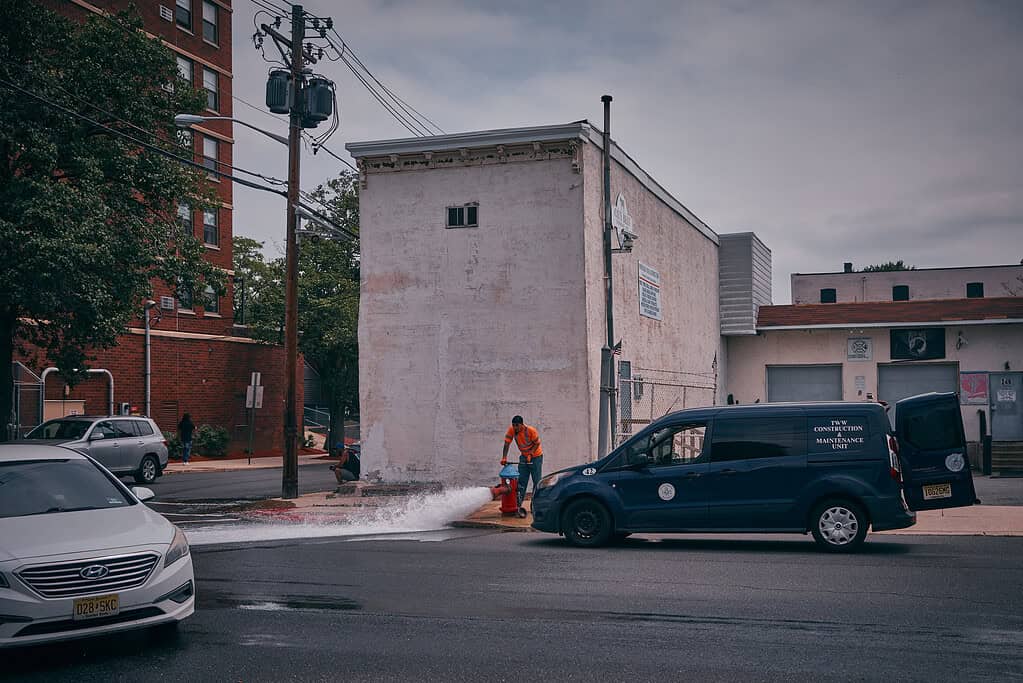
Almost six months have passed since New Jersey’s top environmental watchdog pulled a surprise inspection at the Trenton Water Works, the 200-year-old utility that’s been under state supervision since 2022.
After his visit, Department of Environmental Protection Commissioner Shawn LaTourette posted ghastly photos of rusting pipes, corroded equipment, and electrical cords running through puddles of water, all under a sagging and leaky roof.
“This is by far the worst water utility in the state,” he said in an interview with The Jersey Vindicator, likening it to notoriously tainted water systems in places like Flint, Michigan. “This is an imminent threat to public health and safety.”
Today, Trenton officials have yet to take decisive steps that state officials say will help save the utility that serves some 225,000 people in the state capital and four surrounding Mercer County communities.
Efforts to hire a team of consultants to expedite crucial maintenance work, for example, have dragged on as bids for the work soared to an unacceptable $8 million. The city council continues to reject the state’s calls to study a new regional governance structure for Trenton Water. The plant’s Delaware River water intake system, which clogged with ice last January, remains a question mark as cold weather sets in again.
But there are signs of progress, which were on display during a lengthy tour Trenton Mayor Reed Gusciora and plant operators gave The Jersey Vindicator last week.
Don’t miss the NJ stories that matter. Sign up for our free newsletter →
A huge section of a leaking roof that threatened to collapse has been replaced. Just beneath the roof, a crucial circuit breaker in the heating, ventilation, and air-conditioning control room that was taking on water was dry, clean, rust-free, and 100 percent functional.
Only a few months ago, leaking water puddled on the floor and rusting electric panels were covered in plastic tarps.
Corroded water mains carrying finished drinking water to the utility’s 225,000 customers in Mercer County have been covered in fresh coats of bright blue paint. Rotted ceiling tiles have been replaced, too, and areas that had been covered with standing water are dry and free of debris.
“We’re running full steam ahead, but we know there’s a lot to do and the clock is running,” Gusciora said.
The improvements amount to a small down payment on what the state says are decades-old backlogs of capital projects needed at the 200-year-old water agency. Independent engineering experts estimate that the filtration plant and peripheral parts of Trenton Water’s distribution network need at least $100 million in quick repairs to stave off a catastrophic failure.
Utility officials say the Trenton Water Works will need more than $1 billion over the next 15 years to stay operational and complete stalled projects, such as the replacement of lead and copper service lines and the construction of covered tanks to replace the 1-million-gallon open-air reservoir that has been linked to local Legionella cases and a handful of deaths.
Trenton Water is also still battling a lawsuit filed by surrounding municipalities, where officials say better water service is long overdue. The lawsuit, after being dormant for a number of months, is now moving into a discovery phase that could come with more damaging revelations. Hopewell Township has joined the suit.
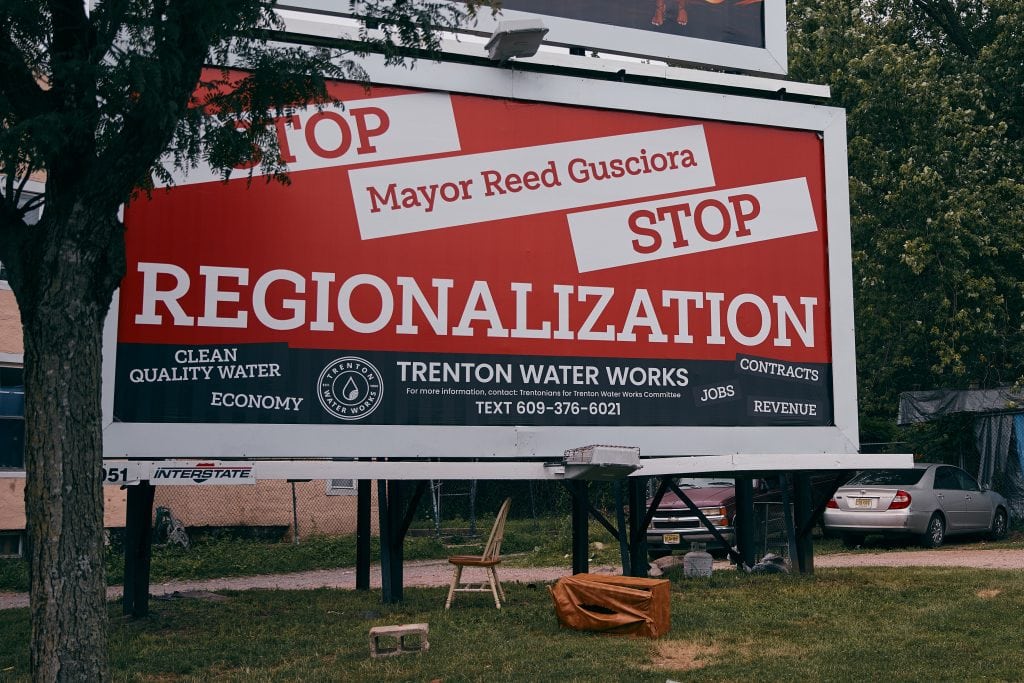
Despite the battles ahead, the ugly feud between LaTourette and Trenton political leaders has cooled since the summer.
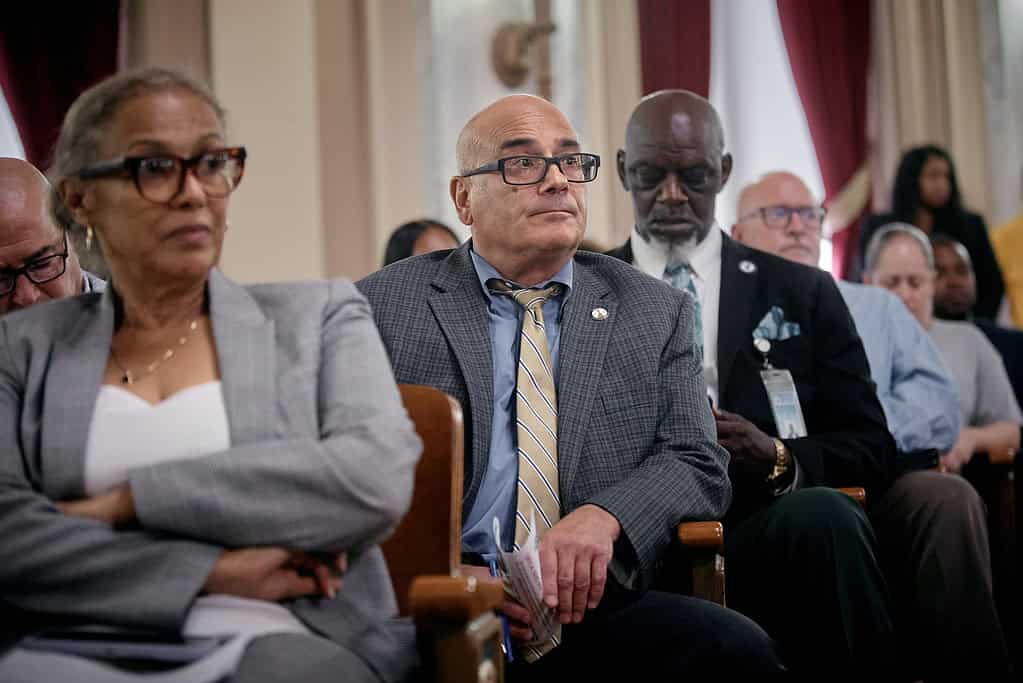
During a two-hour public meeting at Trenton City Hall in August, LaTourette was jeered by the audience and berated by city council members who angrily rejected his arguments for a new regional water authority that could end dysfunction and stabilize shaky finances. Some council members suggested LaTourette was leading a racist coup of an agency that employs many African American workers living in a city dominated by minorities.
The meeting followed LaTourette’s surprise inspection and angry assertions that the water utility was New Jersey’s worst, and headed for spectacular failure.
During last week’s tour, Gusciora said LaTourette and the city council later gathered in a more cordial “come to Jesus meeting” that was closed to the public. The two-term mayor, elected in 2018 on a promise to fix Trenton Water, says the council is now “seriously committed” to change, but on the city’s terms.
“We’re doing it on our own,” Gusciora said. “If the state wants to do another study, we’ll take it and consider it. But we’re going forward now.”
This reporting is free because readers make it possible. Join them. →
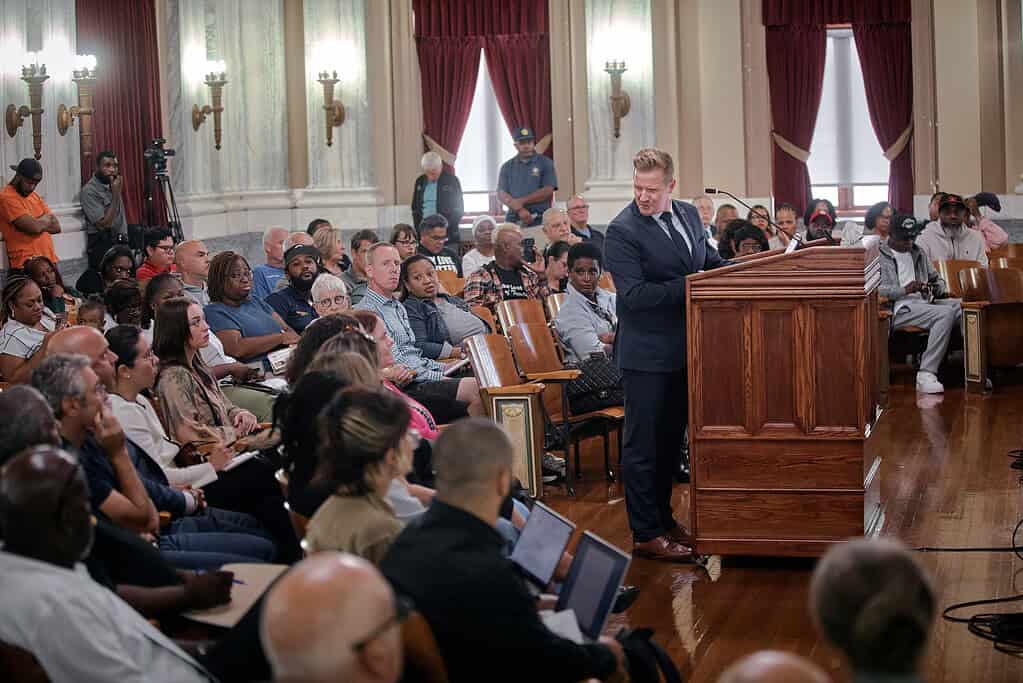
Since the heated meeting last summer, New Jersey Department of Environmental Protection officials have been less vocal in their criticism while still pushing for reform.
LaTourette declined to be interviewed for this story. A spokesman for the agency said it was too early to comment on emerging developments, such as the state’s hiring of a consultant for an 18-month regionalization study on the creation of a regional water authority that would give surrounding communities some control over the utility.
Residents in Hamilton, Hopewell, Ewing, and Lawrenceville make up 55 percent of Trenton Water’s customer base.
Before last week’s plant tour, Gusciora and lead plant operators met with a pair of consulting engineers to discuss priorities for the utility’s crash maintenance plan. The engineers, from the global engineering firm Black & Veatch, have been poring over the plant since last year as part of a review by the New Jersey Infrastructure Bank, an independent state agency that arranges low-interest bond financing for water, sewer, and road projects.
A reporter and another visitor were allowed to sit in and ask questions. The 30-minute session provided an eye-opening glimpse of the decisions now facing the troubled water utility. City officials would not allow photographs of the facility during the visit.
One of the consulting engineers, Landon Kendricks, said the city had reached a critical point where it must decide whether to make expensive repairs to old equipment and facilities or just scrap them and start over.
He talked about how Trenton Water needs to triage its aging systems to “mitigate risks” and guard against “single points of failure” that would interrupt service. He stressed the necessity to plan for emergencies and stockpile replacement parts ahead of time, a process that requires the kind of foresight and planning that has lagged in Trenton.
He asked hard questions: Should old electrical systems be ripped out or renovated? Should the central pumping station be razed and replaced or just fixed up and monitored carefully in the coming months and years?
“Fully replacing the central pump station would cost $10 to $20 million,” Kendricks said. “Do you want to put new tires on an old car with 200,000 miles?”
Getting such decisions right, Kendricks said, is the difference between smooth and reliable public water service and a potential catastrophe.
“No one wants there to be a Jackson, Mississippi-type failure,” Kendricks said.
He was referring to a 2022 event involving the collapse of Mississippi’s largest water treatment plant. The crisis triggered a federal emergency declaration as 150,000 people went without water. It also spurred a fierce public debate about racial discrimination and the neglect of public infrastructure.
Kendricks, who has consulted on water projects across the country, stressed that the Trenton utility was far from the only urban water plant suffering from deferred maintenance and lack of public investment.
“This is a nationwide issue,” he said.
Last week’s tour ended up on the water plant’s roof, where plant operators talked about their struggles with a new, $9 million intake system that failed last winter when ice particles jammed up intake screens.
The complex system, which started out costing about $1.5 million but ballooned in price, was installed on the state’s orders by a state-hired engineering firm. Almost a year after the failure, it remains unclear why such an advanced system failed.
Plant workers bitterly contest the state’s suggestion that Trenton Water failed to properly maintain the system. They say an air-flushing system designed to clear the intake screens covering pipes submerged in the river simply wasn’t strong enough and has been replaced.
They said the intake screens were prone to clogging with river sediment because the grates were constructed with tiny quarter-inch openings, as opposed to an old system that had three-inch gaps that workers could easily clean with brooms and brushes. Thousands of pounds of debris were found clogging the intake, officials said.
“No way this was our fault,” said a visibly angry Kaseem Gaines, a head maintenance supervisor at the plant. “The system just didn’t work like it should have.”
Building a more informed New Jersey, one story at a time.
The Jersey Vindicator is funded by readers who believe New Jersey needs tough, independent reporting that serves the public. No paywall. No spin. Just deeply reported journalism that helps people understand what’s happening in our state.
If you believe this work matters, please contribute today.

Jeff Pillets is a freelance journalist whose stories have been featured by ProPublica, New Jersey Spotlight News, WNYC-New York Public Radio and The Record. He was named a Pulitzer Prize finalist in 2008 for stories on waste and abuse in New Jersey state government. Contact jeffpillets AT icloud.com.