

Fast-tracked New Jersey bill would tap public employee pensions to help Mercer County towns leave Trenton Water Works
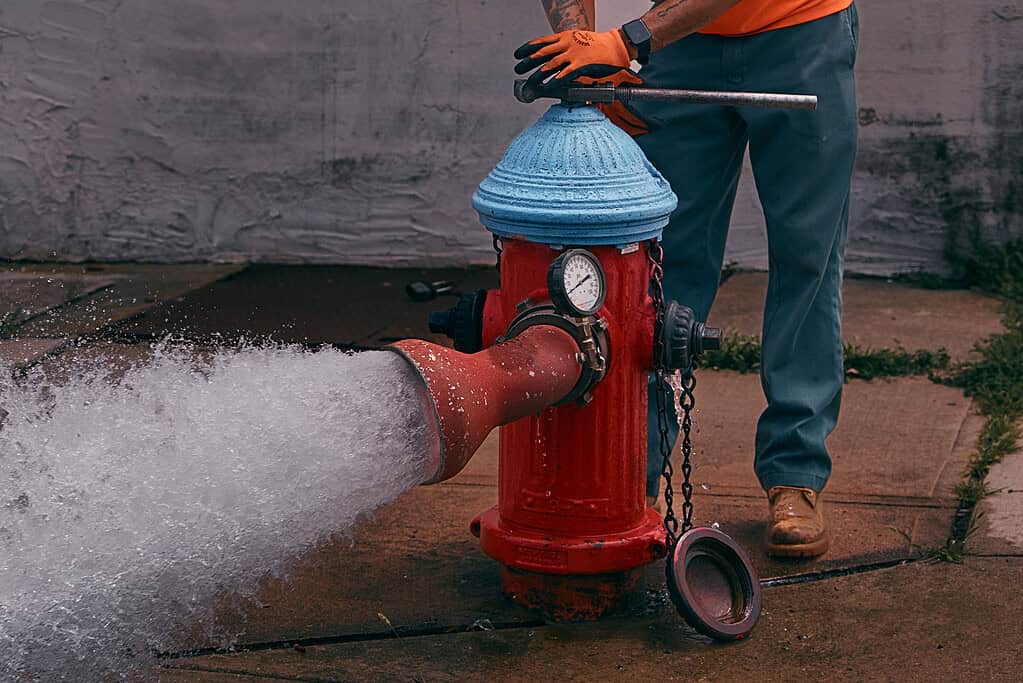
Towns could leave the struggling water utility and start their own by borrowing money from the pension system
Financial legislation being fast-tracked through the New Jersey Legislature’s lame-duck session promises a creative — if untested — solution to the regional water crisis in the state capital and its suburbs.
On Monday, members of the Assembly Telecommunications and Utilities Committee voted unanimously to advance the “Citizens Fund Act,” a measure that would use New Jersey’s public employee pension system to backstop the construction and management of new drinking water systems in Mercer County.
The legislation, which backers say could reach Gov. Phil Murphy’s desk in days, would give suburban towns like Hamilton, Ewing, Lawrenceville, and Hopewell a smooth exit from reliance on the failing Trenton Water Works. The utility and its 80-year-old pumping plant on the Delaware River have been under state supervision since 2022 amid serial water main breaks, treatment failures, and employee corruption.
“We had 16 water main breaks over a three-year period in an area they were supposed to be replacing,” said Ewing Mayor Bert Steinmann, one of several mayors who testified in favor of the new bill. “We’re just at a standstill.”
Residents of Ewing and the other Mercer County communities served by the Trenton Water Works make up some 55 percent of the utility’s 225,000 customers. The towns have all sued to force long-delayed water system repairs, and recently voted to form a regional authority that would strip total control from the City of Trenton.
Last year, New Jersey Department of Environmental Protection Commissioner Shawn LaTourette urged the city to cede control over the water system, warning it was in imminent danger of collapse. Expert studies mandated by the state found decades of deferred maintenance and an ongoing lack of qualified plant operators.
The new bill was the brainchild of American Public Infrastructure, a Chicago-based firm of municipal finance experts, and Black & Veatch, a global engineering consultant. Both firms took part in the recent state-mandated studies of the Trenton water system.
Kevin Drennan, a public affairs specialist who represents American Public Infrastructure and was the executive director of the New Jersey Senate Majority Office under former Sen. Stephen M. Sweeney, said he has been pushing the bill for months with local mayors and the Murphy administration.
Drennan also said he has met with the unions representing public workers who would potentially be affected by the measure, as well as the state Division of Investment, which manages New Jersey’s public employee pension funds.
“We’ve talked to all the suburban mayors, and they really want to go through with this,” Drennan, a longtime Hamilton Township resident, said in an interview Tuesday with The Jersey Vindicator. “It’s simply another tool in their toolbox — a very useful tool. We think it’s the best way forward.”
Under the bill, towns now served by the Trenton Water Works would be allowed to build their own water treatment plants financed by bond proceeds that would be transferred to the public pension fund. The money would be held in the pension system while the new water facilities are being built.
Drennan said the pension system would benefit by collecting interest as the funds are drawn down. He said the system would potentially allow towns to reduce pension debt, an obligation that has weighed down local and state finances for decades.
“You’re looking at much more financial stability for towns who choose to take part,” Drennan said.
The city of Trenton also would be allowed to use the proposed pension-backed financing scheme, but it was not clear Tuesday how the idea would fly in a town that has fought against any substantial changes to the current system that finances the troubled water utility.
Mayor Reed Gusciora, who did not testify at Monday’s Senate committee hearing, called the pension proposal “interesting” and said the city would study using it to help finance a $100 million emergency maintenance backlog at its Delaware River water treatment plant.
But Gusciora also expressed some skepticism, saying the plan echoed former Gov. Christie Whitman’s pension bond plan in 1997, a $2.8 billion scheme to refinance state pension debt. Critics said the plan laid a heavy burden on future generations of New Jersey taxpayers.
“We’re still paying for it,” Gusciora said.
He also pointed out that the new proposed pension bill would require suburban Mercer towns to build their own treatment plants and find alternative sources of water. Partly tongue-in-cheek, he suggested that the suburbs might be able to draw water from below Trenton’s sewage plant on the Delaware, from the campus pond at The College of New Jersey in Ewing Township, or the 25-acre Colonial Lake in Lawrenceville.
“The fact of the matter is they already get good clean water from our utility,” Gusciora said.
Drennan said suburban communities in Mercer County would be able to tap well water or establish connecting mains to the Delaware River. “There are a lot of options,” he said.
As written, the pension measure would only be available to communities in Mercer County with distressed water supply systems. Backers say the measure, if passed, could eventually be expanded to municipal water systems across the state.
The measure is expected to be taken up by the Senate Budget Committee as early as Thursday. If approved by the entire Legislature, Murphy would then have until Jan. 20 to act on the bill.

Jeff Pillets is a freelance journalist whose stories have been featured by ProPublica, New Jersey Spotlight News, WNYC-New York Public Radio and The Record. He was named a Pulitzer Prize finalist in 2008 for stories on waste and abuse in New Jersey state government. Contact jeffpillets AT icloud.com.