


New Portal North Bridge brings NJ Transit trains onto a faster track
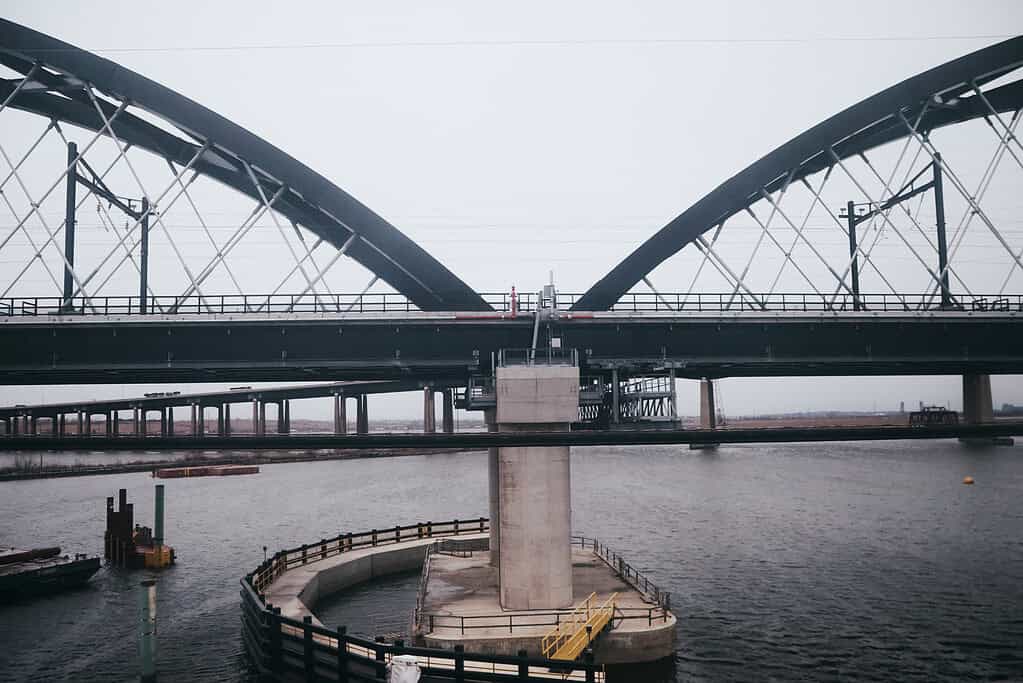
After a month of schedule disruptions and careful testing, NJ Transit commuter trains returned to their regular weekday schedules on Monday, March 16, as the new Portal North Bridge officially entered service, replacing a century-old chokepoint along one of the busiest rail corridors in the country.
The bridge spans the Hackensack River between Newark and Secaucus and carries both NJ Transit and Amtrak trains heading to and from New York Penn Station. For more than a hundred years, the route depended on the aging Portal Bridge, a swing bridge built in 1910 by the Pennsylvania Railroad that frequently caused delays when it opened for river traffic or malfunctioned.
The new Portal North Bridge, approved in 2020 as part of a $2.3 billion project led by the Gateway Development Commission, is designed to eliminate those problems. Unlike the old bridge, it sits high enough above the river to allow boats and barges to pass underneath without opening. Trains can also travel up to 90 miles per hour across the new structure, compared with about 60 mph on the old bridge.
The first full weekday of regular service came on Monday, though transit officials already had an unexpected preview of the new bridge last week.
During the Friday morning rush hour, overhead wire issues on Amtrak tracks near the old bridge caused widespread delays. Crews quickly moved some trains onto the new Portal North Bridge, allowing limited service to continue and easing what could have been a much larger commuting meltdown.
New Jersey’s new governor, Mikie Sherrill, took a ride across the bridge Thursday. March 12, to see the project firsthand, highlighting its importance to the state’s rail system and to the broader Northeast Corridor.
The bridge is one of the first major pieces of the larger Gateway megaproject, a multibillion-dollar effort to modernize rail infrastructure between Newark and Manhattan. Future phases include building new tunnels under the Hudson River to replace the century-old tunnels damaged during Superstorm Sandy.
Before the changeover, the aging structure carried roughly 450 NJ Transit and Amtrak trains each day and about 200,000 daily riders. Officials say the new bridge, along with future Hudson River tunnels, will eventually double rail capacity between Newark and New York City.
Still, the bridge’s opening does not mean the end of delays for commuters.
Transit officials say the transition is not yet complete. A second phase of the bridge cutover project is scheduled for the fall, when the old Portal Bridge will be fully retired.
And early Monday morning, NJ Transit reported trains were running up to 20 minutes late into and out of New York Penn Station because of a disabled train near Newark.


Krystal Knapp is the founder, executive director, and publisher of The Jersey Vindicator and the founder of Planet Princeton. She has more than two decades of experience reporting in New Jersey, including 10 years at The Trenton Times, where she was the newsroom’s public records and computer-assisted reporting expert. Her work has been recognized by the New Jersey Press Association and the Center for Cooperative Media. You can reach her at Krystal AT jerseyvindicator.org.