



New Jersey lawmakers advance bill that would tax private prison immigration detention companies
The bill targets companies like CoreCivic and GEO Group, whose New Jersey profits rose roughly 10% per quarter last year
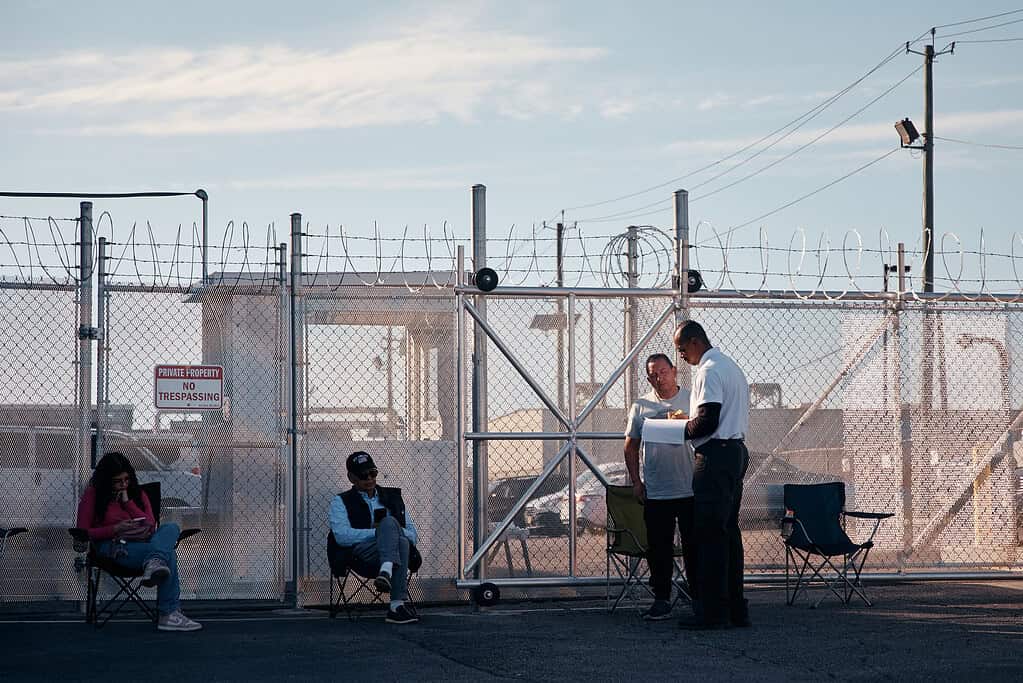
State lawmakers on Thursday advanced a controversial proposal to tax private prison operators, including the companies that run immigrant detention centers, to offset what the bill’s sponsors described as the “social costs of incarceration.”
The bill, A-4077, cleared the Assembly’s Public Safety and Preparedness Committee on a party-line vote of 5-2 over the strenuous objections of Republicans who argued it was a “total shell game to try and shut down prisons.”
“We’ve had people come here and testify that we need more capacity because of overcrowding in our prisons in New Jersey, and now we’re trying to tax them to death so we can funnel money to illegal aliens to help them fight their deportations,” Assemblyman Paul Kanitra (R-Ocean) said, referencing a provision of the bill that directs some proceeds to the state’s Detention and Deportation Defense Initiative, which provides legal services to immigrants facing removal.
But Assemblywoman Mitchelle Drulis (D-Hunterdon), one of the bill’s lead sponsors, said during a brief hearing that the proposal was meant to “shift those costs off of local residents and back onto the corporations that profit from the system.”
Private, for-profit operators now run roughly 9 out of 10 immigration detention centers throughout the nation, she said. And they’ve been raking in the cash: In 2025, these corporations reported revenue of more than $4.8 billion.
In New Jersey, those profits rose by about 10% per quarter last year, she said. But the centers also strain local police, fire departments, housing programs, and food assistance programs, among other things.
“While corporations’ earnings grow, the financial consequences fall squarely on the communities where these facilities operate,” Drulis said. “These are real costs. Costs that do not show up on a corporate balance sheet, but do show up on our tax bills.”
“This approach reflects a basic principle of fairness,” she continued. “If private corporations want to operate in New Jersey, they should pay for the impact of their presence. And they should not profit while local taxpayers absorb these costs.”
The bill would hit prison operators directly in the wallet by imposing an 8% fee based on the amount of the operator’s contract with the feds; charging a $15 per inmate, per day fee to help fund a variety of community-based programs, and imposing an additional private prison surtax.
Now that it’s cleared the committee, the full Assembly must vote on the legislation before it can move on.
Drulis, along with co-sponsors Gabriel Rodriguez of Hudson County and Annette Quijano of Union County, introduced the bill in mid-February amid an uproar over the Department of Homeland Security’s $130 million purchase of a warehouse in Roxbury that will hold up to 1,500 immigrants.
The Roxbury warehouse, which could become the largest detention camp for immigrants on the East Coast, drew swift and fiery blowback from immigration activists, local officials and even the governor.
“The Roxbury immigration detention facility will not make New Jerseyans safer,” Gov. Mikie Sherrill wrote in a letter to the Department of Homeland Security. “In short, DHS’s treatment of human beings, citizen and non-citizen alike, reflects a chilling disregard for both human life and the rule of law. New Jersey will not be complicit in this.”
The private prison operators like CoreCivic and GEO Group, which run the immigration detention centers in New Jersey for ICE, don’t have a shining reputation.
Immigration activists have long protested and pilloried the 300-bed Elizabeth Detention Center in Hudson County, which is run by CoreCivic.
And Delaney Hall, GEO Group’s 1,000-bed immigrant holding facility in Newark, has for months been plagued with complaints of water that is unfit to drink, food that is unfit to eat, erratic meal times, and poor distribution of prescription medicines, among many other issues.
CoreCivic and the GEO Group have defended their conduct and denied the allegations.

Steve Janoski is an award-winning investigative journalist with nearly two decades of experience covering criminal justice, policing, courts, government, and politics. His reporting has exposed corruption, government malfeasance, and police misconduct. His work has appeared in the New York Post, USA Today, The Associated Press, The Record, and the Asbury Park Press. At The Jersey Vindicator, he covers criminal justice. Reach Steve at steve AT jerseyvindicator.org.