



Family seeks answers after Delaney Hall death
Medical care at Newark ICE detention center comes under scrutiny again
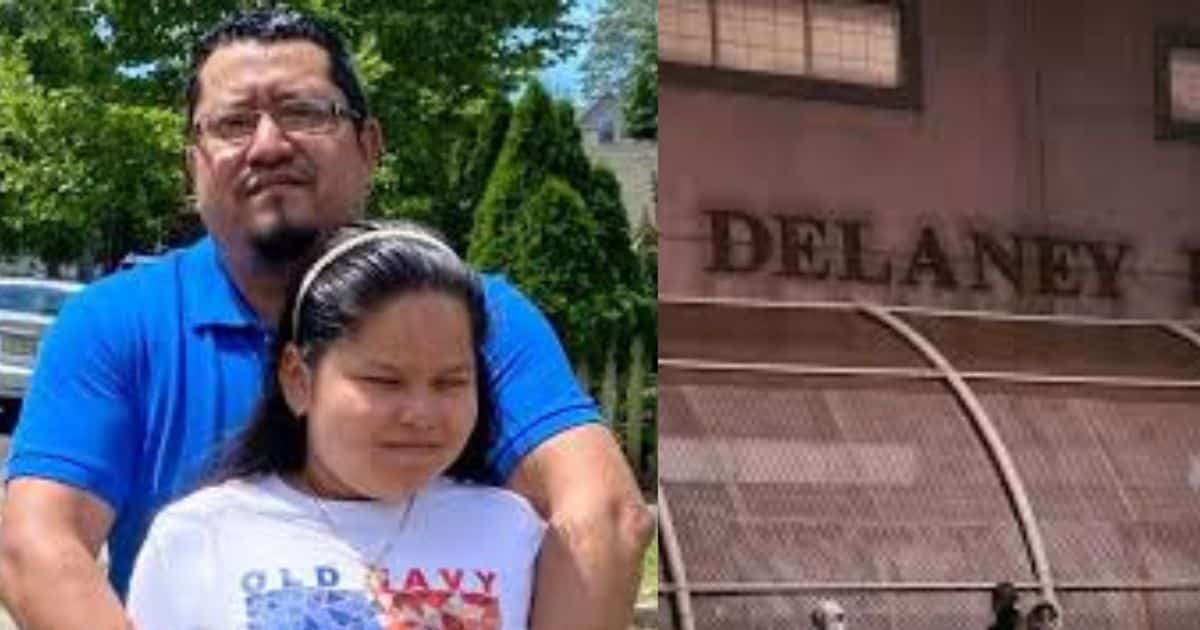
An undocumented immigrant detained at Newark’s Delaney Hall died over the weekend, the second known death at the controversial detention center in less than eight months.
In a Monday statement, a Department of Homeland Security spokesperson said Edwin Jovanny Lopez Cornejo, 41, of El Salvador, experienced a medical emergency Saturday, Aug. 1, while in custody at Delaney Hall.
Guards and the facility’s medical staff quickly responded and called 911, according to the statement. Cornejo was taken to University Hospital in Newark, where he was later pronounced dead.
The cause of death remains unclear pending an autopsy. GEO Group, the private prison company that operates the detention center, declined to comment and referred inquiries to the federal government.
Cornejo, who immigrated to the United States nearly two decades ago, had been at Delaney Hall since U.S. Immigration and Customs Enforcement arrested him in Plainfield on June 18, his mother, Maria Cornejo, told Cosecha New Jersey in a Facebook Live event on Monday.
Immigration authorities said Cornejo first entered the country in August 2006 and was deported that October. He later returned.
His sudden, unexpected death has left his 12-year-old daughter, Ashley, without a father, Maria Cornejo said. It has also left her and the rest of the family heartbroken.
“My son had no vices,” she said. “He was an excellent son, he had a little girl, and he was a good father. He was my second child, and today I have lost him at the hands of immigration, and I don’t know how to heal this pain … the loss is irreparable. I cannot bear this.”
Cornejo dealt with several chronic health conditions and needed medication to manage his diabetes, high blood pressure, and seizures, Maria Cornejo said.
On Friday, Cornejo told his mother he had been feeling sick, and that part of his face and right hand had gone numb while detained inside the 1,000-bed facility on Doremus Avenue.
“He said he had a consultation that day, and they were going to do some tests, but he didn’t tell me when they were going to do them,” Maria Cornejo said. “I asked him if they gave him medicine. He didn’t tell me whether they had given it to him or not.”
The next day, workers at a local hospital called her and asked her to identify her son’s body.
“They called me saying they had him there, that my son had arrived [dead], that his heart had stopped,” she said in Spanish. “And they said I had to go identify him.”
Both Maria Cornejo and her other son, Danilo Lopez, blame Delaney Hall staff for Cornejo’s death and said they do not believe guards gave him his medication.
“He had medical supplies because he suffered from health issues, and they did not provide them to him as they should have,” Lopez said. “Because of that, perhaps, was my brother’s death. It hurts so much … it leaves an irreparable void.”
The DHS spokesperson disputed that claim, saying, “While in custody, Lopez Cornejo received proper medical care and was seen by medical professionals.”
Cornejo’s death comes less than eight months after Jean Wilson Brutus, a 41-year-old undocumented Haitian man, died at the facility from “suspected natural causes” one day after ICE agents arrested him.
Cornejo’s death renews scrutiny of detainees’ longstanding complaints about inadequate medical care and delays in receiving prescription medications.
Delaney Hall opened in May 2025 after ICE signed a 15-year, $1 billion contract with GEO Group to operate the facility.
Detainees and their families have repeatedly described squalid conditions inside the detention center near Newark Bay, including contaminated water, inedible food, erratic meal times, inconsistent medical care, and other problems.
In June 2025, detainees rioted over those conditions. Although the unrest subsided, the complaints continued.
About 300 detainees launched a hunger and labor strike in May 2026 to draw attention to conditions inside the facility. They also urged Gov. Mikie Sherrill to meet with them. The strike drew national attention, and protesters gathered outside the detention center for weeks.
The streets outside Delaney Hall have since quieted, but activists say conditions inside remain largely unchanged.
Both DHS and GEO Group have repeatedly denied wrongdoing or negligence.
Gov. Mikie Sherrill said in a statement she was “deeply disturbed” to hear of Cornejo’s death and that her administration is working with New Jersey’s congressional delegation to determine what happened.
“This tragedy is another painful reminder of why Delaney Hall should be closed,” said Sherrill, a first-term Democrat. “I have long opposed the use of private, for-profit prisons operating in a space that should be reserved for government. Corporations should not have the right to monetize imprisoning people while avoiding public accountability.”
Rep. Bonnie Watson Coleman described Cornejo’s as an upstanding member of his community.
“His detention alone was an act of cruelty, and if he indeed was denied his medication as his family reports, the operators at Delaney Hall should be charged with homicide,” Watson Coleman said. “For over a year, community leaders, family members, Mayor Baraka, Sens. Andy Kim and Cory Booker, members of Congress, and the governor have warned about the conditions at Delaney Hall. Now a second person has died at the for-profit prison. Delaney Hall is a stain on our country. Its continued use is a daily reminder of the cruelty of our immigration and criminal justice systems. It should be shut down at once, and those responsible for its inhumane conditions should be investigated and tried.”
Amol Sinha, executive director of the ACLU of New Jersey, also called for Delaney Hall’s immediate closure.
“This tragedy is another devastating result of the rampant inhumane conditions at Delaney Hall and detention centers across the country, including the routine denial of proper medical care, sanitary conditions, and food,” he said. “The Trump administration’s detention and deportation machine continues to terrorize and traumatize communities at an unprecedented level, yet numbers cannot encapsulate the grief and devastation that these abuses cause.”
Maria Cornejo said she is now calling for justice and does not want anyone else to endure the same sorrow.
“These men go around grabbing hard-working people,” she said of immigration authorities. “This country moves forward because of immigrants. It doesn’t move forward because of the Americans. It moves forward because of the immigrants. But they don’t see that. They only see the damage they are doing, but they don’t see the good things one does in this country.”
“May they pay for all of this,” she continued. “I don’t want other mothers to keep going through the same thing I am going through. If we don’t make sure justice is served, they will just continue with this, and we don’t know how many more people we will lose.”
Steve Janoski is an award-winning investigative journalist with nearly two decades of experience covering criminal justice, policing, courts, government, and politics. His reporting has exposed corruption, government malfeasance, and police misconduct. His work has appeared in the New York Post, USA Today, The Associated Press, The Record, and the Asbury Park Press. At The Jersey Vindicator, he covers criminal justice. Reach Steve at steve AT jerseyvindicator.org.