



ICE plans to spend up to $20 million on electric-shock gloves
The devices resemble ordinary patrol gloves but can deliver painful electrical shocks when pressed against a person’s skin.
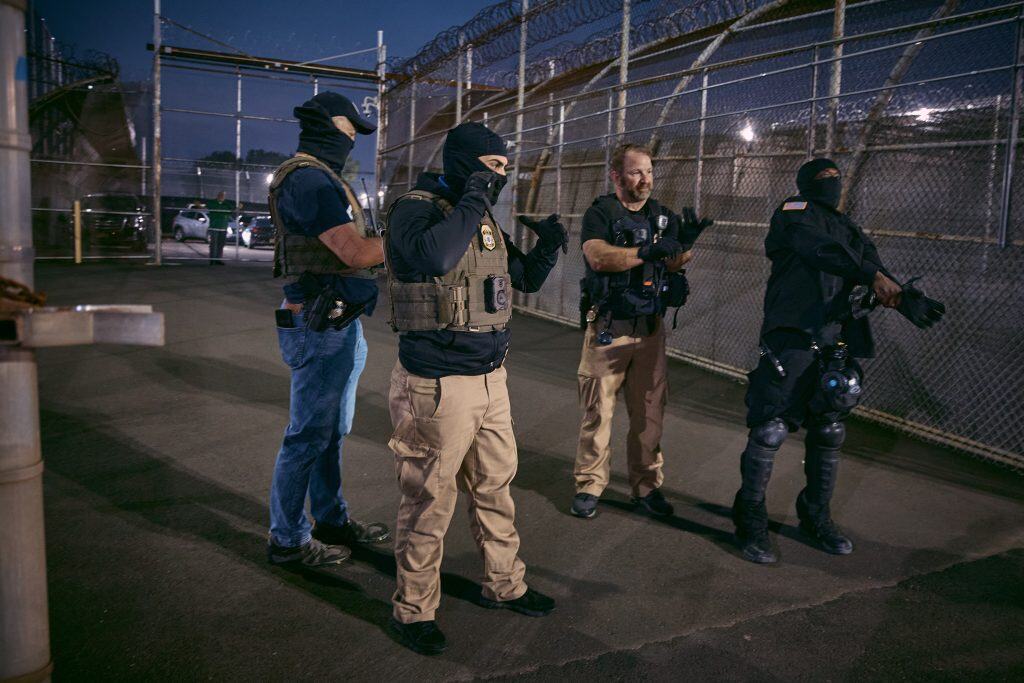
U.S. Immigration and Customs Enforcement plans to spend as much as $20 million on gloves that allow officers to deliver painful electrical shocks to people they are attempting to detain.
ICE plans to distribute the devices to officers and agents in its two principal enforcement divisions, according to a Department of Homeland Security acquisition notice published Monday.
The Associated Press first reported the planned purchase of the devices on Tuesday.
The CTG-5 G.L.O.V.E., short for Generated Low Output Voltage Emitter, is manufactured by Compliant Technologies LLC of Lexington, Kentucky. It resembles an ordinary patrol glove until an officer activates its electrical function using a switch.
The device must be pressed against a person’s skin to administer a localized shock. The manufacturer says the resulting pain is intended to distract the person and compel compliance within seconds.
Compliant Technologies markets the gloves as an alternative to other weapons for use during close physical encounters. Its user manual, however, warns that the technology is not risk-free and that failing to follow its safety instructions could cause injury or death.
The contract is expected to cost between $10 million and $20 million, according to the federal notice. ICE plans to award a firm, fixed-price contract without competition by the end of September. A solicitation for bids could be released by the government agency as early as Friday.
The government expects the contract to be completed by March 31, 2027. The notice does not disclose how many gloves ICE intends to purchase, although the Associated Press reported that the agency is seeking thousands of devices.
ICE plans to issue them to Enforcement and Removal Operations, the division responsible for immigration arrests, detention, and deportations, and Homeland Security Investigations, which investigates crimes including human trafficking and drug smuggling.
The notice lists Fort Benning, Georgia, as the contract’s performance site, but does not explain what work would occur there or how the devices would be distributed.
The acquisition comes as the Trump administration is pressing ICE to dramatically increase immigration arrests. The White House has set a goal of 2,000 arrests per day, raising concerns among civil rights advocates about the tactics agents employ to meet that target.
The gloves have previously been used on a smaller scale by some jails and police departments, according to the Associated Press.
John Peters, president of the Institute for the Prevention of In-Custody Deaths, told the Associated Press that ICE’s purchase would probably be the manufacturer’s largest order to date. He said agents could use the gloves when removing resistant people from homes or vehicles or moving detainees into and out of detention facilities.
Civil rights advocates warned that the gloves could give officers a largely concealed way to inflict pain that would be difficult for witnesses to recognize or document.
The National Immigration Law Center condemned the planned purchase Wednesday, citing ICE’s history of aggressive encounters with immigrants and U.S. citizens. The organization called on Congress to stop giving the agency money for additional enforcement tools.
The manufacturer’s manual says the gloves must not be used as punishment, torture, or a response to verbal defiance. It also advises against using them on young children, pregnant women, older adults, or people with severe disabilities.
The manual recommends limiting some activations to 15 seconds and warns that longer exposure increases the potential risk of harm to the person the gloves are being used on. Officers must complete training before using the gloves and be recertified every two years.
The CTG-5 also contains built-in memory capable of recording thousands of activations. Compliant Technologies recommends downloading those records at least once every three months, but agencies establish their own reporting and use-of-force policies.
The federal notice does not disclose what restrictions ICE would impose on usage of the gloves by agents, whether supervisors would review activation records, or whether people subjected to the shocks would receive medical evaluations.
The Department of Homeland Security told the Associated Press that it was preparing a response to its reporter’s request for comment, but did not immediately respond. Compliant Technologies has also declined to discuss the planned purchase.

Krystal Knapp is the founder, executive director, and publisher of The Jersey Vindicator and the founder of Planet Princeton. She has more than two decades of experience reporting in New Jersey, including 10 years at The Trenton Times, where she was the newsroom’s public records and computer-assisted reporting expert. Her work has been recognized by the New Jersey Press Association and the Center for Cooperative Media. You can reach her at Krystal AT jerseyvindicator.org.