



NJ officials admit scrap giant EMR ignored law for years without fines
State regulators acknowledged in court that the company has failed to submit required reports for years, yet has not been fined despite repeated fires at its facilities.
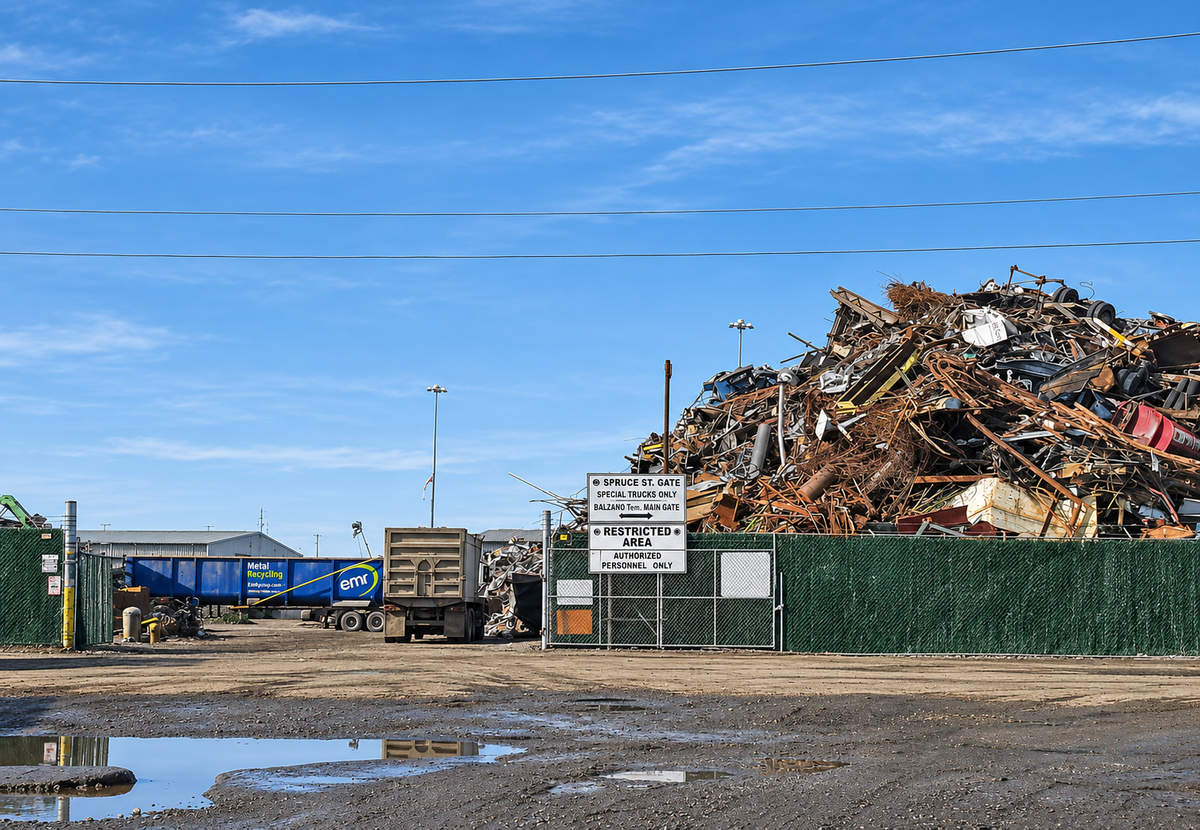
TRENTON — At least once a year, scrap metal recyclers in New Jersey are required by law to submit reports describing how much waste material, including old junked cars and trucks, they take in and process.
The reason behind the law is to protect public health and safety: Shredding old vehicles yields mountains of toxic foam, rubber, textiles, and plastic materials that pollute the air and have an alarming tendency to catch fire.
Despite the law, Eastern Metal Recycling (EMR) — one of New Jersey’s biggest scrap recyclers — has ignored this basic regulatory requirement for years, even as the company’s scrap yards in Camden and other parts of the state continue to catch fire and threaten the health of nearby residents with smoke, ash and toxic soot.
Details about EMR’s failure to meet the safety reporting requirements emerged Wednesday during a state appeals court hearing, where lawyers for a Camden citizens’ group argued that New Jersey must do more to protect residents from a scrap operation that has been implicated in 14 major fires since 2020 alone.
Alana Paccione, a deputy state attorney general who represented the New Jersey Department of Environmental Protection (DEP), acknowledged that the agency has been pressing EMR for well over three years to submit the basic reports detailing how many junked cars the Camden plant accepts and shreds every year.
Paccione said the DEP issued a notice of violation to EMR in May 2023 but has yet to receive the reports or issue a single fine. She said that agency officials continue to “work with” EMR in an effort to collect the reports and other documents describing what goes on at the company’s facilities in South Camden near the Delaware River waterfront.
“The notice of violation remains open,” Paccione said.
Without the reports, the public has no way of knowing what kind of materials and how many junked cars are shredded at the Camden site, or how much nonmetallic auto material, commonly known as “fluff,” is building up at the scrapyard.
State records show that about 500,000 so-called “end-of-life” vehicles are shredded and processed every year in New Jersey alone. Residents who live near EMR scrap yards in Camden and Bayonne say shipments of junked vehicles are constantly arriving at those sites, where they are processed to separate valuable metal components from the highly flammable fluff, which experts say makes up about 20% of a car’s weight.
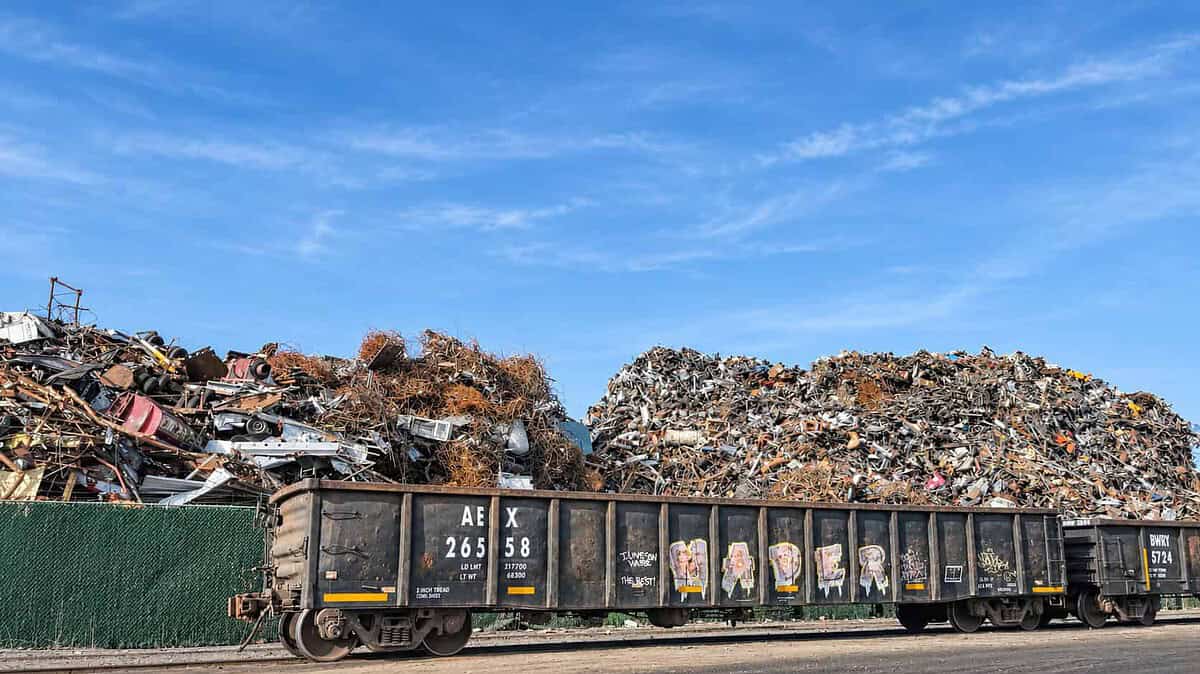
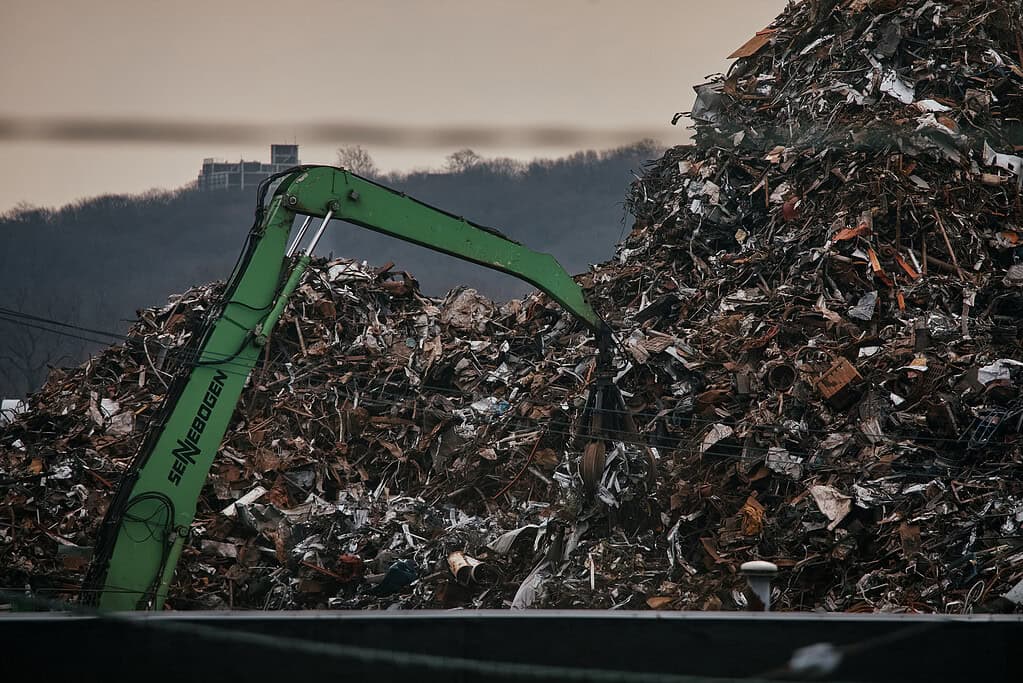
Mountains of junked vehicles waiting to be shredded can rise to heights of 50 feet or more, residents say, and the shredding process typically releases windborne particles that can harm human health.
“This case is really the health and safety of the people of Camden,” Jonathan Compton, executive director of the Camden group, said in an interview last week with The Jersey Vindicator. “The DEP has clearly failed to protect residents in regards to EMR. The public has every right to know what’s being brought into that facility.”
Nicole Moshang, an attorney for EMR who appeared at the Wednesday appellate court hearing, downplayed the issue of annual disclosure reports. She said it’s not unusual for state-issued violation notices to remain unresolved for extended periods while parties talk.
“This is not uncommon,” she said in response to repeated questions from Judge Lisa Firko, who heard the case alongside Judge Stanley L. Bergman Jr. “These complex compliance issues take a while to complete.”
Wednesday’s appellate court hearing comes after a Superior Court judge dismissed the complaint lodged last year by the Center for Environmental Transformation. The suit seeks to compel the DEP to recognize that EMR’s high-volume shredding and autofluff operation should be regulated under the strictest standards of the state’s solid waste law.
The lower court dismissed the case, saying that it had neither the jurisdiction nor the expertise to force the DEP to change its regulatory policy. The court agreed with EMR’s lawyers that the Camden group should seek redress by appealing to the New Jersey Legislature and rulemakers.
But Maggie B. Broughton, an attorney with the Eastern Environmental Law Center in Newark, argued that the DEP’s interpretation of New Jersey’s solid waste laws ignores how EMR actually operates and has failed to protect residents from repeated fires, noxious fumes and airborne pollution.
Broughton said state law plainly says that dangerous material like car fluff must be separated before arriving at a metal recycler like EMR. Instead, the state continues to exempt EMR from that condition.
“No exemptions can be given if public health is threatened,” she told the court.
Over the past dozen years, materials being processed at EMR sites in Camden, Newark and Bayonne have been the source of major fires that blanketed residential neighborhoods in smoke and ash. In February 2025, a four-alarm fire forced 100 people in one Camden neighborhood to evacuate their homes. In 2021, another major fire at an EMR facility in Camden also forced evacuation and the temporary closing of a school.
Residents of Camden and Bayonne filed personal injury lawsuits against EMR in state court earlier this year and are seeking class-action status on behalf of residents in waterfront neighborhoods in both communities.
Several recent scrap fires at EMR’s Bayonne facility along the Kill Van Kull, a tidal strait connected to the Hudson River estuary, were extinguished only after New York City fireboats arrived to help battle the blazes.
In 2025, Matthew Platkin, then New Jersey’s attorney general, filed a public nuisance lawsuit against EMR seeking greater protections for neighborhoods affected by the scrap metal recycler. His office noted that EMR’s Camden facility is located in a predominantly Black and Hispanic neighborhood where nearly a third of residents live in poverty.
“It is outrageous that EMR has failed to correct the dangerous conditions at its facilities,” Platkin said at the time. “Companies should never be allowed to turn a quick buck at the expense of their communities.”
In August 2025, Eastern Metal and the city of Camden reached a $6.7 million “memorandum of understanding” agreement that both parties said was designed to protect residents. The agreement called for the scrap recycler to install an aerial fire suppression system and mandated that EMR set up a $1 million fund for the waterfront neighborhood.
The city of Camden subsequently sued EMR, claiming the company reneged on the agreement and failed to provide all of the promised payments. The company denies the claim and says it has actually provided more money to the community than the agreement calls for.
Company officials also point to expanded fire-suppression systems at its Camden facility and other safety improvements, including limits on the height of its scrap piles and new heat-detection technology. Company officials at EMR and other major recyclers across the nation say discarded lithium-ion batteries are responsible for many of the fires. They have called for legislation restricting the disposal of the batteries.
Eastern Metal Recycling was founded in the United Kingdom and is among the world’s biggest recyclers of scrap metal. Its United States affiliate is headquartered in Camden and owned by the Balzano family, which has been active in Camden civic affairs for decades and enjoys a close relationship with Camden County political figures.
In 2015, Eastern Metal received a $252 million tax break from the New Jersey Economic Development Authority to support a new recycling facility in the Camden port district, promising to create 285 jobs in return. The state reduced the tax award by $132 million in 2022, part of $350 million in reductions to 82 firms that failed to meet employment pledges.
The appellate judges will now consider whether to reinstate the case against EMR and issue a ruling at a later date.

Jeff Pillets is a freelance journalist whose stories have been featured by ProPublica, New Jersey Spotlight News, WNYC-New York Public Radio and The Record. He was named a Pulitzer Prize finalist in 2008 for stories on waste and abuse in New Jersey state government. Contact jeffpillets AT icloud.com.