


N.J. appeals court to decide whether state comptroller can force charter school to hand over financial records
College Achieve Public Schools has fought a subpoena for more than a year and a half.
A New Jersey appeals court will hear a case on May 28 that will determine whether private charter school management organizations can be compelled to disclose financial records tied to publicly funded schools.
The decision could have far-reaching implications for private vendors, nonprofits, and other organizations that contract with public agencies, local governments, and school districts across New Jersey.
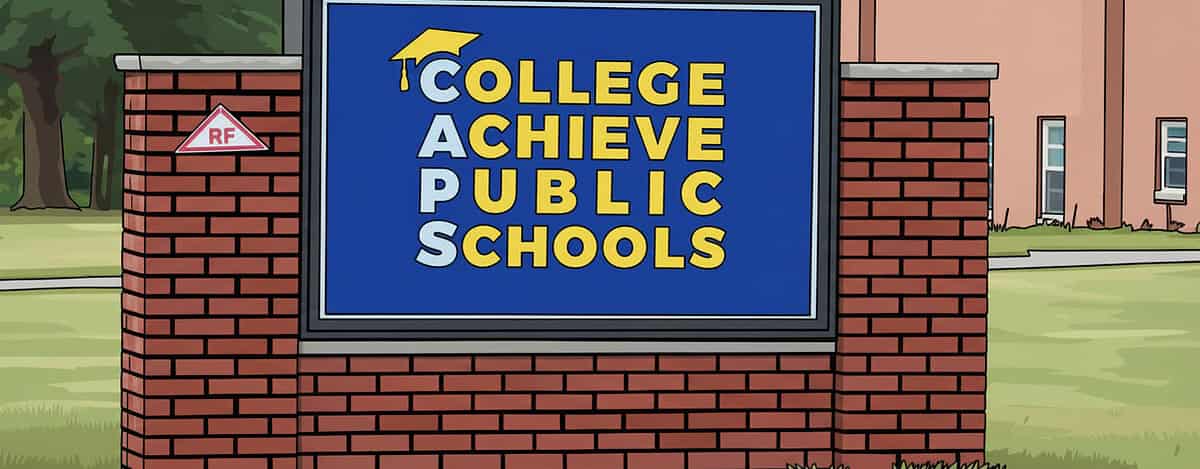
College Achieve Public Schools Inc., a controversial Tinton Falls-based nonprofit that manages three New Jersey charter school networks across 11 campuses, including College Achieve Greater Asbury Park Charter School, is at the center of the case.
In 2024, the comptroller’s office subpoenaed the school and later the management company for financial records and other documents, then filed a complaint when all the records were not produced. College Achieve Public Schools and the charter school then filed their own lawsuits against the Office of the State Comptroller seeking to block access to the records and the findings of an internal misconduct investigation.
A Superior Court judge rejected the management company’s effort to quash the subpoena last year and ordered College Achieve to produce documents and data related to the charter school. Instead of complying, College Achieve appealed. Three consolidated cases are now pending before the Appellate Division.
The legal fight stems from an Office of the State Comptroller investigation that uncovered what was described as a pattern of illegal procurement, cash mishandling, nepotism, and a management structure that stripped the publicly funded charter school board of meaningful oversight.
The College Achieve management company collected $57 million in public funds across its network between 2016 and 2023, according to the comptroller’s office.
Findings from the investigation were detailed in a Jan. 12 report issued by then-Acting State Comptroller Kevin Walsh. The report was preliminary, and the comptroller’s investigation remains ongoing.
“Charter schools are public institutions,” Walsh said when the report was released. “When they delegate sweeping control to a private vendor without oversight or the ability to terminate the contract if needed, it creates an environment ripe for fraud, waste and abuse.”
Don’t miss the NJ stories that matter. Sign up for our free newsletter →
The subpoenas
The legal battle began more than a year before the comptroller’s report was issued.
In August 2024, the Office of the State Comptroller served the charter school with a subpoena requiring it to produce financial and management records.
Three months later, the comptroller’s office subpoenaed the management company over its role in managing a publicly funded charter school. The subpoena sought policies on related-party transactions, nepotism, purchasing, conflicts of interest, and ethics, along with employment rosters, salaries, and contracts.
The comptroller also requested all investigative reports and findings from any internal investigations into alleged violations by the charter school and its officials.
Current Lieutenant Governor Dale Caldwell was the president of the board of trustees for the College Achieve Greater Asbury Park Charter School during the investigation and the battle over the subpoenas. Caldwell stepped down from the board after he was selected to serve as lieutenant governor.
In December 2024, the management company filed a lawsuit to quash the subpoenas, arguing that the comptroller had no legal authority to demand the records and that the materials sought were privileged.
College Achieve has argued that any problems were isolated, involved only a small share of expenditures, and have already been fixed. Lawyers for the management company have also contended that the comptroller’s office failed to acknowledge the network’s academic success and exceeded its authority by demanding access to a private nonprofit’s internal records.
In court filings, the management company described the comptroller’s demands as a form of harassment that was “quintessentially Orwellian” and a “fishing expedition.”
A Superior Court judge sided with the comptroller.
A contract that delegated broad control
At the center of the comptroller’s investigation is a management agreement between the charter school and the management company that investigators said effectively handed control of the school to the management organization.
Under the contract, the management company assumed responsibility for all administrative activities of the school, including curriculum, staffing, facilities acquisition, budget preparation, and the hiring and compensation of the executive director, who was contractually an employee of the management company rather than the school itself. The charter school paid the management company a fee starting at 14.9% of all program revenues.
The comptroller’s office found that the contract sharply limited the board’s independence. Budget approval “shall not be unreasonably withheld,” the agreement stated, and the board was required to act on executive director recommendations within three weeks. The contract also allowed the management company to exit the agreement if the board failed to adopt recommendations it believed were necessary for the school’s success.
The charter school was required to provide a minimum of 18 months’ notice to terminate the agreement.
Investigators concluded the arrangement reduced the school board’s role to largely ratifying decisions made by the management company.
The charter school was described during testimony as a “franchise.” A former financial officer told investigators that Chief Executive Officer Michael Piscal “pretty much ran the operations of the CMO (charter management organization) and the schools” because he controlled hiring and major decisions.
Piscal, who founded College Achieve Public Schools Inc. in 2012, was paid $795,515 in fiscal year 2023, according to the comptroller’s report. NJ Advance Media previously reported that the salary made Piscal the highest-paid education official in New Jersey.
A Toms River native and graduate of Toms River High School East, Piscal resigned in 2010 as head of one of the nation’s largest charter school organizations amid a financial crisis that forced his Los Angeles-based ICEF Public Schools to restructure, seek emergency donor funding, slash its payroll by 25%, and lay off about 100 employees. The network Piscal founded in the 1990s had nearly collapsed under rapid debt-fueled expansion and state budget cuts. Piscal went on to return to New Jersey and founded College Achieve.
Jodi McInerney served simultaneously as the Greater Asbury charter school’s executive director and the management company’s chief operating officer. Her husband, Timothy McInerney, served as principal of the Asbury school, receiving $460,515 in compensation in fiscal year 2023.
Both Jodi McInerney and Timothy McInerney left the school in spring 2024. Since July 2024, the school’s head of school has been directly employed by the board rather than the management company.
Procurement violations and alleged fabricated quotes
Investigators found that the charter school used public funds to purchase uniforms, branded clothing, and other goods from All Shore, a screen-printing company owned by Jodi McInerney’s brother-in-law (Timothy McInerney’s brother), beginning in 2018.
According to the comptroller’s office, All Shore repeatedly delivered goods without purchase orders and later submitted backdated invoices to the school business administrator, who had not authorized the purchases.
Staff raised concerns as early as October 2018, alerting both Jodi McInerney and Piscal. Investigators said McInerney directed staff to pay the vendor, and employees later created purchase orders after the fact to facilitate payment.
The school stopped ordering directly from All Shore in January 2020, but investigators said the arrangement continued indirectly through another vendor, Simonetti and Sullivan LLC.
The comptroller’s office found that Simonetti and Sullivan used All Shore to fulfill all orders placed for the charter school. The owner of Simonetti and Sullivan told investigators the charter school was her only customer and that all orders she received from Timothy McInerney were fulfilled by All Shore. More than $108,000 in public funds flowed through Simonetti and Sullivan between 2021 and 2024.
Investigators also alleged that the management company’s chief financial officer directed staff to obtain second quotes retroactively for invoices that had already been submitted. The comptroller’s office said those competing quotes appeared to be fabricated.
A representative of a separate Monmouth County screen-printing business told investigators the company had no record of generating the documents, though someone appeared to have entered the charter school’s information into its system.
The comptroller’s office found that multiple senior officials, including the management company’s chief financial officer, the school’s business administrator, and the school’s chief budget officer, warned officials that the purchases were illegal, but the transactions continued until April 2024.
Neither Jodi McInerney nor Timothy McInerney agreed to be interviewed by investigators. Through attorneys, both invoked their Fifth Amendment right against self-incrimination.
The management company and the charter school said staff involved were terminated, the conduct was referred to law enforcement, and procurement procedures have since been reformed.
Cash, gym rentals, and family hires
Investigators also found problems involving cash collected from parents for school uniforms.
The comptroller’s office said uniforms purchased through Simonetti and Sullivan were sold only for cash and that little, if any, of that money was deposited into school accounts. Over six years, investigators found only 18 cash deposits totaling about $13,000, most tied to unrelated activities such as book fairs and transportation fees.
Investigators found that Timothy McInerney entered into a verbal arrangement allowing a basketball training business to rent the school gym in exchange for cash payments collected directly by him. The business owner told investigators he paid between $1,900 and $2,100 in cash. School bank records reflected only two related cash deposits totaling $1,060.
A separate state Department of Education review found that the charter school hired four direct relatives of Jodi McInerney between 2021 and 2023 without proper approvals, including her husband as principal, her mother as an interventionalist, and her son and daughter in unspecified roles.
Timothy McInerney was the only applicant and the only person interviewed for the principal position.
A loophole in state oversight
The comptroller’s office also identified what it described as a significant gap in state oversight of charter school management organizations.
The Department of Education conducts detailed reviews of management relationships disclosed during the charter school application process and previously denied applications that named the management company as a partner.
But investigators found that once a charter is approved, schools can later enter into management agreements without formal state approval.
None of the three College Achieve schools disclosed plans to contract with the management company in their approved applications. Piscal testified that, after earlier applications were denied, he believed the department would not approve applications that identified a charter management organization. Contracts with the management company were signed after the schools received charter approval, in some cases before they even opened.
The comptroller’s office also found that the management contracts were never publicly bid as required under New Jersey’s Public School Contracts Law.
Hidden financial problems
Investigators found that the management company repeatedly forgave portions of management fees owed by the charter school to prevent it from ending the year in deficit.
Those fee waivers, sometimes totaling hundreds of thousands of dollars, were determined solely by the management company and recorded as “bad debt” on its own books.
The comptroller’s office said the practice obscured the school’s true financial condition because audited financial statements and budgets reflected the full fee obligation even when the school routinely did not pay the entire amount.
Following the comptroller’s draft report, both entities agreed to require formal board approval for future fee waivers.
The broader fight over public accountability
Even after a trial court ordered the management company to produce financial records tied to the charter school, College Achieve Public Schools Inc. appealed rather than comply.
The Office of the State Comptroller has also been unable to obtain the findings of an internal investigation commissioned by College Achieve and conducted by the law firm Gibbons P.C. Lawyers for the charter network are attempting to shield the investigation from state investigators, arguing the records are protected by attorney-client privilege.
In court filings, lawyers for the charter management company have characterized the subpoenas as overly broad and challenged the authority of the Office of the State Comptroller to demand the records.
They have also argued that once taxpayer money is paid to a private vendor, how that money is spent falls outside the comptroller’s authority.
College Achieve has further argued that it is not itself a public entity, even though it manages publicly funded schools, and that the comptroller’s office is improperly attempting to expand its oversight powers into the internal operations of a private nonprofit organization.
The Office of the State Comptroller has refuted College Achieve’s arguments, citing the law that created the agency and pointing to state statutes requiring vendors that receive public funds to provide records upon request.
The comptroller’s office has argued that charter schools are public institutions funded by taxpayers and that the private nonprofits managing them cannot evade oversight simply because they are organized as private entities. Under N.J.A.C. 19:70-1.6, the Office of the State Comptroller has the authority to audit or review vendor contract records, and N.J.S.A. 52:15C-14.d subjects private vendors that contract with government agencies to oversight by the comptroller’s office.
The office has also said that accepting the management company’s legal position could place large amounts of taxpayer-funded charter school spending beyond meaningful public oversight.
More controversy, Paterson financial conditions, College Achieve expansion
Controversy surrounding College Achieve Public Schools grew after the Asbury Park school built a dominant first-year high school varsity basketball program stocked with highly ranked recruits from across New Jersey. Critics accused the school of creating a “super team” that overwhelmed smaller public schools while straying from the charter network’s mission of serving local students.
The backlash expanded into broader scrutiny of the network’s recruitment practices, finances, and governance. The Asbury Park Board of Education has been battling the charter school, alleging it improperly enrolled out-of-district students and diverted millions in public funding. Amid growing pressure and recruitment investigations, the basketball program withdrew from the New Jersey State Interscholastic Athletic Association ahead of the 2024-25 season, making it ineligible for state championship competition.
A charter school reform law, signed in January 2026, expanded state oversight of charter schools and the nonprofit organizations that manage them. Adopted after controversies involving College Achieve, the law requires greater public disclosure of management contracts, budgets, and financial records. It also strengthens the state’s authority to place charter schools on probation or revoke charters, while imposing new governance and executive compensation rules. College Achieve spent $495,000 in 2025 to lobby state officials as reform legislation was being considered.
The law requires charter school applicants to demonstrate a legitimate educational need not already being met by nearby public or charter schools, and emphasizes that charter schools must serve a broad cross-section of the community. While the legislation does not directly regulate athletic recruiting, it strengthens the commissioner’s authority to place schools on probation or revoke charters for violations of state law, discriminatory practices, or failure to appropriately serve local communities.
College Achieve Public Schools drew statewide scrutiny again this spring after coaches and rival programs accused the school of assembling a girls flag football “super team” by recruiting elite travel-circuit players from across New Jersey. The controversy prompted some schools to refuse to play the team and fueled concerns about competitive balance in one of the state’s fastest-growing high school sports.
In March, the College Achieve Paterson Charter School saw its bond rating downgraded to B+ from BB+. S&P Global cited a rapid deterioration in the school’s financial condition, driven by unanticipated and aggressive expansion costs. The ratings agency said the school was projected to post a significant double-digit operating deficit in fiscal 2025, sharply deplete its liquidity, and violate debt service coverage and reserve covenants.
“We consider Paterson’s governance risk to be elevated due to its weak risk planning and financial management practices,” the S&P Global report stated, warning that the school’s financial troubles could require outside support.
S&P said it would continue monitoring the school’s final 2025 audited results, fiscal 2026 operating performance and liquidity, compliance with debt covenants, and communications with bondholders. The agency warned it could lower the rating further, potentially by several notches, if the school fails to stabilize its operations or finances.
Despite College Achieve Paterson’s challenges and the ongoing legal battle with the comptroller, the charter school network is looking to grow again. College Achieve is seeking state approval to open a new charter school in Jersey City, a decision state education officials are expected to make as early as this coming week.
Building a more informed New Jersey, one story at a time.
The Jersey Vindicator is funded by readers who believe New Jersey needs tough, independent reporting that serves the public. No paywall. No spin. Just deeply reported journalism that helps people understand what’s happening in our state.
If you believe this work matters, please contribute today.

Krystal Knapp is the founder, executive director, and publisher of The Jersey Vindicator and the founder of Planet Princeton. She has more than two decades of experience reporting in New Jersey, including 10 years at The Trenton Times, where she was the newsroom’s public records and computer-assisted reporting expert. Her work has been recognized by the New Jersey Press Association and the Center for Cooperative Media. You can reach her at Krystal AT jerseyvindicator.org.