


Polluters Pay bill advances as advocates urge lawmakers to shift climate costs from taxpayers
Assembly committee releases legislation that would create a $50 billion fund for resiliency, infrastructure, and climate adaptation projects
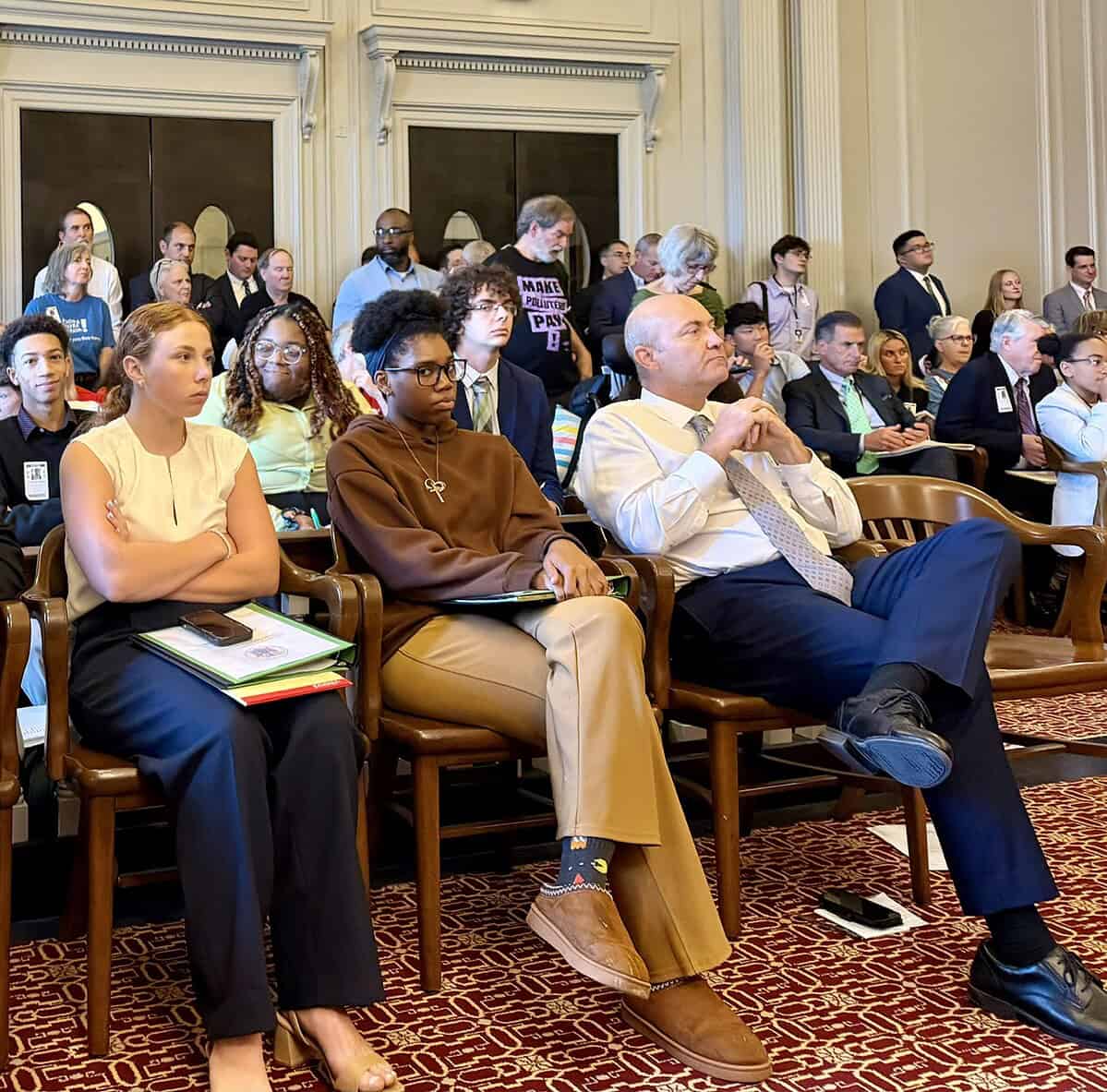
A bill that would require major fossil fuel companies to help pay for New Jersey’s climate adaptation and resiliency needs advanced Tuesday out of the Assembly Appropriations Committee, drawing praise from environmental, labor, and social justice advocates who say taxpayers should no longer shoulder the full cost of climate change.
The committee released bill A3735, the “Polluters Pay to Make New Jersey More Affordable Act,” which would authorize the state to seek up to $50 billion from certain fossil fuel companies linked to significant greenhouse gas emissions since 1995. The committee voted largely along party lines. The bill now goes to the full Assembly for a vote.
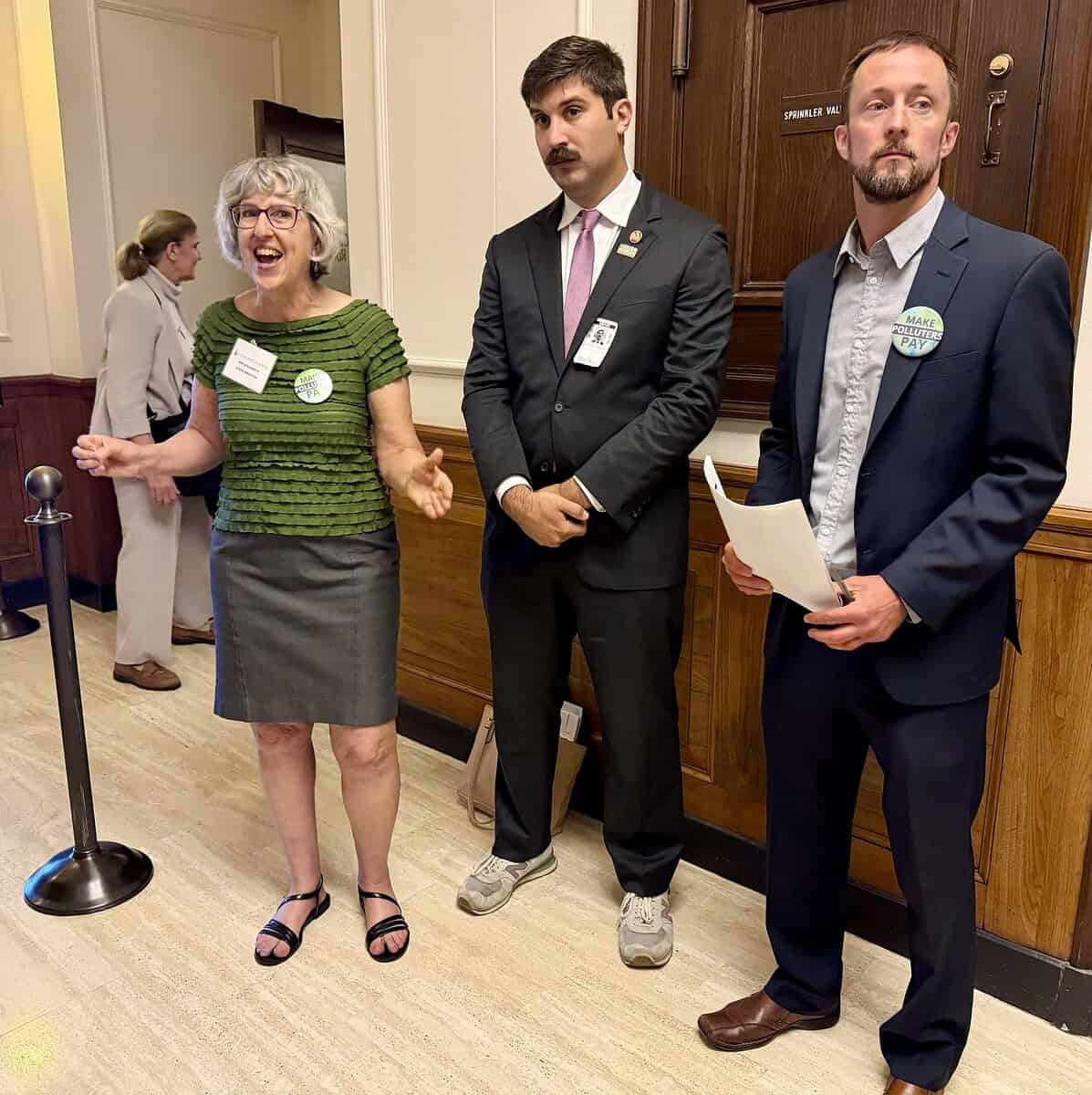
Before the hearing, supporters gathered outside the committee room to urge lawmakers to move the legislation forward.
“We’ve been at this for more than a year and a half, and the reality is that right now taxpayers is paying 100% of the costs of climate change,” said Matt Smith, New Jersey director of Food & Water Watch.
“Those costs show up through rising property tax bills, they show up through soaring utility bills, and they show up through rising insurance premiums,” Smith said. “Ultimately, it’s taxpayers, and it’s residents, and businesses who are absorbing 100% of these costs today. That must end.”
Smith said the legislation would create a $50 billion climate adaptation resiliency trust fund for the state and described it as a way to finance projects ranging from flood protection and drinking water improvements to school infrastructure and public transit upgrades.
“It includes funding for the Department of Health to tackle the challenges created by extreme heat, and it includes funding for mental health programs,” Smith said. “It includes funding for restoring habitat, for restoring wetlands and forests, so that we have more natural flood water absorption.”
Don’t miss the NJ stories that matter. Sign up for our free newsletter →
Assemblyman Balvir Singh (D-Burlington), one of the bill’s sponsors, said communities have long borne the health and environmental costs of pollution.
“It’s our communities that end up paying the cost,” Singh said. “Whether it is through fossil fuel, whether it is through urban industrialization. … Anything we can do to recover some funds, put toward an account that can help our communities overcome this burden.”
Amy Goldsmith of Clean Water Action pointed to growing support for the proposal across New Jersey.
“We have over 75 municipalities pass municipal resolutions. We have five counties pass countywide resolutions in support of this legislation,” Goldsmith said.
Goldsmith said residents across the state have experienced the consequences of increasingly severe weather.
“You can live on the coast, you can live inland. It doesn’t matter where you live. The impact of climate is huge, and polluters should pay, just like the tobacco industry paid, just like the opioid industry paid,” Goldsmith said. “It’s time for big oil to pay.”
Younger residents also have a stake in the debate, said Ben Dziobek of the Climate Revolution Action Network.
“This bill answers the question whether young people, 20-year-olds, teenagers, are going to continue to have to pay for the long run for climate costs that they did not cause, that they weren’t even alive to cause,” Dziobek said.
He said communities are already seeing the effects through rising local costs.
“We are seeing local taxes go off the hook,” Dziobek said. “We are seeing water bills go up at incredible rates. We are seeing electric bills go up at incredible rates.”
Dziobek dismissed industry arguments that the legislation would lead to higher fuel prices.
“Gas prices are determined by the global commodity market,” he said. “It’s not going to be caused by some tiny bill in the state of New Jersey.”
Cuqui Rivera of the Latino Action Network urged lawmakers to consider the human consequences of climate change and pollution in low-income communities.
“They want to know all about the numbers and the money,” Rivera said of legislative debates. “They don’t describe the human impact that happens in our community, in Black and brown communities.”
Rivera pointed to communities near industrial facilities and refineries where residents experience disproportionate health impacts.
“That’s where the human impact is, where the chronic illnesses are,” Rivera said. “Low-income communities are also paying. They can barely stay alive and survive with the little income that they have.”
Calandria Ortiz of the League of Women Voters of New Jersey said fossil fuel companies have long known about the effects of their products.
“The oil industry, they knew the damage that they were doing since day one,” Ortiz said. “Their own scientists told their owners what was going on.”
“Now we have the opportunity to do something,” she added. “It’s time that they pay a fair share.”
Supporters said the legislation is backed by more than 130 organizations through the Make Polluters Pay coalition, including labor unions, environmental groups, faith organizations, and social justice advocates.
Opponents of the legislation, including business groups and some Republican lawmakers, argued that the bill could increase costs for consumers and unfairly target companies that have long produced products used throughout the economy.
Ray Cantor of the New Jersey Business and Industry Association warned that the measure would move “in the exact opposite direction” of affordability efforts and argued that any costs imposed on energy companies would ultimately be passed on to consumers.
Mike Egenton of the New Jersey State Chamber of Commerce objected to the bill’s framing, saying, “I take real big issue with calling my members polluters when they were given the legal authority, both from EPA and DEP, to produce a product and service that we all use.”
During committee debate, Assemblyman Jay Webber, R-Morris, repeatedly questioned whether the state should impose retroactive costs on companies that sold products consumers willingly purchased and relied upon.
“If you washed your hair this morning or used deodorant, you used petroleum products,” Webber said. “If you brushed your teeth with a toothbrush and toothpaste, you used petroleum products.”
Webber argued that fossil fuels and petroleum products remain deeply embedded in modern life and questioned whether responsibility for climate impacts should rest solely with producers.
“We all use it,” Webber said. “To demonize a handful of companies who have for years and decades offered products that you’ve asked for, that you’ve bought, that you’ve used, that have made us healthier, wealthier, more educated, and more successful as a society, and now you want to turn around and retroactively tax them for that.”
Supporters pushed back, arguing that the bill is intended to recover a portion of climate-related costs already being borne by taxpayers and local governments.
Before the committee voted, Assemblywoman Carmen Theresa Morales, D-Essex, said the legislation raises a fundamental question.
“Who should pay for the cost of environmental damage and climate impacts? Right now, New Jersey taxpayers, homeowners, and local governments are carrying much of that burden,” she said. “This legislation is about ensuring that those who profited from contributing to these impacts shared in the responsibility.”
Building a more informed New Jersey, one story at a time.
The Jersey Vindicator is funded by readers who believe New Jersey needs tough, independent reporting that serves the public. No paywall. No spin. Just deeply reported journalism that helps people understand what’s happening in our state.
If you believe this work matters, please contribute today.

Krystal Knapp is the founder, executive director, and publisher of The Jersey Vindicator and the founder of Planet Princeton. She has more than two decades of experience reporting in New Jersey, including 10 years at The Trenton Times, where she was the newsroom’s public records and computer-assisted reporting expert. Her work has been recognized by the New Jersey Press Association and the Center for Cooperative Media. You can reach her at Krystal AT jerseyvindicator.org.