


Five minutes with retiring New Jersey State Climatologist Dave Robinson
The Rutgers professor discusses Hurricane Sandy, climate change, and the future of weather in New Jersey.
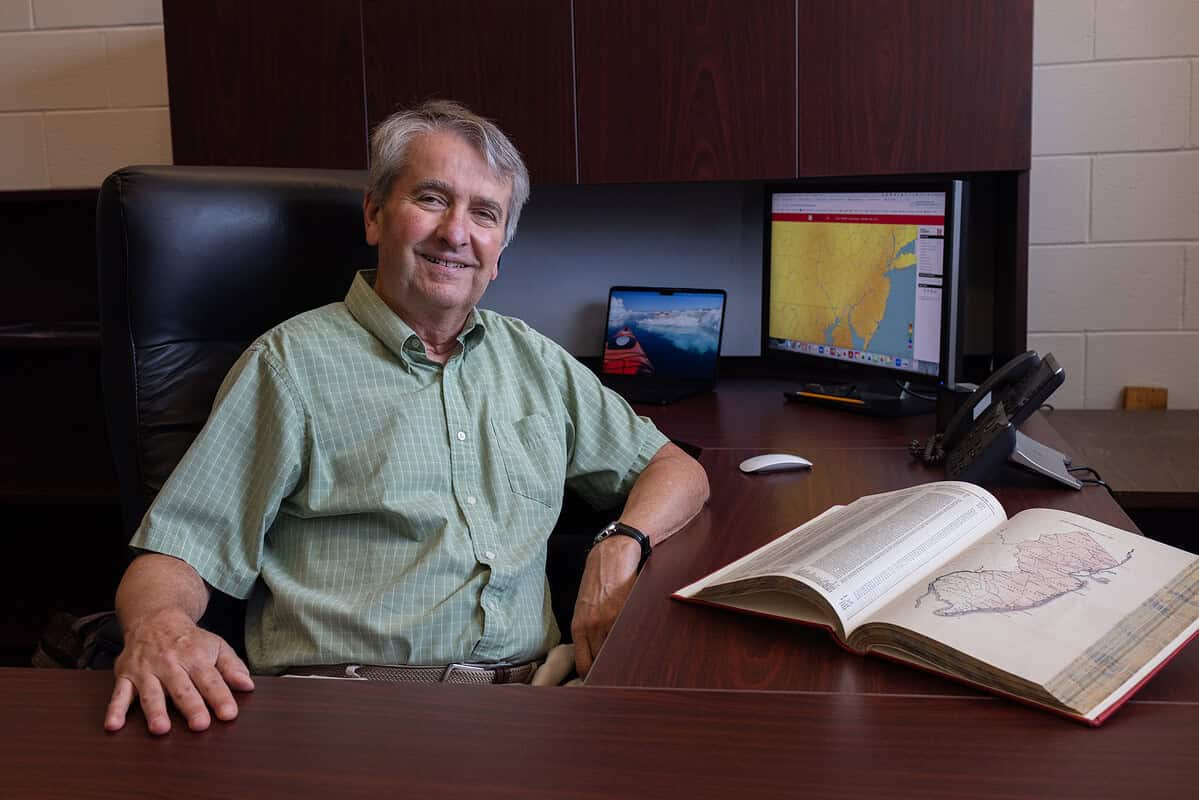
After nearly four decades as New Jersey’s state climatologist, Professor Dave Robinson of Rutgers University is finally calling it a career.
A 71-year-old Tenafly native who now lives in Somerset, Robinson has served as the trusted interpreter of the Garden State’s increasingly erratic weather and warming climate since taking the position in 1991.
But now the father of two and grandfather of five is looking forward to his retirement, which he says will be spent traveling, reading, and, in his words, “not working.” Still, he has left his mark on the university, where he worked for 38 years in the geography department, and the state, whose citizens he has tirelessly helped to understand the ever-changing world around them.
He spoke to The Jersey Vindicator on June 29, the day before his retirement.
Don’t miss the NJ stories that matter. Sign up for our free newsletter →
Q: What does the state climatologist actually do?
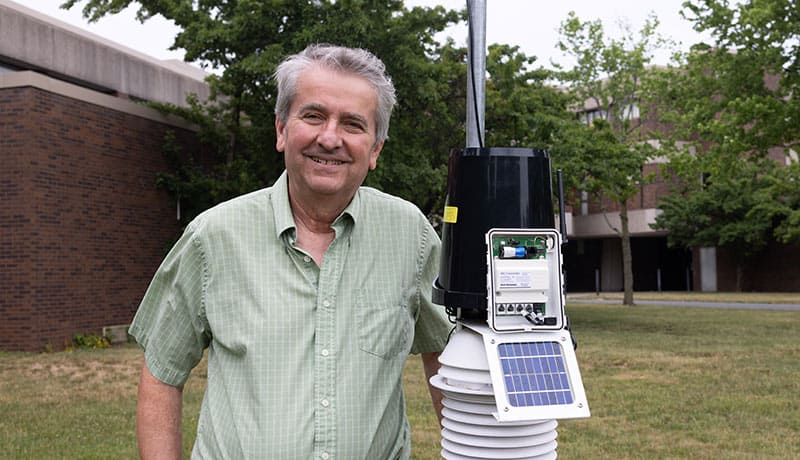
A: The state climate office, led by the state climatologist, is here to provide information and expertise on New Jersey’s weather and climate to help people make informed decisions. That could be anyone from the homeowner all the way up to the governor’s office, state and federal agencies, and the private sector. Weather and climate influence everything we do. Normally, it’s in more of a subtle, background fashion. But every once in a while, you get a [Superstorm] Sandy, or a [Hurricane] Ida, or a heat wave, or a drought. That’s when weather and climate move front and center. We don’t forecast the weather. But we have a network of 70 stations around the state that take weather observations every five minutes and make them public. We also have records that go back a century and a half, and it’s Jersey-centric.
Q: What sparked your lifelong passion for the weather?
A: Most people in our business can trace it back to childhood — they’re infected with some kind of bug. My first week of kindergarten in September 1960, we had Hurricane Donna. I have vivid memories of that. And the subsequent winter, we had several major snowstorms. Most 6-year-olds don’t remember those things. But it was just something that sparked my interest. I volunteered to keep weather records for my fourth-grade class! It was a childhood love. And now I’m the nation’s longest-serving state climatologist, ever. They couldn’t get rid of me.
Q: What’s something interesting about New Jersey’s climate or weather that most people don’t know?
A: I don’t know if people appreciate the variety of weather we get here. What I love about it is we have four seasons, sometimes two or three in the same day. And we get kind of a Whitman’s Sampler of all different types of weather events. But generally, we don’t get the worst of it. I know people are going to say, “What about Sandy, and [Hurricane] Floyd, and [Hurricane] Ida, and the flooding from those? What about sea level rise? What about the fact that New Jersey is one of the fastest-warming states in the nation?” We get our share of severe weather, don’t get me wrong. But we don’t get the worst of the worst, which is kind of comforting.
Q: You’ve witnessed and spoken about hundreds of weather events. Which one stuck with you the most all these years later?
A: There’s no question, it’s Sandy. It was a transformative event for the state, not just environmentally, but in terms of the economy and societal issues. I taught a course in the geography of New Jersey, which covers the economy, tourism, agriculture, and the environment. I had to redo a lot of my notes after Sandy because of the effects it had on all these different sectors. It was the definitive event of the last century.
Q: A lot of climatologists have a “favorite” weather phenomenon. What’s yours?
A: Snow! I love the way it transforms the environment. Things get quiet, and life goes at a different pace. It’s an aesthetic thing.
Q: What does the future hold for New Jersey’s climate, and how worried should we be?
A: We’re getting warmer. We’re going to continue to get warmer. It’s not just New Jersey. It’s the whole globe. I do polar research. I saw sea ice disappear in the Arctic Ocean in summer to a level I never would have imagined 50 years ago when I started studying this. With that will be additional threats to our environment, our hydrologic supplies, and our ecosystems. And, of course, being a coastal state with warming seas, melting ice in Greenland and from ice sheets in Antarctica and glaciers around the world, we’re going to see the sea level continue to rise. But it’s not this linear process. It’s a slow process, so it’s difficult to appreciate … and anecdotally it’s hard to get a real sense of that. But when you look at the records, which we as climatologists do, it’s undeniable that we’re warming. And it’s undeniable to any legitimate climatologist that it’s due to human activities, greenhouse gases, and such. We expect to see more of our rainfall in large events, thus the danger of river flooding. Coastal storms are working off a warmer ocean, so tropical systems may stay stronger. So I think we expect warmer temperatures and more extreme events.
Q: What should the state government be doing to safeguard us from the consequences?
A: The state Department of Environmental Protection is trying to keep up with rising sea levels and its impact on coastal communities, so they’re putting more restrictions on development in flood zones along the coast. The Jersey government is looking at these things, and they’re getting pushback from businesses and industries. There needs to be work and compromises. But keep in mind, Mother Nature doesn’t compromise. It’s undeniable we’re going to have more threats. I don’t have the bandwidth to think ahead several decades, but if we look back at the last couple and see how we can be more prepared, that will help us prepare for the future.
Q: What would you tell students looking to pursue a career like yours?
A: Follow your heart. The playing field keeps changing. In my career … the private sector was riskier, even though you might [earn more]. The federal and state sectors were more stable. Now the private sector has become more involved and works with the federal and state sectors. So don’t be discouraged if you see there aren’t Weather Service jobs. There are private-sector forecast groups, climate outlook groups, and climate communication entities. There’s a place for you. Become a good communicator, become a good writer, become a good scientist. And don’t put all your eggs in just one basket. The key for the future with our workforce is going to be adaptability and the ability to cover a diverse range of topics.
Building a more informed New Jersey, one story at a time.
The Jersey Vindicator is funded by readers who believe New Jersey needs tough, independent reporting that serves the public. No paywall. No spin. Just deeply reported journalism that helps people understand what’s happening in our state.
If you believe this work matters, please contribute today.

Steve Janoski is an award-winning investigative journalist with nearly two decades of experience covering criminal justice, policing, courts, government, and politics. His reporting has exposed corruption, government malfeasance, and police misconduct. His work has appeared in the New York Post, USA Today, The Associated Press, The Record, and the Asbury Park Press. At The Jersey Vindicator, he covers criminal justice. Reach Steve at steve AT jerseyvindicator.org.