



The Vindicator explains: How 6,600 noncitizens were registered to vote in New Jersey
About 400 later cast ballots. Here is what we know about the voter-registration failure, what the state and its contractor disagree about, and the questions that still need to be answered.
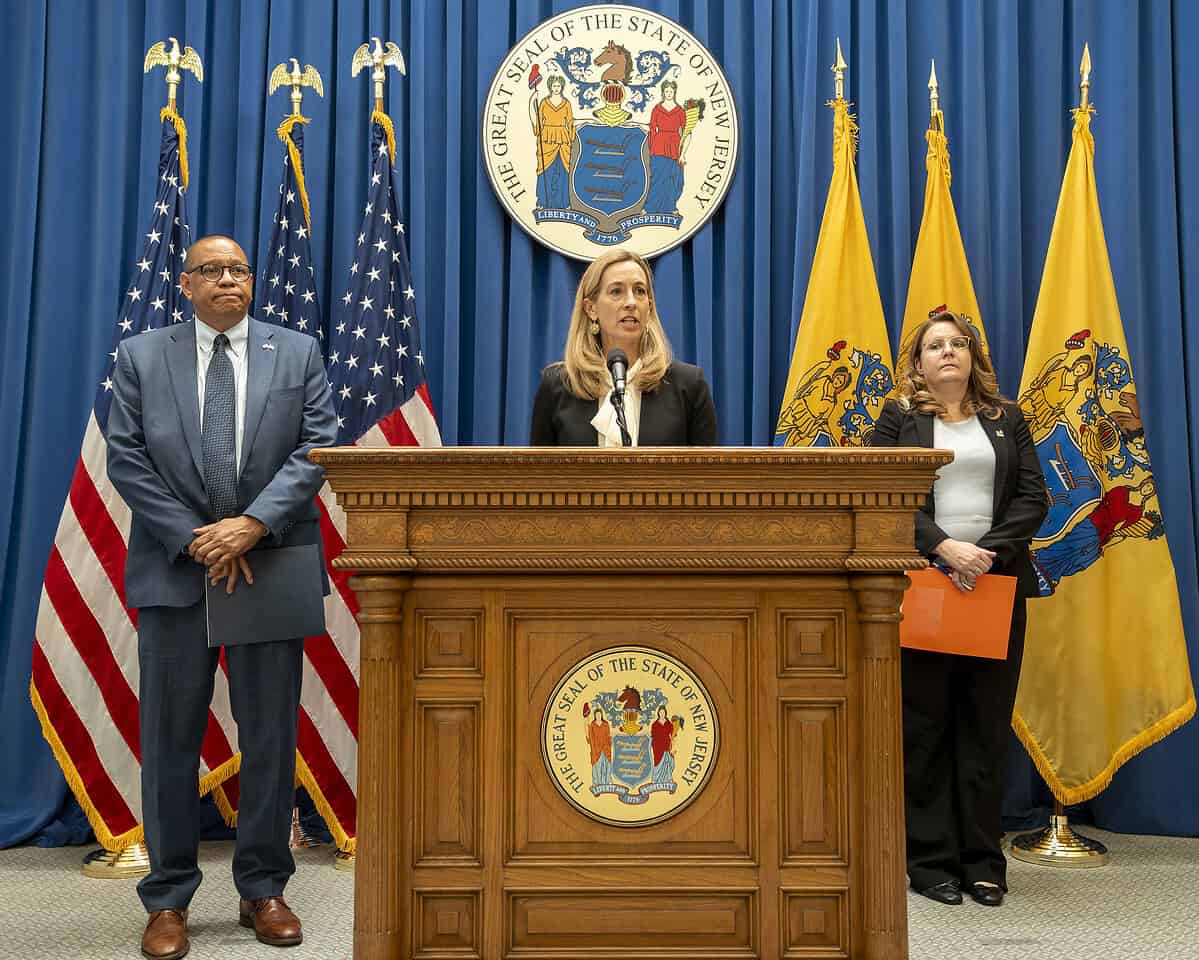
New Jersey officials have acknowledged a breakdown in the state’s voter-registration system: About 6,600 people who identified themselves as noncitizens while obtaining driver’s licenses or identification cards were nevertheless registered to vote.
Roughly 400 of them later cast ballots, according to a preliminary state review.
Gov. Mikie Sherrill has blamed a software error involving IDEMIA, a longtime Motor Vehicle Commission contractor. But the company says its system accurately recorded the information it received and that state officials had access to records showing the applicants were not citizens.
The failure occurred between June 2023 and June 2024, during former Gov. Phil Murphy’s administration. Although the process was corrected in June 2024, the public was not told about it until Sherrill disclosed it on July 21, 2026.
That leaves several major questions unresolved: Was this primarily a software failure, a poorly designed state process, a failure by election officials to review the information they received, or some combination of all three? Who knew about the problem, and when? And why weren’t the approximately 6,600 registrations reviewed and removed after the system was fixed?
Don’t miss the NJ stories that matter. Sign up for our free newsletter →
Here is what we know and what we don’t know yet.
First, who is allowed to vote in New Jersey?
To register to vote in New Jersey, a person must be a U.S. citizen, a resident of the county where they are registering for at least 30 days before the election, and at least 17 years old, although they cannot vote until they turn 18.
Noncitizens are prohibited from voting in federal and New Jersey elections. That includes people who are in the country legally, such as permanent residents with green cards, as well as people who are undocumented.
Noncitizens can legally obtain New Jersey driver’s licenses. Having a driver’s license does not make someone eligible to vote.
What happened?
Between June 2023 and June 2024, approximately 6,600 people were registered to vote through the Motor Vehicle Commission even though they indicated that they were not U.S. citizens.
The registrations occurred when people applied for or renewed driver’s licenses or state identification cards.
The applicants answered “no” when asked whether they were U.S. citizens, according to both the state and IDEMIA. But the system still asked whether they wanted to register to vote. IDEMIA says they answered “yes,” and their information was then transmitted for voter registration.
The state says the problem was corrected in June 2024. But officials apparently did not then identify and remove everyone who had already been improperly registered, and the public was not told about the failure until Sherrill disclosed it more than two years later.
Did the 6,600 people intentionally register?
That is disputed or, at a minimum, more complicated than the state initially disclosed.
Sherrill said the people were registered through no fault of their own because they had accurately indicated that they were not citizens.
IDEMIA later added an important detail. The company said all 6,600 people answered “no” when asked whether they were citizens but also answered “yes” when asked whether they wanted to register to vote.
That does not establish that they knowingly tried to register illegally. The questions may have been confusing, particularly for people with limited English proficiency. Applicants could have misunderstood what they were being asked or pressed the wrong button.
County election officials previously warned lawmakers that the Motor Vehicle Commission’s English-only computer interface could cause confusion for applicants who did not speak English fluently.
But the state has not explained why people who said they were not citizens were permitted to proceed to a voter-registration question, or why a “yes” response was transmitted despite the conflicting answer about citizenship.
After the problem was detected, Motor Vehicle Commission officials asked IDEMIA to update the software so that anyone who answered “no” when asked whether they were a U.S. citizen would automatically be marked as declining to register to vote.
Was this really a software error?
The state and IDEMIA disagree.
Sherrill has repeatedly described the problem as a “serious software error” and blamed IDEMIA, the Motor Vehicle Commission’s longtime technology contractor.
IDEMIA says its software worked according to the process approved by the state. The company says:
- The system correctly recorded that the applicants answered “no” to the citizenship question.
- The system also recorded that they answered “yes” when asked whether they wanted to register.
- No noncitizen was falsely identified as a citizen in the database.
- The applicants’ citizenship answers remained available to the Motor Vehicle Commission.
- The Motor Vehicle Commission transmitted the voter-registration information to the state Division of Elections.
- The Motor Vehicle Commission did not ask IDEMIA to automatically treat noncitizens as declining voter registration until June 2024.
The Sherrill administration has not fully responded to IDEMIA’s account. The governor has continued to blame the company, saying information from people who identified themselves as noncitizens should never have been transmitted for voter registration.
Both accounts could contain elements of truth. The software may have operated according to the state’s specifications. At the same time, the design of the system itself contained a glaring flaw: It allowed the voter-registration process to continue after someone said they were not a citizen.
Who was responsible for approving the registrations?
IDEMIA’s role was to collect and transmit information through the Motor Vehicle Commission system. The company says the information was transmitted to the New Jersey Division of Elections, which oversees elections statewide.
County election officials maintain voter-registration records and determine whether applications should be accepted.
The state has not explained what information the Division of Elections and county officials received, whether they could see the applicants’ answers to the citizenship question, or why the contradictory records were not flagged.
That distinction matters. If election officials received information explicitly showing that an applicant was not a citizen, the breakdown extended beyond the Motor Vehicle Commission’s software.
How many people voted?
The state’s preliminary analysis found that fewer than 400 people who were newly registered because of the error later cast ballots.
The state has not released the exact number.
Sherrill has said the voters were scattered across New Jersey. Some were registered as Democrats, some as Republicans, and others as unaffiliated voters.
Party registration does not reveal how someone voted. Ballots are secret, so the state cannot determine which candidates they supported.
Which elections did they vote in?
We do not know.
The error operated from June 2023 through June 2024, but people registered during that period could have remained eligible to cast ballots in later elections until their registrations were removed.
Depending on when they were registered, affected voters could potentially have participated in:
- The 2023 primary or general election
- The 2024 presidential primary
- The 2024 general election
- The 2025 primary or gubernatorial election
- The 2026 congressional primary
The state has not released a breakdown showing how many ballots were cast in each election, county, or municipality.
It also has not said how many people voted more than once over multiple elections or whether they voted in person, during early voting, or by mail.
Did the ballots change the result of an election?
There is no evidence so far that they did.
Sherrill has said the state has not found evidence that the ballots changed an election outcome. But the state has not released the election-by-election and municipality-by-municipality information needed for the public to evaluate that conclusion.
The ballots cannot simply be identified and removed from election totals. Once a ballot is separated from the voter’s identifying information, the secret ballot prevents officials from determining which candidates that person selected.
The lack of evidence that an election result changed should not be confused with proof that no result could have been affected. The state would have to disclose when and where the affected ballots were cast and compare those numbers with the margins in the relevant races.
Were all 6,600 people still noncitizens when the state reviewed the records?
That has not been established publicly.
Some people may have become naturalized U.S. citizens after their Motor Vehicle Commission transactions. If so, they could have become legally eligible to vote later, although their original registrations would still have been improperly processed if they were noncitizens at the time.
The 6,600 are likely a mix of:
- People who remained noncitizens and never voted
- People who remained noncitizens and voted
- People who became citizens before voting
- People whose citizenship status may have been recorded incorrectly
Without that review, “6,600 noncitizens on the voter rolls” may not accurately describe the current status of every person in the group.
Will the people who voted be prosecuted?
Sherrill has said New Jersey does not plan to prosecute the affected voters because the registrations resulted from the state’s own failure and there is no evidence that they deliberately broke the law.
“It would be really the utmost in hypocrisy for the state to charge them when it’s our fault,” she said.
Some Republican lawmakers have called for prosecutions, arguing that the attorney general, not the governor, should make that decision.
The federal government could also take a different position. The U.S. Department of Justice has demanded identifying information about the approximately 6,600 people, as well as details about when and where the nearly 400 voters cast ballots. Sherrill has said New Jersey will not turn over their personal information, arguing that the federal government could misuse it.
Noncitizen voting in a federal election can result in criminal charges and serious immigration consequences, including deportation.
Intent would be an important issue in any prosecution. Investigators would need to determine what each person understood, what the system told them, whether they received notices confirming their registration, and whether they knew they were ineligible when they voted.
Who knew about the problem, and when?
This may be the most important unanswered part of the case.
The faulty process operated from June 2023 until June 2024. The state says it was corrected in June 2024, meaning someone had discovered the problem, or at least recognized the flaw, by then.
But correcting the software did not correct what had already happened.
The state has not explained why officials did not immediately identify the approximately 6,600 people who had already been improperly registered and review or remove their registrations. Instead, at least some of them apparently remained on the voter rolls, and some may have continued voting.
The unanswered questions include:
- Who first discovered the problem?
- When was it discovered?
- Who ordered or approved the June 2024 software change?
- Did the Motor Vehicle Commission know that thousands of registrations had already been transmitted?
- Did the Division of Elections know?
- Were county election officials notified?
- Was then-Secretary of State Tahesha Way, who served as New Jersey’s chief election official, told?
- Was Latrecia Littles-Floyd, who headed the Motor Vehicle Commission during the affected period, told?
- Did anyone in Murphy’s office know?
- Did IDEMIA provide the state with a list of affected transactions?
- Why wasn’t that list used to review and clean up the voter rolls in 2024?
- Why weren’t the affected residents told that they had been improperly registered?
- Why wasn’t the problem disclosed to the public or lawmakers?
A spokesman for Murphy said the former governor knew nothing about the failure until Sherrill announced it publicly on July 21.
“Prior to Tuesday, Governor Murphy had no knowledge of any software glitch at the Motor Vehicle Commission that resulted in non-citizens being inadvertently added to New Jersey’s voter rolls,” spokesman Mahen Gunaratna told the New Jersey Globe.
That answers what Murphy says he personally knew. It does not tell us who within his administration knew or why the problem was not brought to his attention.
Sherrill said she learned about the situation on July 15, 2026, after being alerted by the Attorney General’s Office. She has said she does not know why the problem remained undisclosed for two years.
“I don’t know, but it’s unacceptable,” she said.
Who is investigating?
Sherrill has hired CSG Law, an outside law firm, to conduct what her administration describes as an independent investigation.
The investigation is expected to examine how the failure occurred, who knew about it, and why it was not disclosed. Sherrill has promised to make the findings public.
But important questions remain about the investigation itself:
- Who selected CSG Law?
- What is the firm being paid?
- What is the complete scope of its work?
- Does it have access to all Motor Vehicle Commission, Division of Elections, county, and IDEMIA records?
- Can it compel former officials to cooperate?
- Will interviews be conducted under oath?
- Will it investigate why the registrations were not reviewed and removed when the system was corrected?
- Will the public receive the complete report and supporting evidence or only a summary?
An investigation commissioned by the governor can still uncover important facts. But it does not have the same independence or legal powers as a legislative committee with subpoena authority.
What investigation do Republican lawmakers want?
Every Republican member of the state Senate and Assembly has called for a separate bipartisan legislative investigation.
The 23 Assembly Republicans have asked Assembly Speaker Craig Coughlin to establish a special committee with equal numbers of Democratic and Republican members. The state’s 15 Republican senators made a similar request to Senate President Nicholas Scutari.
Under their proposals, the committees would have bipartisan co-chairs and the power to subpoena documents, electronic records, and witnesses.
Republicans want sworn testimony from current and former officials, including:
- Former Motor Vehicle Commission acting chief administrator Latrecia Littles-Floyd
- Former Secretary of State Tahesha Way
- Current Lt. Gov. and Secretary of State Dale Caldwell
- IDEMIA executives involved in developing and approving the system
They also want lawmakers to determine:
- How the improper registrations occurred
- What officials knew and when they knew it
- Why the failure was not disclosed
- What corrective actions were taken
- Why the affected registrations were not removed sooner
- Where the nearly 400 ballots were cast
- Whether any election results were affected
- Whether the problem extends beyond the 6,600 cases already identified
- Whether earlier registration problems should have prompted additional safeguards
“This matter cannot be left solely to an internal executive branch investigation,” Assembly Republicans wrote in their request.
As of July 26, Democratic legislative leaders had not agreed to establish the proposed committees. Because Democrats control both houses, Republican lawmakers cannot create a committee or grant it subpoena power without Democratic support.
What is the state doing now?
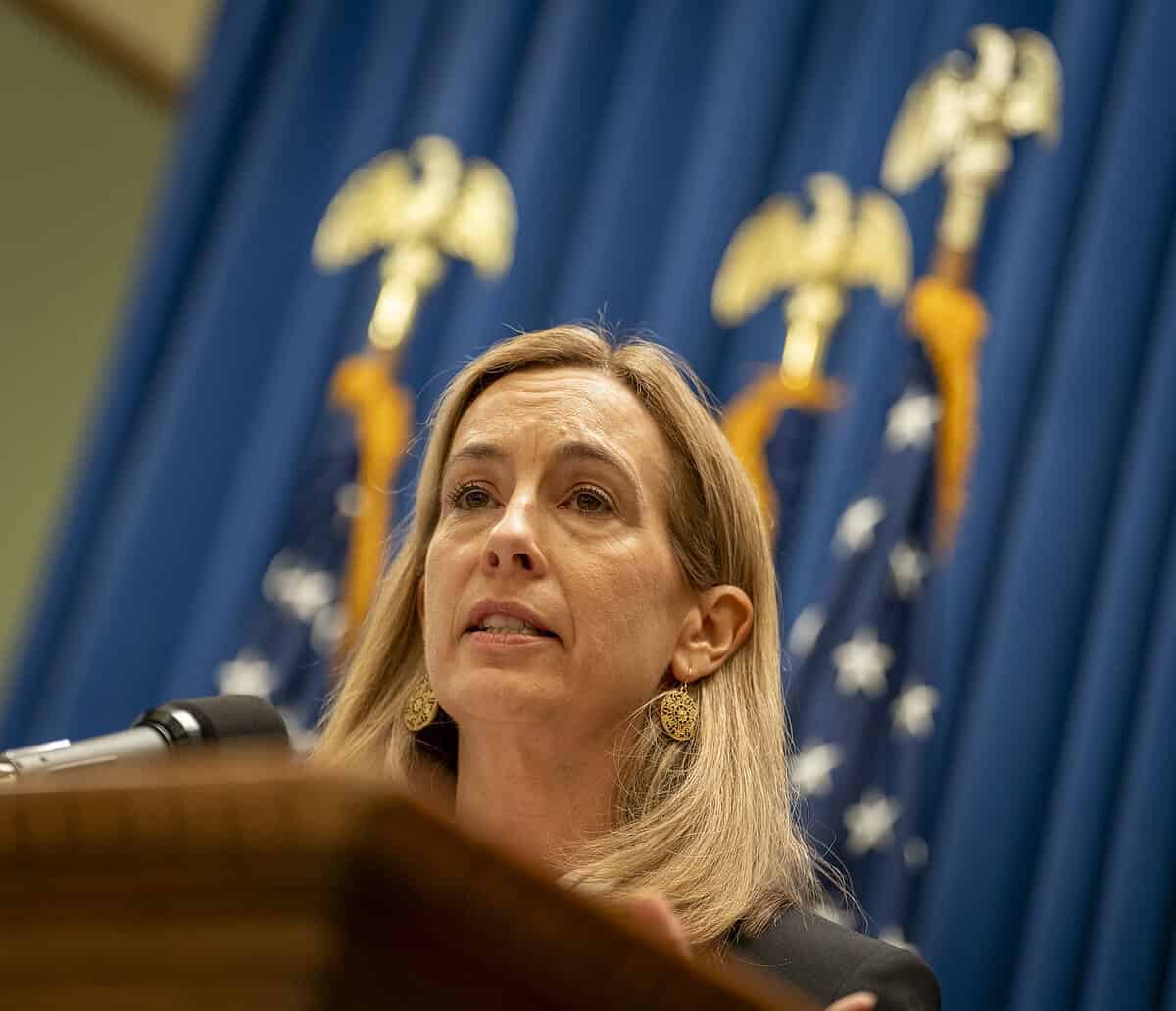
Sherrill has directed election officials to remove anyone who remains improperly registered. The state has also begun sending letters to affected residents.
A July 25 Motor Vehicle Commission letter obtained by the New Jersey Globe told recipients that records showed they may have been registered despite indicating that they were not citizens. The letter directed them to contact their county commissioner of registration to request removal.
It’s unclear why the burden is being placed on affected residents to seek removal instead of the state directly reviewing and correcting registrations it says were created by its own error.
The administration has said it is adding safeguards to prevent the same problem from happening again, but it has not fully described those safeguards.
The Motor Vehicle Commission is also replacing IDEMIA. Sherrill said the process of ending the relationship began before she learned about the voter-registration problem because of other complaints about the commission’s computer systems, wait times, and handling of REAL ID applications.
IDEMIA is one of the country’s largest providers of driver’s license and identity technology. The company says it provides driver’s license technology in 35 states, as well as identity verification, fingerprinting, background checks, facial recognition, and other biometric services to numerous state and federal agencies.
What is the federal government doing?
The U.S. Department of Justice sent Sherrill a letter requesting detailed information about the approximately 6,600 people, including their names, addresses, birth dates, nationalities, registration dates, and registration locations.
For those who voted, the department also requested information showing when and where they voted and, for mail ballots, copies of certifications and signatures.
The Justice Department was already suing New Jersey for access to an unredacted copy of the state’s voter rolls. It told the federal court that the Motor Vehicle Commission disclosure provided another reason it should receive the data.
New Jersey has asked the court to dismiss the federal government’s request, arguing that the Justice Department lacks the legal authority to obtain the information.
Sherrill has said the state will not voluntarily turn over the affected residents’ personal information, citing privacy and immigration concerns.
What about the federal claim that 35,152 noncitizens may be registered in New Jersey?
That is a separate and unproven claim.
Before Sherrill’s disclosure, the Department of Homeland Security told New Jersey that federal data indicated as many as 35,152 potential noncitizens could be registered in the state.
The department has not publicly released the names, its underlying data, or a detailed explanation of how it reached that number.
The word “potential” is important. Database comparisons can produce false matches because different people share names and birth dates, records are outdated, or immigrants become naturalized citizens after their immigration records were created.
The state’s confirmed Motor Vehicle Commission group of approximately 6,600 should not automatically be treated as proof that the federal estimate of 35,152 is accurate. It is not yet clear whether the two groups overlap or how the federal government produced its estimate.
Is the claim about noncitizens being called for jury duty related?
Not in the way it has been portrayed.
A New Jersey Globe story published July 24 carried the headline, “75,000 noncitizens called for jury duty in New Jersey each year.” The story said the figure “widens the scope of a growing controversy over government databases that may incorrectly identify noncitizens as eligible voters and jurors.”
It also stated:
“Sherrill’s disclosure that the Motor Vehicles Commission is creating records of New Jersey residents and transmitting them to the judiciary and Statewide Voter Registration System that misidentify some residents as citizens will only enhance the current controversy.”
New Jersey does not select potential jurors from voter-registration records alone. The Judiciary randomly draws names from three sources: Motor Vehicle Commission records, tax records, and Division of Elections records. More than 500,000 noncitizens pay taxes in New Jersey.
Those source lists are intentionally broad to make juries more representative of communities in the state. A person does not need to be eligible to vote or serve on a jury to appear in one of the databases. Receiving a jury summons does not mean the government has identified that person as a citizen or approved that person to serve.
The approximately 75,000 figure represents people who received a summons and then reported on a qualification questionnaire that they were not U.S. citizens. In other words, the screening system identified and disqualified them as it was designed to do.
Potential jurors face several safeguards:
- They must complete a questionnaire asking about citizenship and other qualifications.
- The citizenship requirement is explained during jury orientation.
- Judges and attorneys may question potential jurors directly about their eligibility.
- Only U.S. citizens who meet the other statutory requirements may serve.
The Administrative Office of the Courts said it has no indication that noncitizens have served on New Jersey juries since the safeguards were implemented.
The jury figure therefore does not show that 75,000 noncitizens were incorrectly classified as citizens, approved for jury service, or added to the voter rolls. It also does not show that the Motor Vehicle Commission transmitted false citizenship information to the Judiciary.
One legitimate question is whether any of the approximately 6,600 people improperly registered to vote later appeared on a jury source list because of that registration. But because the Judiciary also receives Motor Vehicle Commission and tax records, many could have received a summons regardless of their voter-registration status.
Does this prove widespread, organized voter fraud?
No evidence of an organized effort has been presented.
What has been established is a government failure that allowed thousands of apparently ineligible people to be registered and hundreds to cast ballots.
So far, there is no evidence that a political party, campaign, advocacy organization, foreign government, or group of voters coordinated the registrations or voting.
The registrations included Democrats, Republicans, and unaffiliated voters and were spread across the state, according to the governor.
Calling the episode merely a harmless “glitch” understates its seriousness. Calling it proof of a coordinated election-fraud scheme goes beyond the evidence currently available.
The biggest unanswered questions
- Who first discovered the registration problem, and on what date?
- What document, complaint, audit, or data review revealed it?
- Who knew about it in June 2024?
- Who approved the software change that corrected the process?
- Did the correction produce a report identifying all previous transactions affected by the error?
- Did IDEMIA give that information to the Motor Vehicle Commission?
- When did the Division of Elections learn about the 6,600 registrations and how?
- Were county election officials told?
- What information did state and county election officials receive with each application?
- Could they see that the applicants had answered “no” to the citizenship question?
- Why weren’t the approximately 6,600 registrations immediately reviewed when the process was fixed?
- Why were at least some affected residents apparently left on the rolls for two more years?
- Who decided not to notify the public, lawmakers, county officials, or the affected residents? (Editor’s note: Some lawmakers and county officials said in 2024 they had heard about the issue, but not details. No one pursued it at the time, it appears.)
- Did former Secretary of State Tahesha Way know?
- Did former Motor Vehicle Commission chief Latrecia Littles-Floyd know?
- Did anyone in Murphy’s office know?
- When did the Attorney General’s Office learn about the problem?
- What prompted the Attorney General’s Office to alert Sherrill in July 2026?
- Was the timing connected to the federal government’s inquiry, an internal review, litigation, a whistleblower, or something else?
- What is the exact number of improper registrations?
- What is the exact number of people who voted?
- How many voted in each election, county, and municipality?
- How many voted in more than one election?
- Were ballots cast in races decided by fewer votes than the number of affected ballots?
- How many affected residents became citizens before voting?
- How many remained noncitizens?
- How many registrations had already been removed before Sherrill’s announcement?
- How many remained active as of July 2026?
- Did affected residents receive registration cards, sample ballots, or mail-ballot applications that could have led them to believe they were eligible?
- Did any affected residents report the mistake or previously ask to be removed?
- Were similar registrations processed before June 2023?
- Has the state reviewed the entire period since automatic voter registration began in 2018?
- What is CSG Law’s mandate, budget, deadline, and access to records?
- Will CSG Law’s complete report and supporting evidence be released?
- Will Democratic legislative leaders establish the bipartisan committees requested by Republicans?
- If not, will the Legislature hold public hearings or require sworn testimony?
- What safeguards have now been added to prevent the same failure?
The state did not just fail to prevent approximately 6,600 improper registrations. After correcting the process in June 2024, it failed to address the registrations the faulty process had produced. This failure and the two years of silence that followed have raised new questions about the state’s handling of its voter rolls at a time when public confidence in government and elections is already low.
Sherrill was not governor when the failure occurred and did not oversee the officials responsible. But as governor, she is now responsible for determining how thoroughly and transparently the state investigates what happened, discloses its findings, and rebuilds confidence in the election system.

Krystal Knapp is the founder, executive director, and publisher of The Jersey Vindicator and the founder of Planet Princeton. She has more than two decades of experience reporting in New Jersey, including 10 years at The Trenton Times, where she was the newsroom’s public records and computer-assisted reporting expert. Her work has been recognized by the New Jersey Press Association and the Center for Cooperative Media. You can reach her at Krystal AT jerseyvindicator.org.