



Sherrill signs bill expanding NJ protections for reproductive, gender-affirming care
The law shields patients and providers from certain out-of-state legal actions and creates penalties for blocking access to care
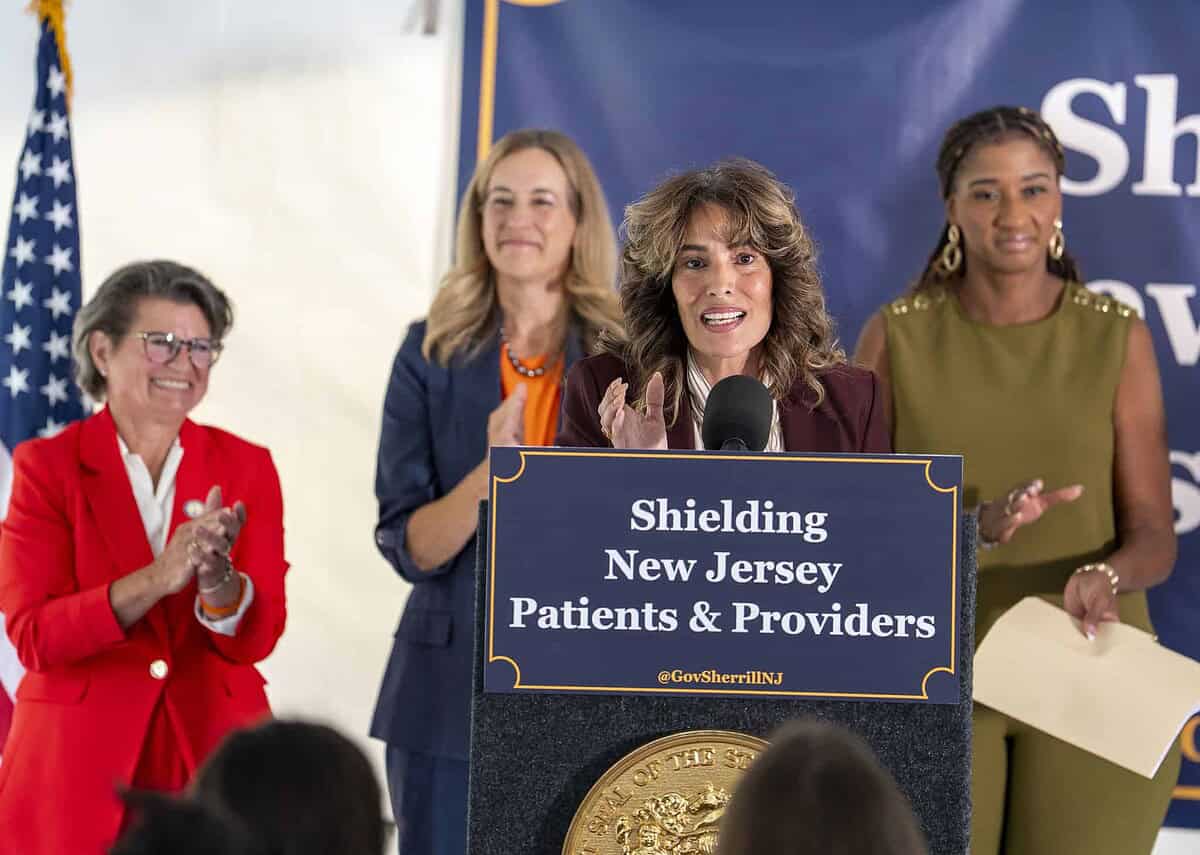
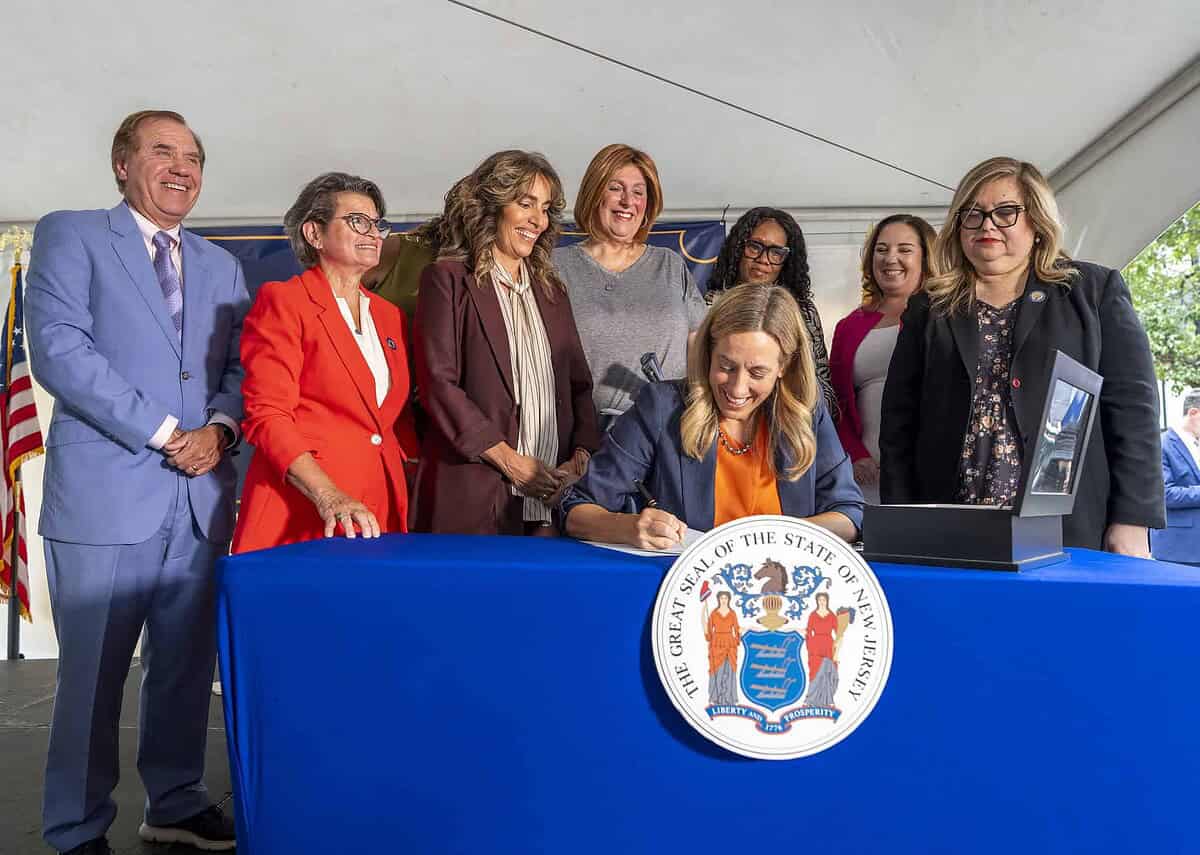
Gov. Mikie Sherrill signed a law Thursday expanding New Jersey’s legal protections for patients who receive reproductive or gender-affirming health care and the professionals who provide it.
The measure, S2260/A2218, strengthens the state’s existing reproductive health care shield law and extends its protections to gender-affirming care that is legal in New Jersey.
It also makes it a crime to intentionally injure, threaten, intimidate, or physically block people seeking or providing care. Damaging a provider’s or health care facility’s property to interfere with care would also be a crime.
“We have seen attacks from the Trump administration and other states on access to reproductive and gender affirming healthcare, and attempts to impose restrictions across state borders,” Sherrill said. “Here in New Jersey, we are standing firm in defense of reproductive freedoms, including the right to choose and the right to receive gender-affirming care.”
Don’t miss the NJ stories that matter. Sign up for our free newsletter →
Sherrill said that no one should fear intimidation or violence for seeking healthcare.
“And no healthcare professional should fear punishment from another state for providing care that is legal in New Jersey,” she said. “With this legislation, we are making clear that New Jersey will protect patients, providers, and the fundamental freedom to make personal healthcare decisions.”
The law covers services related to pregnancy, assisted reproductive technology, contraception, miscarriage management, and abortion. It also covers medication and other services intended to support a person’s alignment with their gender identity or expression.
Its protections apply only to care that is legal in New Jersey and consistent with state regulations, agency requirements, and professional standards of care.
The law is designed in part to prevent states with more restrictive abortion or gender-affirming care laws from using New Jersey agencies and courts to investigate or punish patients, providers, or people who help them obtain care here.
Under the law:
- New Jersey agencies generally cannot provide information, personnel, equipment, or other resources to support an out-of-state investigation into protected care.
- State and local law enforcement officers cannot arrest someone solely for providing, receiving, or helping someone obtain care that is legal in New Jersey.
- New Jersey courts generally cannot issue subpoenas, search warrants, wiretap orders, or other legal process in support of such investigations.
- The governor cannot extradite someone who was not in the requesting state when the alleged offense occurred and is being prosecuted for reproductive health care activity protected in New Jersey.
- State licensing boards cannot discipline a health care professional solely for providing protected care.
- Medical malpractice insurers cannot deny coverage, raise rates, or take other adverse action against a provider because the patient lives in a state where the care is illegal or because another state disciplined the provider for providing that care.
The restrictions contain exceptions, including when the underlying conduct would also violate New Jersey law or when cooperation is required by a valid court order or federal law. The law extends some protections to federal investigations only to the extent permitted under federal law.
Patient information related to protected health care generally cannot be disclosed in legal or administrative proceedings without written consent. Existing exceptions remain for disclosures required under state law or court rules, professional disciplinary investigations, legal defense, and suspected abuse.
“New Jersey is committed to protecting bodily autonomy and access to medical care for all,” Attorney General Jennifer Davenport said. “This law ensures that anyone seeking or providing reproductive or gender-affirming health services in our state can do so without fear of harassment or punishment.”
The new crime of interference with reproductive health care services is a fourth-degree offense, punishable by up to 18 months in prison and a fine of up to $10,000. It becomes a third-degree crime if the victim suffers bodily injury and a second-degree crime if the victim suffers significant or serious bodily injury.
Patients, providers, volunteers, and others harmed by prohibited conduct can also file civil lawsuits. Courts may award damages of at least $1,000 per violation, punitive damages, attorneys’ fees, and other relief.
The attorney general and county and municipal prosecutors may also seek injunctions and civil penalties of up to $10,000 for a first violation and $25,000 for subsequent violations.
An earlier version of the legislation drew objections from the New Jersey Press Association and other free speech advocates because it would have allowed lawsuits over statements that allegedly harmed someone’s reputation, finances, or emotional well-being without requiring the speech to be false, threatening, or defamatory.
Lawmakers removed that language before final passage of the bill. Civil liability under the version Sherrill signed is tied to conduct that violates the law’s criminal interference provisions, such as injury, threats of force, physical obstruction, or property damage.
The legislation passed the Assembly 55-23 and cleared the Senate 25-15 on June 30. Republicans opposed it, along with one Assembly Democrat. New Jersey Right to Life said the amended legislation still raised concerns about parental rights, interstate accountability, and legal protections for providers.
Leaders of advocacy organizations that supported the legislation said the new law creates lasting protections against out-of-state interference and allows patients and providers to obtain or deliver legal care without fear of retaliation.
“With the passage of the Shield Bill, we are stepping out of the temporary and into the permanent, replacing executive orders with strong statutory protections,” said Simone Kraus, a steering committee member of the Transgender Rights Coalition of New Jersey.
Kraus said the coalition is proud to have fought for a firewall around New Jersey that protects providers and transgender people.
“As a transgender woman, I know these protections are more than words on a page; they give our community greater freedom to live our lives without fear,” Kraus said.
Roslyn Rogers Collins, president and CEO of Planned Parenthood of Metropolitan New Jersey, said reproductive health care is essential health care.
“By signing this bill, Governor Sherrill ensures patients and providers in New Jersey are protected from out-of-state threats or retaliation,” Collins said. “We could not be more grateful to her and her team.”
Kaitlyn Wojtowicz, executive director of the Planned Parenthood Action Fund of New Jersey, noted that 20 states ban or severely restrict abortion.
“With this signing, New Jersey is standing up as a beacon of hope for reproductive health care across the country and ensuring that all patients and providers are protected for exercising their fundamental right to health care,” Wojtowicz said.

DaWuan Norwood, policy counsel at the American Civil Liberties Union of New Jersey, said the law affirms the state’s commitment to the safety, autonomy, and dignity of all people.
“Everyone should be able to access reproductive health care and life-saving services when they need them, and the new protections from this bill will help make that a reality in New Jersey,” Norwood said.
Lauren Albrecht, senior director of advocacy and organizing at Garden State Equality, said the new law is the embodiment of what happens when elected officials lead with conviction and listen to advocates and experts.
“New Jersey has decisively declared today that we believe in protecting our providers, and with that, their patients, from politically motivated attacks on bodily autonomy and self-determination,” Albrecht said.
Natalie Baker, a co-founder and steering committee member of the Transgender Rights Coalition of New Jersey, said the law also provides reassurance to providers and the families of transgender children.
“As a healthcare provider and as a parent of a transgender child, I know that the care this law protects is safe, evidence-based, and can mean the difference between a childhood spent thriving and one spent in distress,” Baker said. “Today, New Jersey makes clear that medical decisions stay where they belong: with patients, families and doctors. My fellow providers, my patients, and my family can all breathe a little easier.”
The law took effect immediately.
Building a more informed New Jersey, one story at a time.
The Jersey Vindicator is funded by readers who believe New Jersey needs tough, independent reporting that serves the public. No paywall. No spin. Just deeply reported journalism that helps people understand what’s happening in our state.
If you believe this work matters, please contribute today.

Krystal Knapp is the founder, executive director, and publisher of The Jersey Vindicator and the founder of Planet Princeton. She has more than two decades of experience reporting in New Jersey, including 10 years at The Trenton Times, where she was the newsroom’s public records and computer-assisted reporting expert. Her work has been recognized by the New Jersey Press Association and the Center for Cooperative Media. You can reach her at Krystal AT jerseyvindicator.org.