



Federal judge dismisses challenge to Sherrill’s restrictions on ICE
Decision affirms state’s authority to restrict ICE access to nonpublic facilities
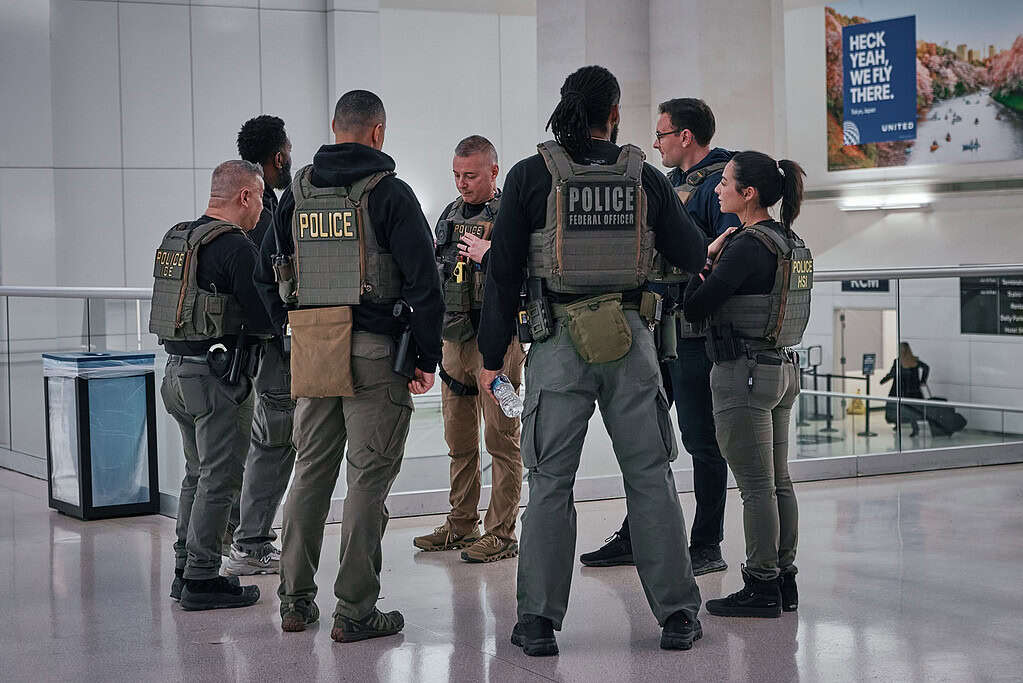
New Jersey does not have to assist federal immigration enforcement officers and may prevent federal agents from using nonpublic state property without a judicial warrant, a federal judge ruled Friday.
U.S. District Judge Georgette Castner dismissed the Trump administration’s challenge to Gov. Mikie Sherrill’s restrictions on federal immigration officers’ use of state property, leaving the executive order in effect.
“Once again, Trump tried to stop us, and once again we won,” Sherrill said in a statement after the ruling.
Sherrill pledged to continue fighting for safe communities across the state, and said she issued the order because U.S. Immigration and Customs Enforcement “is not making New Jersey’s communities any safer.”
Attorney General Jennifer Davenport called the Justice Department’s lawsuit “baseless” and said the executive order was “plainly lawful.”
“Make no mistake: Our office will continue to work tirelessly alongside Governor Sherrill to protect our state’s immigrant communities,” Davenport said.
Sherrill signed Executive Order 12 on Feb. 11, directing state agencies not to permit federal immigration officers to enter or use nonpublic areas of state property for immigration enforcement without a judicial warrant or order. The order also bars state property from being used as an immigration-enforcement staging area, processing site, or operations base.
State property includes facilities, offices, parking lots, and garages owned, leased, operated, or controlled by executive branch agencies.
The restrictions do not apply to areas open to the public. Federal immigration agents may enter those areas on the same terms as anyone else. Castner noted that officers may still conduct enforcement near state courthouses, in public portions of those buildings, and throughout federal, county, and municipal courthouses.
The Trump administration filed a lawsuit 12 days after Sherrill signed the order, arguing that it conflicted with federal immigration law, improperly regulated the federal government, and discriminated against federal officers.
Federal officials said the restrictions could prevent ICE from making arrests or accepting custody transfers in controlled settings, forcing agents to conduct potentially more dangerous arrests in public. The Trump administration accused New Jersey officials of obstructing federal law enforcement and endangering officers.
Castner rejected all three claims brought by the U.S. Department of Justice. In her ruling, she found that the federal government had legal standing to bring the case but failed to state a plausible constitutional claim.
The ruling turned largely on the distinction between obstructing federal immigration enforcement and declining to help carry it out.
Executive Order 12 does not prevent federal agents from enforcing immigration law in New Jersey, Castner wrote. Instead, it says the state will not provide its property and resources to assist civil immigration operations.
“Refusing to help is not the same as impeding,” Castner wrote, quoting a 2019 federal appeals court ruling.
Castner found that federal immigration laws anticipate voluntary cooperation from states, not mandatory assistance. Requiring New Jersey to provide its facilities or employees for federal enforcement would violate the Constitution’s anti-commandeering principle, which generally prevents Washington from forcing states to administer federal programs.
New Jersey was acting as the owner of its property, not as a regulator of the federal government, the judge found.
The ACLU of New Jersey and Democracy Defenders Fund filed a friend-of-the-court brief supporting the state on behalf of 20 community organizations. Jeanne LoCicero, the ACLU-NJ’s legal director, said the decision would help ensure residents can use state facilities without fear or intimidation by federal agents.
The Justice Department can appeal the ruling but has not announced whether it will do so yet.

Krystal Knapp is the founder, executive director, and publisher of The Jersey Vindicator and the founder of Planet Princeton. She has more than two decades of experience reporting in New Jersey, including 10 years at The Trenton Times, where she was the newsroom’s public records and computer-assisted reporting expert. Her work has been recognized by the New Jersey Press Association and the Center for Cooperative Media. You can reach her at Krystal AT jerseyvindicator.org.