


New Jersey’s county line is finally dead altogether as Bergen County agrees to settle
Bergen County becomes the last county to settle and accept fair primary-ballot rules. but must pay more than $90,000 in legal fees
Bergen County’s clerk has agreed to end his fight to preserve New Jersey’s controversial county-line primary ballot, becoming the last of 19 county clerks sued over the system to accept new rules designed to give candidates equal treatment.
The proposed settlement, filed Monday in federal court, would resolve two related lawsuits: one filed by former primary candidates and the New Jersey Working Families Party in 2020 and another filed by U.S. Sen. Andy Kim and two congressional candidates in 2024.
Bergen County also would pay about $90,000 toward the plaintiffs’ legal fees and costs, likely leaving taxpayers to pick up the bill for the clerk’s continued defense of the ballot system.
The agreement still must be approved by U.S. District Judge Zahid Quraishi.
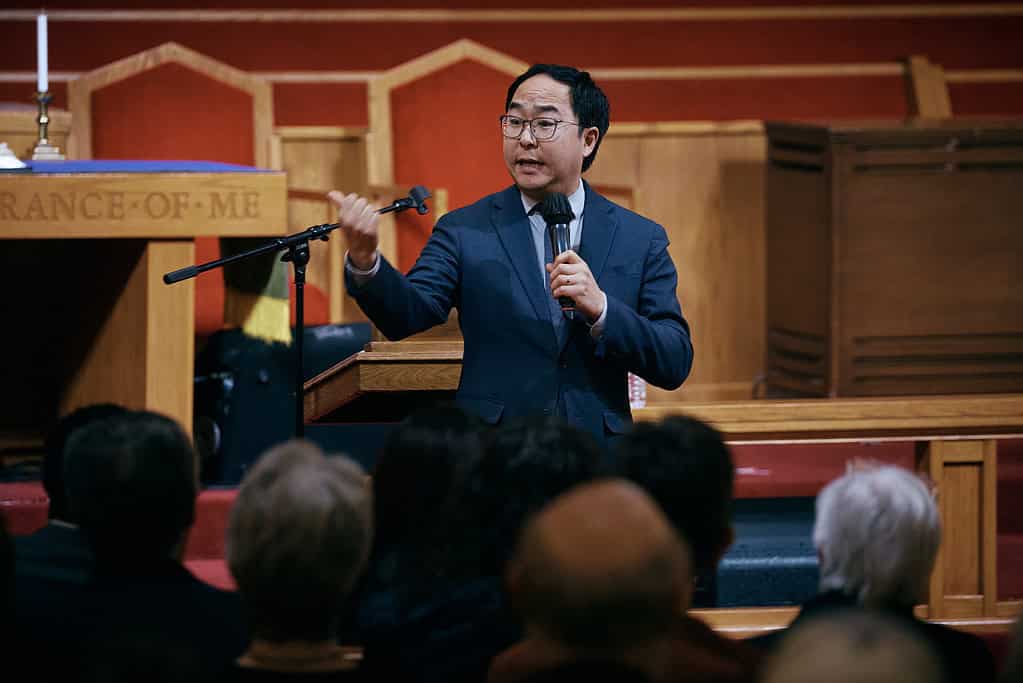
“Today’s settlement is a massive win for New Jersey voters,” said Kim, whose 2024 lawsuit led Quraishi to block the county line in that year’s Democratic primary. “It’s a win that took years of work from advocates and everyday people who just wanted their democracy to work for them.”
For decades, 19 of New Jersey’s 21 counties used some form of the county line. Candidates endorsed by county political organizations were grouped in the prominent left column or on the primary ballot, often along with better-known candidates.
Candidates who did not receive the party’s endorsement could appear far away from their opponents in columns to the far right, a position people often referred to as “ballot Siberia.” The ballot system gave county party leaders significant power because their endorsement often came with a major advantage on the ballot.
The first lawsuit, Conforti v. Hanlon, was filed in July 2020 by former primary candidates and the New Jersey Working Families Party. The case challenged several parts of the county-line system, including rules that allowed party-endorsed candidates to be grouped together and receive favorable placement.
Bromberg Law and Weissman & Mintz brought the case, which survived seven attempts to have it dismissed, according to the plaintiffs’ attorneys.
Kim filed the second lawsuit in February 2024 with congressional candidates Sarah Schoengood and Carolyn Rush. At the time, Kim was seeking the Democratic nomination for U.S. Senate against then-first lady Tammy Murphy, who had secured favorable ballot positions in counties representing about two-thirds of Democratic voters.
After Murphy dropped out, party leaders offered Kim the favorable ballot positions she would have received. But Kim continued pursuing the lawsuit, arguing that candidates should not have to join a party-backed slate to improve their chances of winning.
Quraishi sided with Kim, Schoengood and Rush in March 2024 and ordered county clerks to stop using the county line in that year’s Democratic primary. A federal appeals court upheld his decision.
“We shouldn’t see today as the finish line; we still have a system — in New Jersey and across the country — that has too much money and too little transparency and power for working families,” Kim said Monday. “We need to fix that, and today’s win will help propel those next fights forward.”
The Legislature rewrote New Jersey’s primary-ballot law in 2025, but Bergen County Clerk John Hogan continued fighting the lawsuits. As recently as this spring, he argued that the plaintiffs should no longer be allowed to pursue the cases because they had not shown that they planned to run for office again.
Eight plaintiffs then submitted statements saying they intended to seek local, county or statewide offices in future elections. The New Jersey Working Families Party also said it planned to endorse candidates in 2026 and beyond.
Quraishi rejected Hogan’s argument in May and allowed the lawsuits to continue. The judge found that county clerks still had enough freedom under the revised law to arrange ballots in ways that could favor some candidates.
Hogan has now agreed to stop contesting the plaintiffs’ claims and accept a court order setting detailed rules for Bergen County’s primary ballots.
“Every county clerk named in this case has now agreed to fair ballots. There’s nothing left to argue,” attorneys Yael Bromberg, Brett Pugach and Flavio Komuves said in a joint statement Monday. “If anyone tries to bring the old system back, they’ll end up right back in court. Fair ballots are the law, and they’re here to stay.”
Under the proposed settlement, candidates would be grouped according to the office they are seeking. For example, all candidates for governor would appear together and all candidates for the state Assembly would appear together.
The clerk also would conduct a separate random drawing for each office. Every candidate running for the same position would have an equal chance to appear first.
Those rules would apply to all primary ballots, including mail-in ballots and ballots used at polling places.
Bergen County could no longer use the result of a drawing for one race to determine where an entire group of party-endorsed candidates appears. It also could not place candidates for different offices together in one column or row.
The clerk would be barred from separating a candidate from others seeking the same office or placing one candidate beneath or beside opponents who otherwise appear together.
Candidates still could share a slogan on the ballot. But the clerk could not group them in a way that prevents their opponents from receiving an equal drawing and equal placement.
“The county line is finally dead. A lot of people said this day would never come, but here we are,” said Antoinette Miles, state director of the New Jersey Working Families Party on Monday. “This closes a long and ugly chapter in New Jersey politics where party bosses picked election winners. Now it’s the voters who get to write the next one.”
New Jersey used ballots organized by office in the 2024 Democratic primary following Quraishi’s ruling in Kim’s case. The Legislature later made that format part of state law through a bill signed by then-Gov. Phil Murphy in March 2025.
But Quraishi found that the new law did not address all the problems raised in the lawsuits. County clerks still had some control over how candidates were arranged based on their petitions, slogans, endorsements and political alliances.
“The amendment did not remove all the alleged unconstitutional practices,” Quraishi wrote.
Union County Clerk Joanne Rajoppi settled with the plaintiffs in June, leaving Hogan as the only county clerk still fighting either case.
Bergen County officials approved the proposed payment of legal fees and costs at the county commissioners’ July 1 meeting, according to a report filed with the court. Lawyers spent another month negotiating the settlement’s final wording.
If Quraishi approves the settlement, he would remain responsible for enforcing it and resolving any disagreements over its requirements. Hogan would then be dismissed from the litigation, allowing both cases to be closed.
Editor’s note: Our original stories said Bergen County would pay $60,000 for legal fees, but that was for one of two lawsuits about the ballot system. The legal fees for the second lawsuit are another $30,000. Thanks to colleague Charles Stile for digging into this.

Krystal Knapp is the founder, executive director, and publisher of The Jersey Vindicator and the founder of Planet Princeton. She has more than two decades of experience reporting in New Jersey, including 10 years at The Trenton Times, where she was the newsroom’s public records and computer-assisted reporting expert. Her work has been recognized by the New Jersey Press Association and the Center for Cooperative Media. You can reach her at Krystal AT jerseyvindicator.org.