



Despite reforms, NJ prisons face persistent staffing and safety problems
Corrections Ombudsperson Terry Schuster is urging lawmakers to expand oversight to county jails, plan for older prisoners’ care, and replace Trenton’s nearly 200-year-old prison compound.
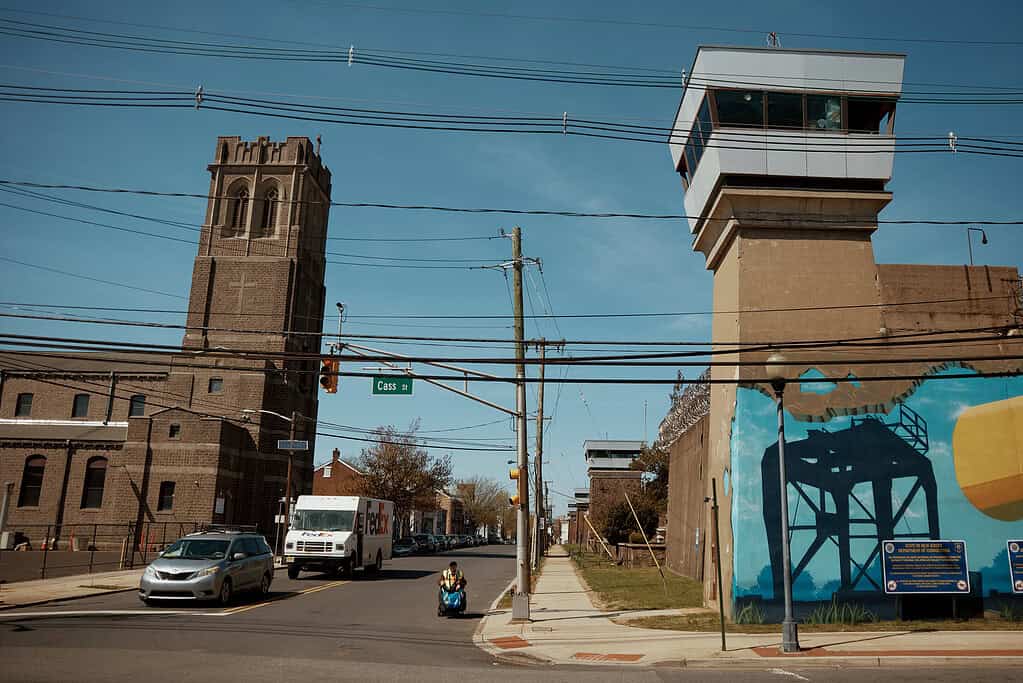
New Jersey’s state prison system continues to grapple with chronic staffing shortages, decaying facilities, an aging prison population and a worrying cluster of unnatural deaths, according to a state prison watchdog’s annual report.
Issued Thursday by Corrections Ombudsperson Terry Schuster, the 27-page document provided a look back at almost five years’ worth of prison inspections, investigations and resolutions that stemmed from more than 60,000 requests for assistance from incarcerated people and their loved ones.
Many of the complaints related to prisoners’ problems with property, money, housing, health care, confinement conditions and communication with the outside world.
Statewide, complaints to the office about safety, discipline and health care fell 3% for the fiscal year that ended June 30, compared with the previous year, Schuster wrote.
Schuster lauded the Department of Corrections and its commissioner, Victoria Kuhn, for providing stable and competent leadership while shepherding the prison system through intense scrutiny following allegations of sexual abuse at Edna Mahan Correctional Facility, the state’s only women’s prison.
Federal monitoring of the troubled facility ended in July 2026 after five years of reforms and compliance. In his report, Schuster called it a successful conclusion.
The department also created a program that gave prisoners tablets to talk with friends and family, adopted a new mail process that cut down on the amount of contraband making its way inside prison walls, and built a larger, stronger network of community reentry partners, Schuster wrote.
“There was real progress to celebrate this past year,” Schuster wrote. “And there are interesting and difficult problems for policymakers to turn to next.”
Schuster, who was appointed to a five-year term as corrections ombudsperson in May 2022, oversees the independent agency responsible for reviewing and auditing the environment inside New Jersey’s nine state correctional facilities.
In the last fiscal year, his office received more than 12,600 requests for help from incarcerated people and their loved ones, mostly concerning inmates at New Jersey State Prison, Northern State Prison and South Woods State Prison.
Among the most common complaints were allegations about lost, stolen, or broken property; incorrect personal account balances; delayed responses to sick call requests; slow mail delivery; and problems getting family members approved for visits.
Others reported conditions of confinement such as extreme temperatures, the loss of electricity, or pests and insects.
More than 800 calls and letters were related to safety concerns. About 70% of these were immediately referred to the Special Investigations Division or prison administrators, Schuster wrote.
Schuster said his office managed to close out and address 93% of complaints within two weeks.
But problems persist, such as the chronic shortage of corrections officers that union officials say has plagued the department since the pandemic.
Schuster’s office has listed the staffing crunch as a top concern for several years, and the daily operations at prisons have now become “constrained by hundreds of officer vacancies and nearly as many people out on long-term leave,” he wrote.
The department has graduated more than 500 new officers from its training academy in the last two years and has raised starting salaries, Schuster wrote.
“Lockdowns and days with limited activity have become common on weekends and around holidays as officers who have worked mandatory overtime shifts several days during the week call out sick,” Schuster wrote. “The problem may get worse with current staff who are eligible to retire this year with full pensions.”
“If the state can’t hire and train more corrections officers than are retiring, lawmakers must take more steps to reduce the incarcerated population so that prisons can operate safely,” he added.
Beyond that, the department has other issues it must address, including overcrowding caused by the practice of putting two inmates in cells designed for one person, a lack of out-of-cell time for those in close custody units, and an aging prison population that includes more than 200 inmates age 70 or older and 750 inmates who are in their 60s.
The older population has grown significantly because of mandatory minimum sentences, Schuster wrote, and the prevalence of seniors in the prison system has continually driven up prison health care costs.
“The department must assess today what staff and physical space it will need a decade from now to accommodate the disability, mobility, and long-term care needs of its aging population, as well as their end-of-life care,” he wrote. “Lawmakers should expect continued increases in health care-related costs that cannot be covered by federal Medicaid or Medicare dollars.”
Schuster also reported that thousands of incarcerated people are still being held in facilities without air conditioning, including four out of five beds at the Garden State Youth Correctional Facility, excluding its reception unit, as well as all general population beds at Bayside State Prison, East Jersey State Prison and the West Compound of New Jersey State Prison in Trenton.
Temperatures inside can soar into the 90s or beyond during the summer, Schuster said. But retrofitting the facilities with air conditioning would cost an estimated $296 million, according to 2022 Department of Corrections estimates cited by Schuster.
He recommended that lawmakers prioritize installing air conditioning at Bayside and Garden State, which the corrections department will likely use for the next five decades or more. That work would cost around $136 million, Schuster said.
There’s also the problem of the West Compound, which Schuster detailed in a standalone September 2025 report that called on lawmakers to demolish the aging facility, parts of which date back to 1836.
Replacing the West Compound could cost about $1 billion, Schuster wrote. The state won’t be able to dodge the bill for much longer.
“Lawmakers should begin working with the Department of Corrections and the New Jersey Treasurer to explore avenues to secure funding for a project of this scale,” he wrote.
In the meantime, the corrections department should begin moving out well-behaved inmates who can be safely held at other facilities, he wrote.
The corrections ombudsperson also outlined several cases of young people who died “unnatural deaths” while incarcerated and urged the department to find out what went wrong in each situation.
That includes three homicides between January and April of this year, as well as at least three other deaths over the summer that are still being investigated — a suspected suicide and two suspected homicides, Schuster wrote.
Of the six deaths, two happened at Northern State Prison, three at Garden State Youth Correctional Facility, and one at South Woods State Prison.
Four of the six people who died were young men in their 20s.
“Given the concentration of deaths this year at Garden State, the department should consider if there are more steps they can take to help people process the losses, to increase transparency, and to better understand what went wrong to help prevent more unnatural deaths in the future,” Schuster wrote.
He also said lawmakers should extend county jail living standards to state prisons, where those same requirements do not apply, and cells are often far smaller.
Schuster also suggested extending independent, statewide oversight to county jails, which endure many of the same problems at state prisons but have no independent watchdog of their own.
The state’s Special Treatment Unit, which provides post-sentence treatment for civilly committed people convicted of sex offenses, functions more like another prison than a treatment facility, he wrote.
“A portion of residents in the STU live in a therapeutic community setting, and currently about 20% of the STU population is on a release track,” Schuster wrote. “The rest of the STU population lives in a dark multi-level prison building that was formerly used for disciplinary confinement.”
People held in that building either refused treatment or didn’t make progress, Schuster said. People whom sentencing judges expected to be out of prison in their 30s or 40s are still confined in the unit in their 50s and 60s, he wrote.
“As one resident reported to the Ombudsperson Office, ‘Six to eight hours a week we’re in therapy. The rest of the time, we’re in jail,’” Schuster wrote.
He urged lawmakers to transform the Special Treatment Unit into more of a psychiatric hospital setting and turn its operations over to the New Jersey Department of Health.
“Meaningful mental health therapy requires a treatment setting,” he said. “The state can’t reconcile telling residents that they are not prisoners while housing them in prison cells and supervising them with corrections officers.”
He also said there should be more reentry programs for those who committed sex crimes, and that the state should establish independent oversight of the Special Treatment Unit.
In a Thursday email, a Department of Corrections spokesperson said the agency appreciated the oversight, which documented “sustained departmental progress.”
The spokesperson also said the department is trying to rectify the remaining issues, including infrastructure problems, capital upgrades, and new recruiting campaigns meant to lure more corrections officers to the job.
“As the Ombudsperson’s findings and recommendations are reviewed, the department remains dedicated to continuous self-assessment, interagency transparency, and its core mission of maintaining secure, safe, and rehabilitative environments for both staff and the incarcerated population,” the spokesperson said.

Steve Janoski is an award-winning investigative journalist with nearly two decades of experience covering criminal justice, policing, courts, government, and politics. His reporting has exposed corruption, government malfeasance, and police misconduct. His work has appeared in the New York Post, USA Today, The Associated Press, The Record, and the Asbury Park Press. At The Jersey Vindicator, he covers criminal justice. Reach Steve at steve AT jerseyvindicator.org.