



Soaring rents put affordable housing out of reach for more Warren County residents
Once one of New Jersey’s least expensive rental markets, the county has seen some of the state’s steepest increases over the past decade.
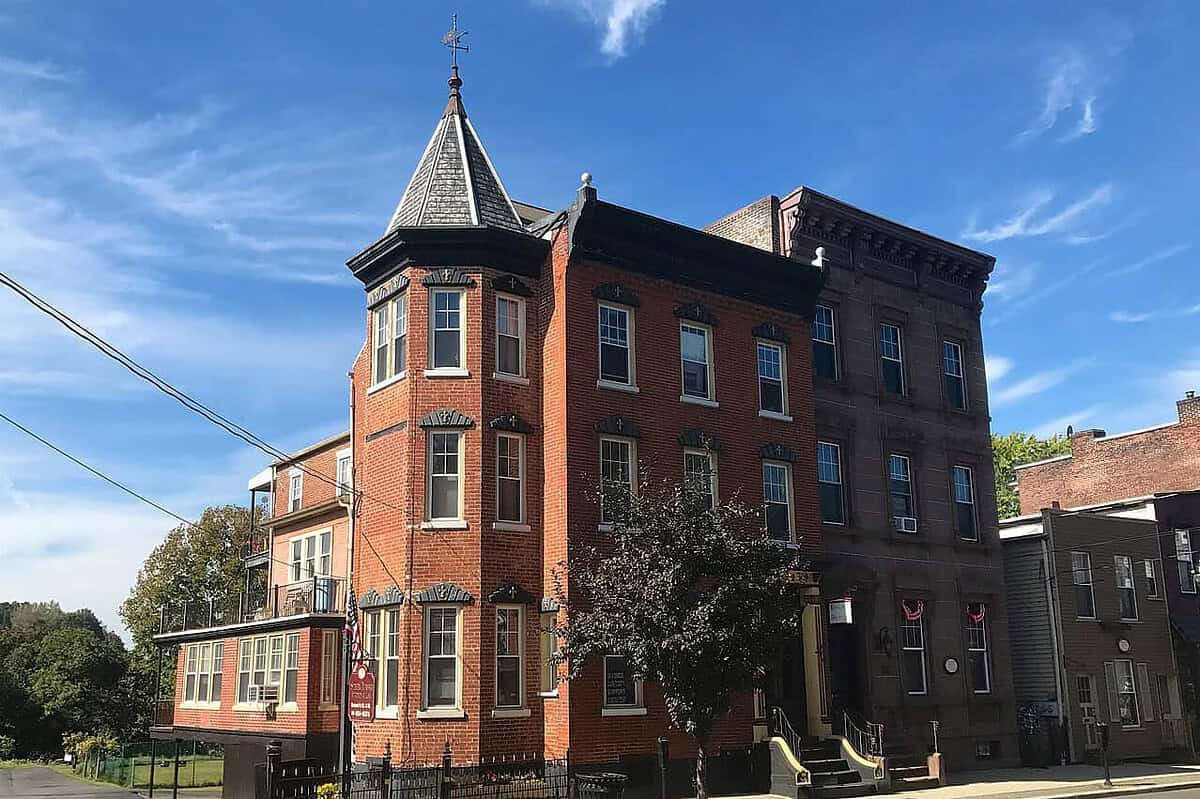
Rising rents in Warren County are making affordable housing scarce and leaving some residents struggling to keep their homes.
Once one of New Jersey’s least expensive rental markets, the rural county has experienced some of the state’s steepest rent increases over the past decade, according to federal housing data.
The county, which includes Phillipsburg and Hackettstown, has seen estimated rents for studio apartments more than double over the past 10 years, approaching the increases seen in Hudson County, home to Jersey City and Hoboken, and Cape May County, a popular vacation destination.
Don’t miss the NJ stories that matter. Sign up for our free newsletter →
Each year, the U.S. Department of Housing and Urban Development estimates rental costs in communities across the country. Known as fair market rents, the estimates reflect the amount below which 40% of qualifying rental units are rented. Housing agencies use the figures to set payment standards for programs such as Section 8 rental assistance and help determine rent limits for several other affordable housing programs.
Warren County also had the second-highest 10-year increase for two-bedroom apartments at 80.8%, just behind Hudson County. It had the highest 10-year increase of any county in the state for three-bedroom apartments at 77.1%.
Estimated rental costs in Warren County are now close to the statewide average. HUD’s 2027 estimates for the county range from $1,614 for studio apartments to $2,937 for four-bedroom rentals. That compares with statewide averages of $1,660 for studios and $3,033 for four-bedroom rentals.
The county’s rising rents come amid a tight rental market and broader housing affordability challenges across New Jersey. Census Bureau estimates indicate that fewer than 1% of Warren County’s rental units were vacant during the 2020-2024 period, leaving prospective tenants with limited options. A Rutgers University study published in December 2025 identified insufficient affordable housing, inflation, widening income inequality, and changes in the real estate industry as major contributors to rising rents statewide.
Rachel Opdyke, co-executive director of Family Promise of Warren County, has seen firsthand how difficult it has become for residents to find affordable housing. Family Promise helps people facing eviction or homelessness secure housing by assisting with rent, security deposits, and other housing-related expenses.
“It used to be when we approved somebody for a program, we would help them look for an apartment. It wouldn’t be too difficult to find a few options,” said Opdyke, who has been working at Family Promise for eight years. “Now we could have somebody complete an application, and we could spend a number of months with them looking for an apartment that works for them, which is obviously very difficult when somebody is already in a situation where they’re homeless or facing homelessness.”
Even when Family Promise succeeds in securing housing for a client, keeping it has become increasingly difficult. Opdyke is seeing more people return for services after losing housing they found with the nonprofit’s help. She said higher rents are trapping Warren County residents in cycles of housing instability.
“When we do identify housing for someone, there’s a much higher risk that they’re not going to be able to sustain themselves in that apartment because the costs are so high,” Opdyke said. “It’s well over half their income that goes toward rent oftentimes. That’s a very unstable situation to be put in.”
Located along the Pennsylvania border and within commuting distance of New York City, Warren County offers access to several regional job markets. Opdyke believes economic opportunities in northern New Jersey, New York City, and nearby Bethlehem, Pennsylvania, are contributing to the rising rents. Once a major industrial center and home to Bethlehem Steel, which shut down local operations in 1998, Bethlehem has since attracted new commercial and residential development.
Despite its rural character and a lower median household income than many of New Jersey’s more affluent counties, Warren County has seen sharper increases in estimated rents than several counties with similar household incomes or population densities.
Mercer and Union counties have median household incomes similar to Warren County’s. Studio apartment rents rose an estimated 62.6% in Union County and 64.8% in Mercer County over the past 10 years. Warren County saw an increase of 103%.
Hunterdon and Sussex counties have population densities comparable to Warren County’s. Estimated studio apartment rents rose 85.3% in Hunterdon County and 62.6% in Sussex County, compared with a 103% increase in Warren County.
Phillipsburg, Warren County’s most populous town, adopted a rent-control ordinance in 2024, but the town council voted unanimously to repeal it in January 2026. Officials said the ordinance had never been enforced and argued that rent control would discourage private investment and limit the housing supply. The repeal drew opposition from residents who believed that even an unenforced ordinance offered some protection against rising rents.
Opdyke said rising rents could create more pressure to implement rent-control laws.
“I could see, in the future, people revisiting that as the rents continue to go up. People are now seeing more and more individuals who are literally unhoused on the street, in their car, in encampments,” Opdyke said.
“I could see policies going into place regarding that as well, and regulating encampments,” she said. “I’m just hopeful that they’ll be in the direction of trying to provide a solution, not just telling people they can’t camp somewhere.”
Building a more informed New Jersey, one story at a time.
Readers fund The Jersey Vindicator because they believe New Jersey needs independent reporting that serves the public. No paywall. No spin. Just deeply reported journalism that helps people understand what’s happening in our state.
If you believe this work matters, please contribute today.

Curtis Brodner is a Report for America corps member covering housing and affordability for The Jersey Vindicator. He investigates the policies, people, and institutions shaping where New Jersey residents can afford to live, with a focus on accountability and solutions. Previously, he was a criminal justice reporting fellow with Columbia Journalism Investigations, producing investigative work for New York Focus. He earned a master’s degree from Columbia Journalism School as a Toni Stabile Center fellow and a bachelor’s degree in journalism from SUNY Purchase. You can reach him at Curtis AT jerseyvindicator.org.