



New Jersey’s food insecurity rate jumped 75% in four years
Food insecurity rose sharply while more than half of affected residents fell outside the federal safety net, even before the latest SNAP cuts.
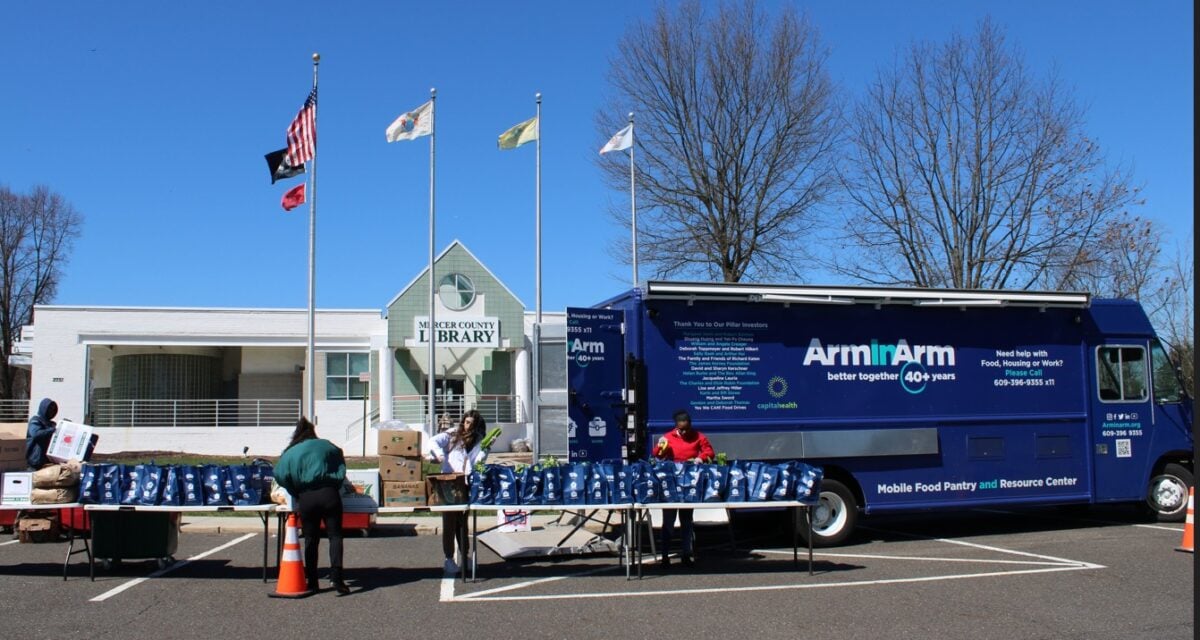
About one out of every eight New Jersey residents struggled to get enough food in 2024, according to a recent analysis of federal data by the hunger-relief nonprofit Feeding America.
The organization estimated that 13% of New Jersey residents experienced food insecurity that year, up from 7.4% in 2020, a 75% increase in four years. The U.S. Department of Agriculture (USDA) defines food insecurity as having limited or uncertain access to adequate food.
Of the New Jersey residents experiencing food insecurity, slightly more than half earned too much to qualify for Supplemental Nutrition Assistance Program (SNAP) benefits, leaving them ineligible for federal food assistance.
Hudson County, home to Jersey City, had the state’s highest 2024 food insecurity rate at 19.1%. It was followed by Cumberland County in South Jersey at 17.5% and Passaic County, home to Paterson, at 17.2%. Even in Hunterdon County, which had the state’s lowest rate, 7.2% of residents experienced food insecurity that year.
Food insecurity also increased nationally, though the rise was sharper in New Jersey. The national rate increased by 22% between 2020 and 2024, compared with 75% in New Jersey. Still, the national rate was 1.4 percentage points higher than New Jersey’s in 2024.
“Food insecurity is not a distant problem — it is present in every community in America,” Feeding America CEO Denis McDonough wrote in a press release about the annual study. “Behind every number is a child, a family, a senior, a veteran, a neighbor working hard to make ends meet.”
The 2024 figures are the most recent federal data available. They will also be the last for the foreseeable future because the U.S. Department of Agriculture canceled its food insecurity survey in September 2025.
“These redundant, costly, politicized, and extraneous studies do nothing more than fear monger,” Trump administration officials for the agency wrote in a press release announcing the change at the time. Agency officials blamed the Clinton administration for beginning the data collection, alleging it was just a ploy to increase funding for food assistance.
The USDA’s decision to stop tracking food insecurity comes amid deep cuts to SNAP under the 2025 One Big Beautiful Bill Act. Anti-hunger advocates warn the cuts are already increasing food insecurity.
“Across our state — one of the most expensive places in the country to live — families are burdened by high food costs, pain that is felt even more acutely by working-class households,” the leaders of five New Jersey food banks wrote in a joint letter denouncing the SNAP cuts. “With the cost of food out of reach for so many, this program is more important now than ever before.”
The survey’s cancellation is part of a broader push by President Donald Trump to restrict access to data and research across the federal government. Since the beginning of Trump’s second term, the administration has removed thousands of federal webpages containing data and research.
In addition to canceling the USDA’s food insecurity survey, the administration stopped releasing maternal and infant mortality data from the Centers for Disease Control and Prevention, federal law enforcement misconduct data from the Department of Justice, and infrastructure safety data from the Department of Homeland Security. Other reports and datasets have been discontinued, withheld, or released in incomplete form.
For the annual Map the Meal Gap study, Feeding America analyzed federal survey data collected by the U.S. Census Bureau and food security measures developed by the USDA to produce state and county estimates of food insecurity, meal costs, and changes over time.
Feeding America has vowed to continue estimating food insecurity rates every year using alternative data sets from a nationwide network of food banks, food pantries, statewide associations, and regional co-ops.

Curtis Brodner is a Report for America corps member covering housing and affordability for The Jersey Vindicator. He investigates the policies, people, and institutions shaping where New Jersey residents can afford to live, with a focus on accountability and solutions. Previously, he was a criminal justice reporting fellow with Columbia Journalism Investigations, producing investigative work for New York Focus. He earned a master’s degree from Columbia Journalism School as a Toni Stabile Center fellow and a bachelor’s degree in journalism from SUNY Purchase. You can reach him at Curtis AT jerseyvindicator.org.