



Bayonne says no to new data centers
The city’s ban comes amid growing opposition to data centers across New Jersey.
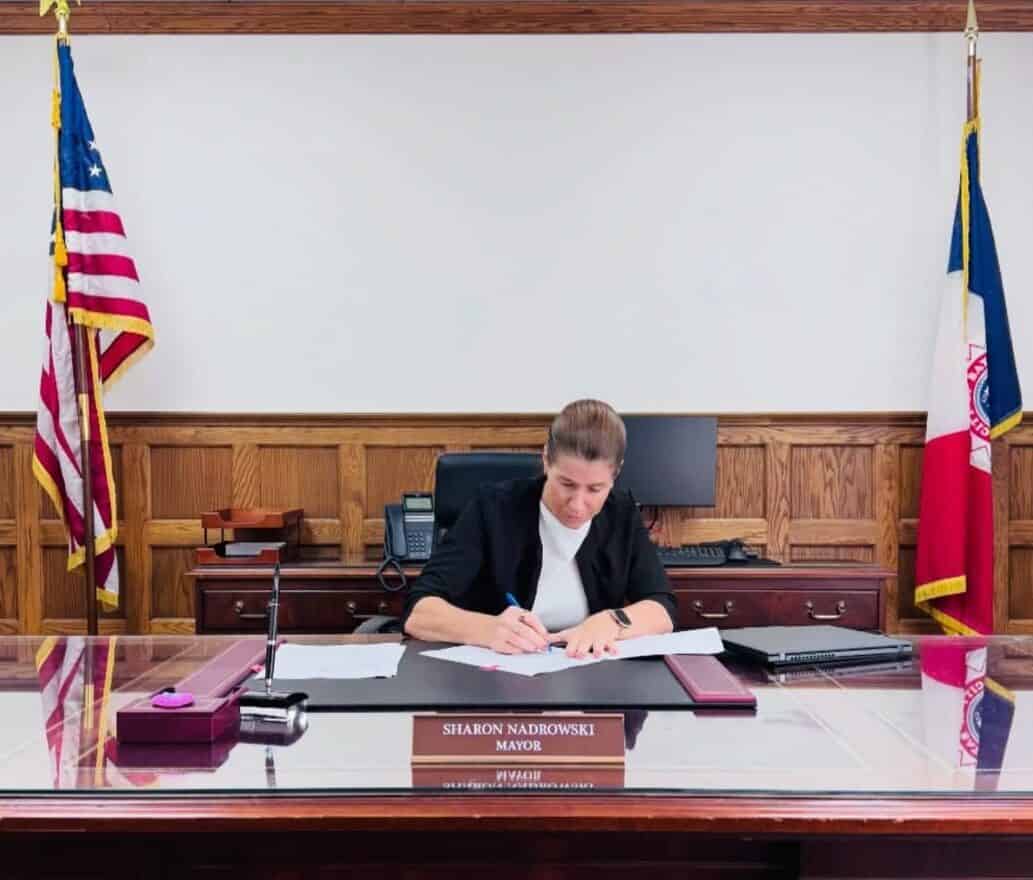
Bayonne officials voted to ban the construction of data centers on Wednesday, following the lead of more than 30 other New Jersey municipalities, including Cherry Hill, Franklin, and Old Bridge.
The local movement for the ban began last December during a fight over a plan to build a data center in the city. Local activists turned out at council meetings to demand a ban, and Sharon Ashe-Nadrowski made the issue part of her platform while running for mayor. She won in May, along with her entire slate for council.
“We showed that the people can fight back and that we’re the ones who have power, not the developers,” said Jennah Reddick, one of the Bayonne organizers of the campaign to ban data centers. “We came together as a community to fight back against corporate greed, even when we were told it was a losing battle, and we won.”
Ashe-Nadrowski signed the ban on Thursday after the five-person Bayonne City Council unanimously approved the ordinance, citing “the interest of health, safety, and welfare of the residents.” The ban removes data centers as a permitted use under every zoning category in the municipality.
Bayonne’s ban comes amid broader concerns about the effect of data centers on electricity costs and the regional power grid. Recent analysis from an independent watchdog estimated that data centers accounted for $6.3 billion in costs for PJM Interconnection, the utility that operates the electric grid for New Jersey, 12 other states, and the District of Columbia. These additional costs are passed on to consumers.
New Jersey is currently the second-most-expensive state in the country for electricity, according to the MIT and Heatwave News Electricity Price Hub project. Residents paid an average of $301.70 this July, historically the most expensive month for electricity bills. That’s almost $100 more than the average electricity bill in July 2020.
Gov. Mikie Sherrill signed legislation last month obligating large data centers to pay for electricity and grid upkeep costs without subsidies from other utility users. Thus far, she has stopped short of pushing for a moratorium on data centers, as New York did last month.
Beyond strain on the grid, opponents of data centers point to problems that include air pollution from generators, the amount of water used to cool hard drives, and noise pollution. A study by a Harvard public health researcher found that the sound of generators, cooling systems, and servers in data centers can reach 96 decibels. That’s about the volume of a passing train, according to Yale’s decibel comparison chart, and above the level considered harmful to human hearing.

Curtis Brodner is a Report for America corps member covering housing and affordability for The Jersey Vindicator. He investigates the policies, people, and institutions shaping where New Jersey residents can afford to live, with a focus on accountability and solutions. Previously, he was a criminal justice reporting fellow with Columbia Journalism Investigations, producing investigative work for New York Focus. He earned a master’s degree from Columbia Journalism School as a Toni Stabile Center fellow and a bachelor’s degree in journalism from SUNY Purchase. You can reach him at Curtis AT jerseyvindicator.org.